


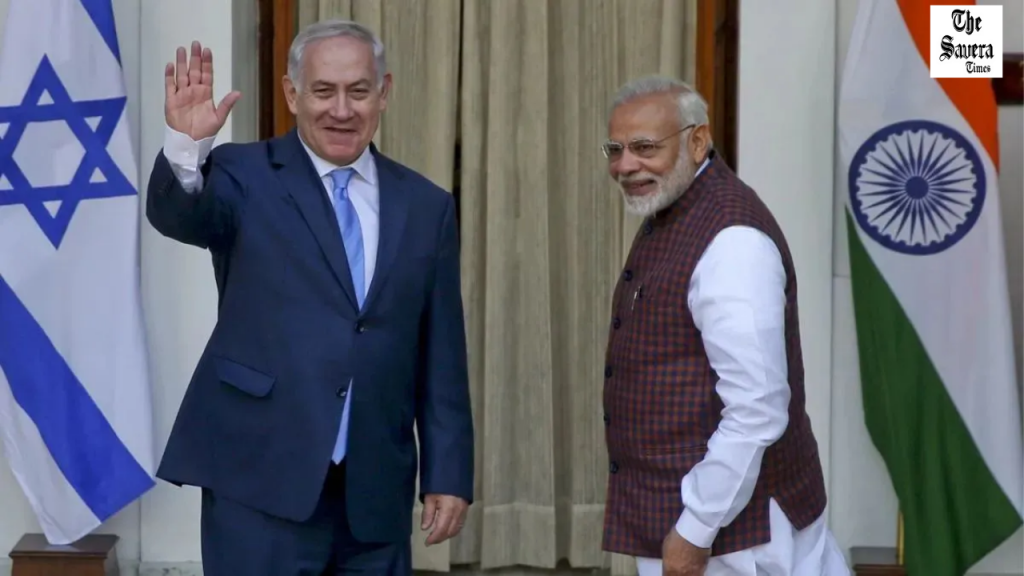
India and Israel are preparing to deepen their defence and strategic cooperation as Prime Minister Narendra Modi prepares for a high-profile two-day visit to Israel from February 25 to 26, 2026. Officials from both countries have indicated that discussions will focus on expanding collaboration beyond traditional defence purchases to include joint development, co-production and new technology sharing, signalling a potential “mega defence pact” during the visit.
Although the two sides are expected to announce an updated security cooperation memorandum of understanding (MoU), sources say that no formal signed defence contract will be concluded immediately. Instead, the visit is likely to set policy direction and strategic alignment for future military cooperation between the longstanding partners.
Key Weapons Systems Under Spotlight
A central part of the defence dialogue involves a host of advanced weapons and systems developed by Israel that India is considering acquiring or collaborating on in production:
SPICE Precision-Guided Bombs – These Israeli-made kits convert conventional bombs into smart, precision-guided munitions capable of highly accurate strikes, and are already in use by the Indian Armed Forces.
Rampage Air-to-Surface Missiles – Designed for standoff precision strikes against high-value targets, Rampage missiles are part of India’s efforts to enhance long-range strike capabilities and are expected to feature in expanded defence cooperation.
Air LORA Ballistic Missiles – Also developed in Israel, Air LORA systems are long-range, air-launched ballistic missiles that offer deep-strike reach well beyond conventional platforms, strengthening India’s aerial deterrence.
Other technologies being discussed include Ice Breaker missiles, extended-range air defence systems and laser-based defence equipment, all of which reflect India’s push for a multilayered defence architecture.
These systems form part of a broader proposed package valued at around $8.6 billion, which would position Israel as one of India’s major defence partners, second only to France in recent arms sales.
Broader Defence Partnership Goals
Officials from both countries have been signalling a shift in the nature of defence cooperation: moving from off-the-shelf purchases to deeper partnerships involving co-development, technology transfer and potential local production in India. Such arrangements would support India’s indigenous defence ecosystem while integrating advanced Israeli capabilities.
The proposed cooperation reflects shared concerns over regional security and technological edge, as both nations seek systems capable of countering missile, drone and aerial threats. China and Pakistan’s expanding missile arsenals have emphasised the need for enhanced air defence and precision strike options.
Political and Strategic Dimensions
The defence discussions also occur against a backdrop of strengthened political ties between Prime Minister Modi and Israeli Prime Minister Benjamin Netanyahu, who have referred to India as a “global power” and outlined visions of broader cooperation frameworks.
Beyond purely military talks, the visit will include discussions on artificial intelligence, cyber security, quantum technologies, trade and agriculture, underlining the multifaceted nature of the partnership.
Implications for Regional Security
Enhanced defence cooperation with Israel may reshape India’s strategic posture in South Asia and beyond, particularly by improving long-range precision strike and layered defence capabilities. Analysts suggest that integrating systems like SPICE, Rampage and Air LORA could expand India’s deterrence options, provide greater operational flexibility, and strengthen interoperability between Indian and Israeli defence industries.
While the pact’s full details are yet to be announced, expectations remain high that the visit will mark a significant step toward a long-term, future-proofed military partnership between the two democracies.