


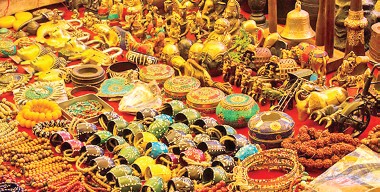
Threads of Heritage, Livelihood, and Sustainable Growth
Aanchal Sharma
Masters in Psychology from Panjab University.
India’s handicraft and handloom sector is one of the oldest and most culturally significant industries in the world. Deeply rooted in the country’s civilizational history, it represents far more than material products—it reflects traditions, skills, community life, and sustainable living practices. From Kashmiri shawls and Banarasi silks to Jaipur’s blue pottery and Odisha’s Ikat weaves, Indian crafts showcase the country’s vast cultural diversity and artistic excellence. Even today, this sector remains a backbone of India’s rural economy, providing livelihoods to millions of artisans and weavers while preserving traditional knowledge passed down through generations.
Indian handicraft and handloom traditions date back over 5,000 years, with archaeological evidence from the Indus Valley Civilization highlighting advanced pottery, metalwork, bead-making, and textile production. Ancient Indian textiles such as cotton, silk, and muslin were globally renowned and traded with Rome, China, Southeast Asia, and the Middle East. During the Mughal era, royal patronage led to the flourishing of crafts such as Zardozi, Chikankari, Phulkari embroidery, carpet weaving, and miniature paintings. However, colonial policies during British rule severely weakened indigenous industries by promoting machine-made imports.
The freedom movement revived pride in handmade goods, with Mahatma Gandhi making khadi a symbol of self-reliance. After independence, India undertook multiple initiatives to revive, protect, and modernize the sector.
India’s handicraft sector reflects regional geography, climate, materials, and cultural practices. Major craft categories include textile crafts such as block printing, bandhani, kalamkari, and kantha embroidery; metal crafts like Dhokra and Bidriware; wood and stone crafts including Saharanpur wood carving and Agra marble inlay; pottery traditions such as terracotta and blue pottery; natural fiber crafts using bamboo, cane, jute, and coir; and jewelry arts like Meenakari and silver filigree. These crafts support entire artisan clusters, primarily located in rural and semi-urban regions. The handloom sector is a decentralized, village-based industry and is central to India’s cultural identity.
India accounts for over 95% of global handloom production, making it the world’s largest producer of handwoven fabrics. Notable handloom traditions include Banarasi and Kanchipuram silks, Pochampally Ikat, Chanderi, Maheshwari, Jamdani, and Assam’s Muga and Eri silks. Handloom weaving is not merely an economic activity but also a form of cultural expression inspired by nature, religion, and folklore. The handicraft and handloom sector is the second-largest employment generator in India after agriculture, supporting over 7 million artisans and weavers, contributing approx. 1.5% to India’s GDP. India Exports Handicrafts worth over Rs. 1 Lakh Crore annually, with top markets being the US, EU and Japan. A large proportion of workers are women and individuals from marginalized communities.
The sector requires low capital investment, enables home-based work, uses eco-friendly raw materials, and helps reduce rural-to-urban migration. The Government of India has launched several initiatives to strengthen the sector, including the National Handloom Development Programme, National Handicrafts Development Programme, PM Vishwakarma Scheme, GI tagging, India Handloom Brand, craft fairs, skill development, and marketing support. Indian handicrafts and handloom products enjoy strong global demand due to their authenticity, craftsmanship, and sustainability, with major export markets in the USA, Europe, the Middle East, and Japan.
Despite its strengths, the sector faces challenges such as low incomes, lack of credit, competition from machine-made products, limited marketing, and declining interest among youth. The way forward lies in combining tradition with innovation through design collaboration, digital platforms, skill training, stronger branding, tourism integration, and eco-friendly production.
In conclusion, Indian handicrafts and handloom are living traditions that embody cultural identity, sustainability, and inclusive growth. Supporting this sector preserves heritage, empowers artisans, strengthens rural livelihoods, and showcases India’s rich cultural legacy to the world.
(The witer is working tirelessly for the upliftment of the rural women artisans of the country promoting Indian Handicrafts, Handloom, Arts, Crafts, Traditions & Heritage. She is working closely with multiple Ministries under Government of India to provide this section of the society a platform to showcase their exquisite talent, skill and tradition to gain their livelihood and be Aatmanirbhar.)