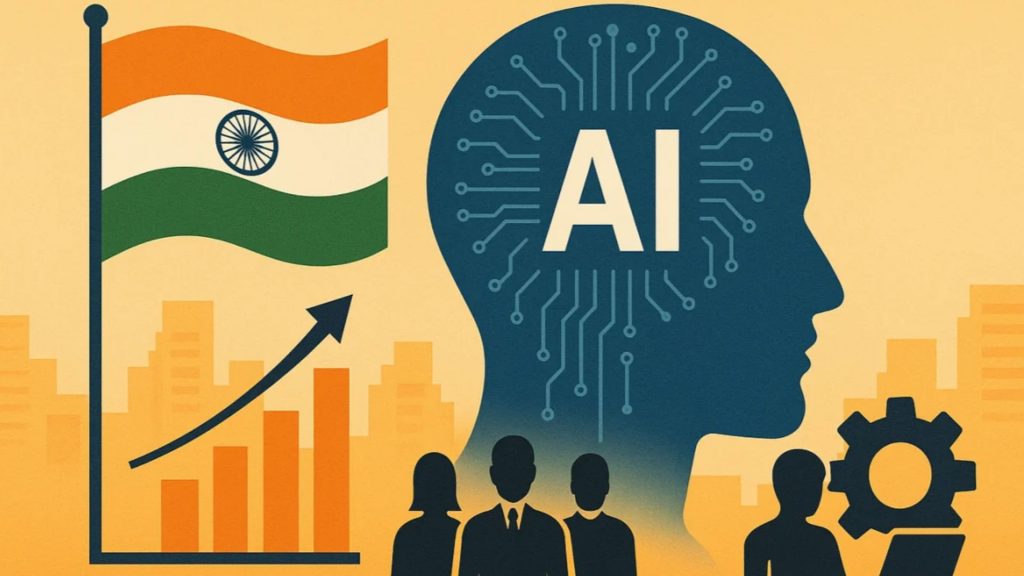
Artificial Intelligence (AI) is rapidly transforming the world, changing the way people work, communicate, learn and conduct business. From healthcare and education to agriculture, banking and governance, AI has emerged as one of the most influential technologies of the modern era. India, with its growing digital economy, large talent pool and expanding technology sector, has the potential to become a global leader in artificial intelligence. However, while the technology offers enormous opportunities, it also raises serious questions about employment, data privacy, cybersecurity and the future of human decision-making. The challenge before India is not simply to adopt AI but to ensure that its benefits reach every section of society. One of the biggest advantages of artificial intelligence is its ability to improve efficiency and productivity. Businesses are increasingly using AI-powered tools to analyse information, automate routine tasks and make faster decisions. In India’s IT and business sectors, AI can help companies improve services, reduce operational costs and compete in international markets. Small businesses and startups can also benefit from affordable AI solutions, allowing them to expand their operations and reach new customers. Healthcare is another sector where AI can bring significant improvements. AI-based systems can assist doctors in analysing medical images, identifying potential diseases and processing large volumes of patient information. In a country where access to specialist healthcare remains limited in several rural areas, technology-enabled consultations and diagnostic support could make medical services more accessible. However, AI must support medical professionals rather than replace their judgement. Patient safety, accuracy and privacy should remain central to every healthcare application. Indian agriculture also stands to benefit from the growing use of artificial intelligence. Farmers often face challenges related to unpredictable weather, crop diseases, irrigation and market prices. AI-powered applications can analyse weather patterns, identify crop infections and provide recommendations on fertiliser and water usage. Such technologies could help farmers reduce losses, improve productivity and make better decisions. However, these solutions must be affordable, available in regional languages and easy to use for farmers with limited digital literacy. Education is another area undergoing major changes because of AI. Personalised learning platforms can help students understand difficult subjects, practise skills and receive immediate feedback. Teachers can use AI tools to prepare lessons, assess assignments and identify students who need additional support. Nevertheless, excessive dependence on artificial intelligence could weaken independent thinking, creativity and problem-solving abilities. Schools and colleges must teach students how to use AI responsibly while encouraging original ideas and independent learning. Despite these advantages, the growing influence of AI raises concerns about employment. Automation may reduce the demand for certain repetitive and routine jobs, particularly in sectors such as customer service, data processing and administration. Millions of Indians depend on these occupations for their livelihoods.
India’s artificial intelligence journey needs innovation