


Abhishek Vij
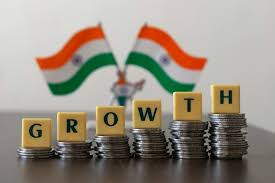
Three days before the budget, Finance Minister Nirmala Sitharaman presented India’s pre-budget economic survey to Parliament. This was perhaps done to create an atmosphere of economic strength from the outset and to ensure a positive reception for the budget she would present on February 1st. Nirmala Sitharaman projected a GDP growth rate of between 6.8 percent and 7.2 percent for 2026-27.
Last year, it was 6.5 percent. The initial estimate for the current financial year was 7.4 percent, but even the threats of Donald Trump’s tariff war failed to shake our economy, as Nirmala Sitharaman pointed out. If we want to make India a developed nation by 2047, we need a sustained growth rate of at least 7 percent. Now, the country’s hopes are bolstered by these figures. The familiar refrain is that in a year or two, we will become the world’s third-largest economic superpower, and perhaps the leading economic superpower by 2047.
But beyond the statistics, we must consider whether the condition of the country’s poor has improved. Has the disparity between the rich and the poor decreased? Or is this economic progress merely increasing the wealth of the already wealthy? Prime Minister Modi speaks of India’s youth power being engaged in nation-building, but it remains to be seen whether this youth power is truly involved in investment and construction activities. The contribution of young people to startup industries should increase, and they should become leaders in economic innovation. The figures presented in this economic survey are encouraging. The first figure is the inflation rate, which had reached 1.7 percent by December 2025-26.
In 2023, this figure was 6.7 percent. The unemployment rate decreased from 5.4 percent in May 2025 to 4.9 percent. Trade negotiations with the United States are expected to be completed this year, reducing uncertainty on the external front. The agreement we have reached with the European Union countries is also being called the “mother of all deals.” It is expected that this will open up a huge lucrative market for Indian investors.
The Economic Survey reiterated that central banks have changed their policies. Despite US tariff policies, we have achieved an export growth of 8.2 percent in five years, and now we are aiming for the Rs9.2 lakh crore club. It also stated that people have increased their home loan borrowings fourfold for building houses, new homes are being built, and people working abroad are filling our coffers. They sent Rs 12.50 lakh crore to India in 2025 alone. Our economic health has improved in the banking sector, and we have reduced NPAs (Non-Performing Assets).
Progress has been made in recovering bad loans. Our equity investments have increased eightfold in 12 years, but deposits have decreased by 23 percent. Therefore, a liquidity crunch is emerging in banks. The good news is that foreign investors still have confidence in India. Rs7.50 lakh crore in investment came in during 2025.
However, there is no growth visible in the manufacturing and agricultural sectors, which is not indicative of stable development for the country. We are proud of the strength of our domestic reforms, and it is on this basis that we want to reach a 10 percent growth rate.
Remember, to sustain domestic investment, it is also necessary to maintain domestic market demand. To maintain this, provide employment to people, develop small and cottage industries so that people have money in their pockets and can sustain the level of demand, thereby supporting the country’s progress.