


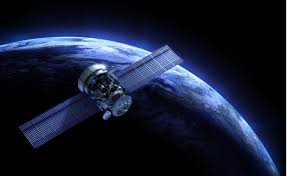
India’s space program has evolved from a national pride project to a significant driver of economic growth. Over the past two decades, the country has emerged as a competitive player in the global space market, with satellite launches, research initiatives, and private sector participation creating new opportunities.
The Indian Space Research Organisation (ISRO) has been at the forefront of this transformation. From the Chandrayaan lunar missions to the Mars Orbiter Mission (Mangalyaan), ISRO has showcased cost-effective and technologically advanced space capabilities. These missions have not only enhanced India’s scientific reputation but also attracted commercial collaborations.
The emergence of private players is reshaping the sector. Companies such as Pixxel, Skyroot Aerospace, and Bellatrix Aerospace are developing satellite imaging, launch vehicles, and satellite propulsion technologies. Government policies like the New Space India Limited (NSIL) framework and the 2020 Space Activities Bill aim to encourage private investment and foster public-private partnerships.
Satellite communication, Earth observation, and navigation systems have created substantial economic value. India’s NavIC satellite navigation system supports applications ranging from transport to agriculture. The global demand for satellite services has also opened revenue streams, with India becoming a cost-effective alternative for satellite launches through programs such as PSLV commercial launches.
Startups are leveraging satellite data for applications in logistics, weather forecasting, urban planning, and environmental monitoring. For example, Pixxel’s high-resolution imaging satellites support disaster management and agricultural planning, while Skyroot Aerospace is developing small launch vehicles to make space more accessible to private customers.
Education and skill development are also critical. Institutes like Indian Institute of Space Science and Technology (IIST) produce highly skilled engineers, and ISRO’s collaborative programs with universities foster research and innovation. This talent pipeline ensures that India remains competitive globally.
Despite the impressive growth, challenges remain. Regulatory frameworks are still evolving, and access to international markets requires compliance with global norms. High initial investments and technology development cycles also pose risks for startups. However, continued government support, venture capital funding, and international collaborations are mitigating these risks.
India’s space economy is projected to grow rapidly, with estimates suggesting a $15 billion market by 2030. As the country expands into satellite manufacturing, launch services, and downstream applications, it is creating a new ecosystem of jobs, technological expertise, and commercial opportunities. This growth positions India as a leader not just in space exploration but in space-driven economic development