


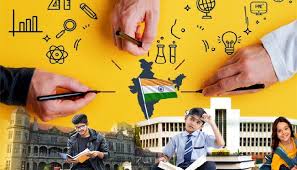
The claim nowadays is that all the old patterns of education in the country are being changed. In their place, a new education for the new era, which will be technologically driven and in which a deep understanding of science will be instilled in every student, is being introduced to fulfill the dreams of educational development. But why don’t these claims seem to be coming true?Because this change will require massive expenditure.
The NITI Aayog says that at least 6 percent of our GDP should be spent on educational development.But the truth is that even after so many years of independence, despite claims of reaching the heights of development, the country has never spent 6 percent of its GDP on educational development. This expenditure is always shown in absolute figures, not as a percentage, so that the slow pace of change in education in the country does not cause any confusion.We want to lead the world by creating an artificial intelligence model in educational development.
The question is, if we want to take an inclusive, innovative, employment-oriented, and research-based education system to every village, where is the initiative for this? If reports still indicate that thousands of primary schools in India have only one teacher handling all the classes, then when will the goal of integrating new techniques and the new scientific era with teacher-student interaction in education be achieved? Even today, many students are opting for arts faculties in their undergraduate and postgraduate degrees, while the new education policy states that from the beginning to the higher levels, the new generation should study arts and science, literature and technology simultaneously.
But the situation is such that while the percentage of student enrollment in schools may have increased in some places, the dropout rate among them is also increasing by the time they reach matriculation.