


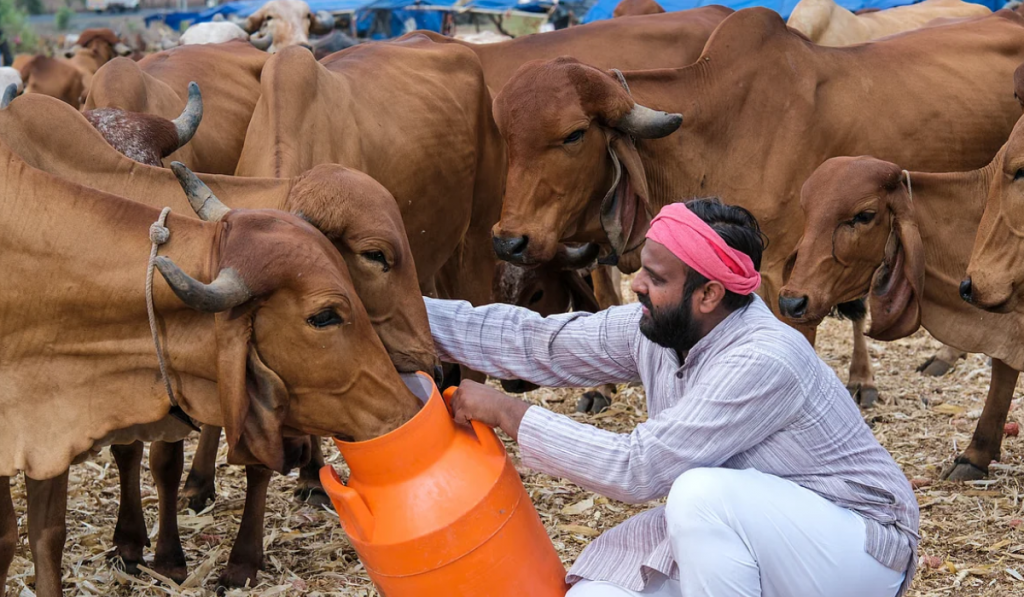
If milk from indigenous breeds, milk tested for antibiotic residues or welfarecertified milk commands a price premium, farmers have a stronger financial incentive to invest in better animal health and responsible medicine use Antibiotics are essential for treating bacterial infections. But their routine use to compensate for poor hygiene, overcrowding, stress, inadequate biosecurity or delayed diagnosis accelerates antimicrobial resistance (AMR).
A preventionled approach seeks to reduce dependence on antibiotics by keeping animals healthy, detecting disease early, strengthening governance and making responsible medicine use economically viable. India’s National Action Plan on AMR emphasises surveillance, infection prevention, optimised antimicrobial use and research and innovation. The updated plan recognises that effective infection prevention can reduce or eliminate antimicrobial use where drugs have become a substitute for deficient animal-husbandry practices.
The challenge is to translate these policy commitments into practical measures for smallholder dairy farmers, veterinarians, cooperatives, regulators and industry. Reform policy and reward prevention The first priority is to tighten controls on the over-the-counter sale of critically important veterinary antibiotics. Their use should require prescriptions from qualified veterinarians, backed by digital prescription records, traceability, training for pharmacists and veterinarians and enforcement against illegal or unlabelled formulations. This is not about denying farmers access to treatment. It is about ensuring that antibiotics are used only when clinically necessary, and at the correct dose and for the prescribed duration. Regulation alone, however, will not change farming practices. Farmers also need financial incentives that reward prevention rather than antibiotic-dependent production. Uttar Pradesh’s Nand Baba Dugdh Mission offers a potential starting point.
Its schemes support indigenous cattle rearing and milk production. The Nandini Krishak Samriddhi Yojana provides a 50 per cent subsidy for establishing a unit of 25 indigenous cattle, while the Mini Nandini Krishak Samriddhi Yojana supports a 10-cattle unit with a similar subsidy. The Mukhyamantri Swadeshi Gau Sanvardhan Yojana provides a 40 per cent subsidy for purchasing two indigenous cattle. The schemes cover breeds including Sahiwal, Tharparkar, Hariana, Gir and Gangatiri.
They could be redesigned as AMR-smart incentives by linking subsidies to vaccination, animal identification, farm biosecurity plans, veterinary consultations and documented antibiotic-use records. Such conditions would make disease prevention an explicit part of dairysector support. Farmers often rely on antibiotics because preventive measures require upfront investment.
Changing this calculation requires accessible finance and a credible economic return Governance must also become more integrated. Standard operating procedures should connect humanhealth, veterinary, environmental, food-safety and rural-development authorities. Surveillance should bring together data on antibiotic sales, resistance patterns, residues in milk and meat, disease outbreaks and environmental contamination. India has strengthened AMR surveillance through the Indian Council of Agricultural Research’s All India Network Programme on AMR, which involves 31 centres across states. District-level dashboards could build on this network to identify hotspots, track emerging resistance and guide corrective action.
Governance must also become more integrated. Standard operating procedures should connect humanhealth, veterinary, environmental, food-safety and rural-development authorities. Surveillance should bring together data on antibiotic sales, resistance patterns, residues in milk and meat, disease outbreaks and environmental contamination. India has strengthened AMR surveillance through the Indian Council of Agricultural Research’s All India Network Programme on AMR, which involves 31 centres across states. District-level dashboards could build on this network to identify hotspots, track emerging resistance and guide corrective action. Make prevention affordable for farmers Farmers often continue to rely on antibiotics because preventive measures require upfront investment, whereas treatment appears to offer a cheaper and more immediate solution. Changing this calculation requires accessible finance and a credible economic return.
Targeted microcredit and transition funds could help smallholders move towards resilient indigenous cattle breeds or improved, low-input production systems where these are appropriate to local conditions. Loans could support vaccination, better ventilation, clean water, footbaths, manure management, herd records, heat-stress adaptation and access to diagnostic services. Public-private partnerships could also help develop premium milk markets with reliable quality assurance. If milk from indigenous breeds, milk tested for antibiotic residues or welfare-certified milk commands a price premium, farmers have a stronger financial incentive to invest in better animal health and responsible medicine use. Such arrangements must be underpinned by credible standards.
They should require no routine preventive antibiotic use, documented veterinary prescriptions when treatment is necessary, compliance with withdrawal periods and independent residue testing. Premium pricing must reward verified practices rather than unsubstantiated claims about milk quality. Empower cooperatives and veterinary services Local dairy cooperatives can turn biosecurity principles into everyday practice.
They are well placed to maintain animal registers, procure quality inputs, monitor milk quality and organise farmerlearning groups. Practical farm protocols should cover hygiene, controlled animal movement, vector control, clean water, calving management, mastitis prevention and vaccination schedules. These measures can reduce the incidence and spread of infection, lowering the need for antimicrobial treatment.