


~Deepika Bhan
Every nation fights a battle
for the imagination of its
youth, and the same is
happening in India also.
But the real question is — what kind of future are young
Indians being encouraged to dream
of?
Recently, a handwritten postcard
carrying the words ‘Vande Mataram’
travelled into space aboard
Skyroot’s Vikram-1 rocket. Asked
why he had chosen that message,
Prime Minister Narendra Modi
said this year marks the 150th
anniversary of the national song
and that Vande Mataram has always
inspired India’s youth.
The symbolism could hardly
have been more striking. India
celebrated two milestones — the
country’s hydrogen-powered train
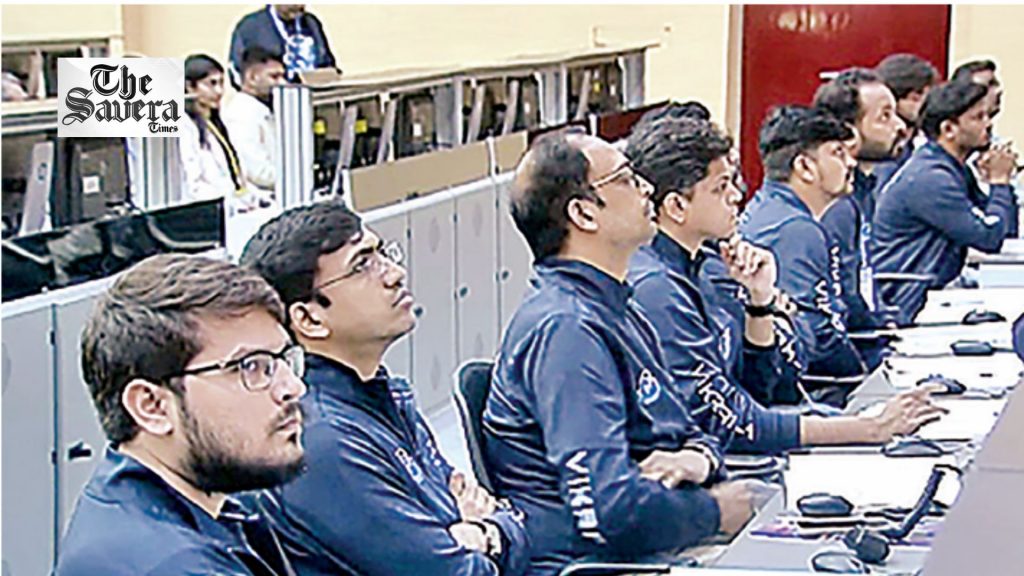
and Vikram-1, a privately built
rocket developed by a team of
young engineers, most of them
under the age of 28. Together, they
conveyed a powerful message:
when given the right opportunity,
Indians, particularly the youth, are
capable of building, innovating
and competing with the best in the
world.
But at the very same time,
another contest has been unfolding
in the national capital. At Jantar
Mantar, attempts have been
underway to channel the anger of
young aspirants over paper leaks
into a larger political movement.
This raises a larger question that
goes beyond one protest or one
political party.
The paper leak issue is
undoubtedly serious. The
NEET-UG 2026 controversy has
shaken the confidence of lakhs
of students and their families. It
deserves neither trivialisation nor
political point-scoring. But it is
equally true that paper leaks are not
a recent phenomenon. They have
plagued India’s examination system
for decades. What successive
governments failed to do was
create a robust mechanism capable
of dismantling the networks that
flourished within the system itself.
When the teacher becomes
the thief, the system stands
compromised. More importantly, it
reflects the country’s social, political
and moral condition. Such a system
has existed for nearly 78 years, with
the Congress party being in power
for much of that period. Today,
Rahul Gandhi is organising events
around paper leaks to target the
present government. He appears
keen to tap into the sentiments
of Gen Z in an attempt to build a
larger political movement ahead of
the 2029 Lok Sabha elections and
the Assembly elections due before
that, including in Punjab and Uttar
Pradesh.
After spending nearly 20 days
abroad, Rahul Gandhi has also
sought to regain political visibility
ahead of the Monsoon Session of
Parliament. Interestingly, he and
his party stayed away from Sonam
Wangchuk’s hunger strike at Jantar
Mantar, which began on June 28,
but decided to show solidarity as
the Parliament session drew closer.
Senior Congress leaders were
seen at the protest site, and Rahul
Gandhi also posted on social media
after Wangchuk was shifted to the
hospital.
For nearly the first fortnight,
there was no significant
mobilisation in Wangchuk’s
support, with many gatherings at
Jantar Mantar revolving around
food, selfies and making reels.
None of the major opposition
parties — Congress, Samajwadi
Party, Trinamool Congress, AAP
or others — asked their youth
wings to stage a sustained protest
at the iconic demonstration site in
the heart of Delhi. However, they
made a beeline for the venue once
it became clear that administrative
intervention could follow the Delhi
High Court’s July 16 order directing
the authorities to do whatever was
necessary to save Wangchuk’s life.
After Wangchuk was shifted
to the hospital, opposition leaders,
including Rahul Gandhi, became
vocal in attacking the government.
The paper leak issue is
undoubtedly a serious concern and
deserves to be dealt with firmly. The
recent arrests in the NEET paper
leak case have exposed the depth
of the racket. Those entrusted with
safeguarding the system are the
very people accused of betraying it.
The growing demand for
structural reforms is therefore
justified. The government must
ensure that examinations become
secure, transparent and beyond
manipulation. That alone will
restore the confidence of students
whose careers depend on a fair
system.
Democracy will always have
protests, and rightly so. Young
people have every reason to
question governments, demand
accountability and seek justice.
But there is a difference between
encouraging young minds to seek
reform and encouraging them to
believe that agitation alone is the
path to change.