


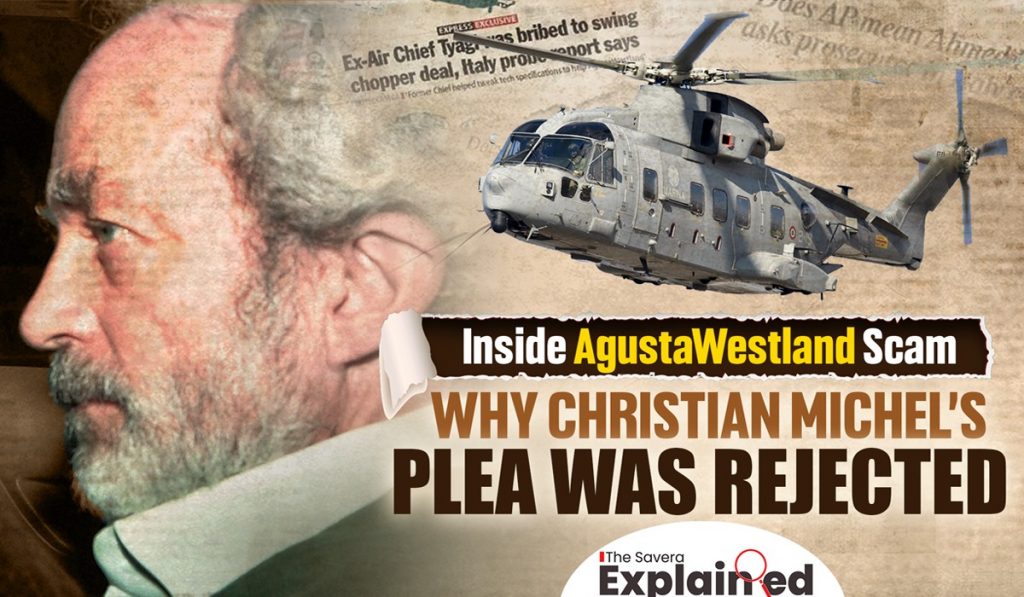
New Delhi: A Delhi court last week rejected Christian Michel James’ plea for release from Tihar Jail, where he’s been for nearly 7 years. Accused as a middleman in the Rs 3,726.96 crore AgustaWestland scam, Michel’s case has sparked debate.
But What’s that scam, Let’s unpack, the charges against him, the law, why his plea was denied, and the broader issue of undertrials in India.
The AgustaWestland Scam
In 2010, AgustaWestland, an Italian company (now Leonardo), secured a Rs 3,726.96 crore contract to supply 12 AW-101 helicopters for VVIP transport in India, like the Prime Minister. In 2011, an Italian investigation revealed alleged bribes to clinch the deal.
India’s CBI and ED stepped in, estimating a Rs 2,666 crore loss to the government. Michel, a British defense consultant, was accused of channeling €30 million (Rs 225 crore) in bribes to Indian officials, including bureaucrats and politicians.
Charges Against Christian Michel
Michel faces charges in two cases:
- CBI Case: Criminal conspiracy (Section 120B IPC), cheating (Sections 415, 420 IPC), forgery (Section 467 IPC), and violations under the Prevention of Corruption Act.
- ED Case: Money laundering under the Prevention of Money Laundering Act, tied to the alleged bribes.
Extradited from Dubai in 2018, Michel is accused of bribing officials to manipulate the deal’s terms in AgustaWestland’s favor.
Why Was His Plea Rejected?
Michel sought release under Section 436A of the CrPC, arguing his seven-year detention matched the maximum punishment for some charges (like cheating). His lawyer claimed his extradition covered only offenses with a seven-year cap. On August 7, 2025, Special Judge Sanjay Jindal rejected the plea, citing:
- Section 467 IPC: Forgery of valuable securities carries life imprisonment, making Section 436A inapplicable.
- Court’s Reasoning: The applicability of Section 467 will be decided at the charge-framing stage. Previous Supreme Court and Delhi High Court rulings also dismissed similar pleas.
Despite bail in both cases, Michel remains in Tihar, citing “security concerns” for not furnishing bail bonds.
What Does Section 436A Say?
Section 436A, added to CrPC in 2006, limits undertrial detention:
- Rule: Undertrials can’t be jailed beyond the maximum punishment for their offense.
- Exception: For offenses with life imprisonment or death penalty, release isn’t automatic and depends on court discretion.
Michel’s case falls under the life imprisonment clause for Section 467, blocking his release.
Undertrials in India: A Broader Issue
India’s jails are packed with undertrials—people awaiting trial. Per the National Crime Records Bureau (2023):
- 75% of prisoners (around 4.4 lakh) are undertrials.
- 9% (about 39,000) have been detained over three years.
- In Delhi, 90% of prisoners are undertrials, with 2% (410) jailed over five years.
Notable undertrials include: - Aaftab Poonawala (Mehrauli murder case, since 2022).
- Umar Khalid (Delhi riots case, since 2020).
These cases highlight systemic delays in India’s courts.
The Case for ReformMichel’s case exposes undertrial challenges:
- Over-Criminalization: Over 70 IPC sections carry life imprisonment, limiting Section 436A’s relief.
- Trial Delays: Michel’s trial hasn’t progressed beyond pre-charge in seven years.
- Reform Argument: Experts, like the Vidhi Centre, push for decriminalizing minor offenses and faster trials to ease undertrial overcrowding.
Reforms could balance justice and fairness for undertrials.
Christian Michel’s rejected plea underscores the complexities of the AgustaWestland scam and India’s legal system. While he battles serious charges, the case highlights the plight of undertrials languishing in jails. As reforms loom, will India’s courts find a balance between justice and fairness?