


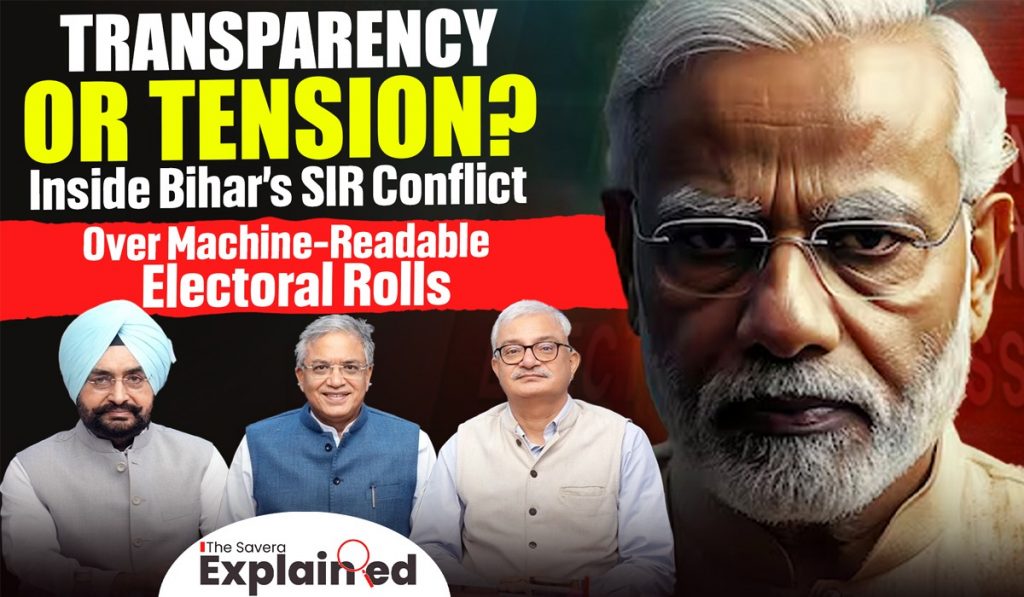
Patna, Bihar: India’s electoral system is under intense scrutiny following the Election Commission’s (ECI) Special Intensive Revision (SIR) of voter lists in Bihar, ahead of anticipated state assembly elections later in 2025.
Opposition parties, led by Congress leader Rahul Gandhi, have accused the ECI of enabling “vote theft” through mass voter deletions and manipulations, sparking protests and legal battles. The demand for machine-readable electoral rolls has reignited debates on transparency versus privacy, exposing deep partisan divides.
The Ongoing Row Among Political Parties
The controversy erupted in July 2025 when the ECI launched Bihar’s SIR, a targeted voter list cleanup requiring additional identity proofs like Aadhaar or passports—documents many rural and marginalized voters lack.
Opposition claims this led to the deletion of over 65 lakh names, disproportionately affecting minorities, Dalits, and backward classes, potentially tilting elections in favor of the ruling BJP-led alliance. Rahul Gandhi labeled it “vote chori” (vote theft), citing evidence of duplicate voters and fake entries in Karnataka’s 2024 Lok Sabha polls, and extended allegations to Bihar.
Protests peaked on August 11, 2025, with opposition leaders, including Gandhi, marching in Delhi and facing brief detentions. Parties like Congress, DMK, and RJD argue the SIR is rushed and opaque, demanding its rollback and access to verifiable data. The BJP counters that deletions target ghosts and duplicates, accusing opposition of fear-mongering after electoral setbacks.
Supreme Court interventions forced ECI to upload deleted names lists within 56 hours on August 17, but tensions persist.
Key allegations include:
- Voter Deletions: 2.92 lakh entries with invalid house numbers like “0” in Bihar rolls.
- Manipulation: Claims of fake votes benefiting BJP, with ECI refusing CCTV footage preservation beyond 45 days.
- Partisan Bias: Opposition says ECI acts as a “BJP stooge,” ignoring complaints.
What Are Machine-Readable Electoral Rolls?
Electoral rolls are official voter lists prepared by the ECI under the Representation of the People Act, 1950. Machine-readable versions are digital files (e.g., searchable PDFs or Excel) where data like names, addresses, and IDs can be easily extracted, searched, and analyzed using software. This allows quick detection of duplicates, errors, or fraud via algorithms—crucial for India’s 100 crore voters.
In contrast, current rolls are often scanned images (non-searchable PDFs), requiring manual review or OCR (optical character recognition), which is time-consuming and error-prone. For Bihar’s 7+ crore voters, analyzing non-machine-readable data could take years manually, as former CEC noted.
Why Were They Stopped in 2019?
Pre-2019, ECI provided machine-readable rolls to parties and the public for transparency. However, in 2019, citing privacy risks under Article 21 (right to privacy, per 2017 Puttaswamy judgment), ECI switched to image-based PDFs. Fears included foreign access, data breaches, and misuse for targeted profiling or coercion. A 2018 Supreme Court ruling didn’t ban them outright but noted ECI’s discretion, allowing parties to convert images if needed. Post-2019, ECI encrypted files, blocking conversions.
In Bihar SIR, ECI initially uploaded machine-readable files on August 1, 2025, but replaced them with scans after Gandhi’s August 8 presser exposing anomalies—fueling suspicions of hiding fraud.
Why Opposition Demands Machine Readable Electoral Rolls? Does it expose EC?
The opposition wants machine-readable electoral rolls to enable easier verification, allowing parties to cross-check voter data against official databases like Aadhaar or the census. Such formats also create an audit trail, making systemic errors or manipulation harder to hide, and allow pattern analysis to detect suspicious trends such as sudden voter surges before elections. This transparency ensures the EC cannot selectively provide usable data to some parties while limiting others.
However, making the rolls machine-readable could expose the EC by revealing inflated voter lists, ghost voters, duplicates, uneven cleanups, or biased deletions and additions. With raw data, these issues become harder to dismiss, and if significant errors or political bias are found, the EC’s credibility could suffer serious damage.
Implications and ECI’s Defense
Opposition demands machine-readable rolls to enable AI-driven audits, arguing privacy concerns are a smokescreen for opacity. Disability rights groups note image files violate accessibility laws.
While, ECI on Sunday led by Chief Gyanesh Kumar counters back and rejected these as “baseless” and “wild” allegations, calling them a “disrespect to the Constitution” and an assault on voters’ integrity.
ECI demanded Gandhi provide a sworn affidavit with proof, noting no formal response to their June 2025 communications, and accused opposition of creating confusion despite transparent processes involving all parties. They emphasized SIR targets ghosts/duplicates, not theft, and instructed staff to ignore “irresponsible statements.”
This row has sparked protests and Supreme Court interventions, eroding trust in ECI’s Independece and electoral integrity. Without reforms, trust in India’s democracy—already strained post-2024 polls—could erode further, potentially leading to more legal challenges.