


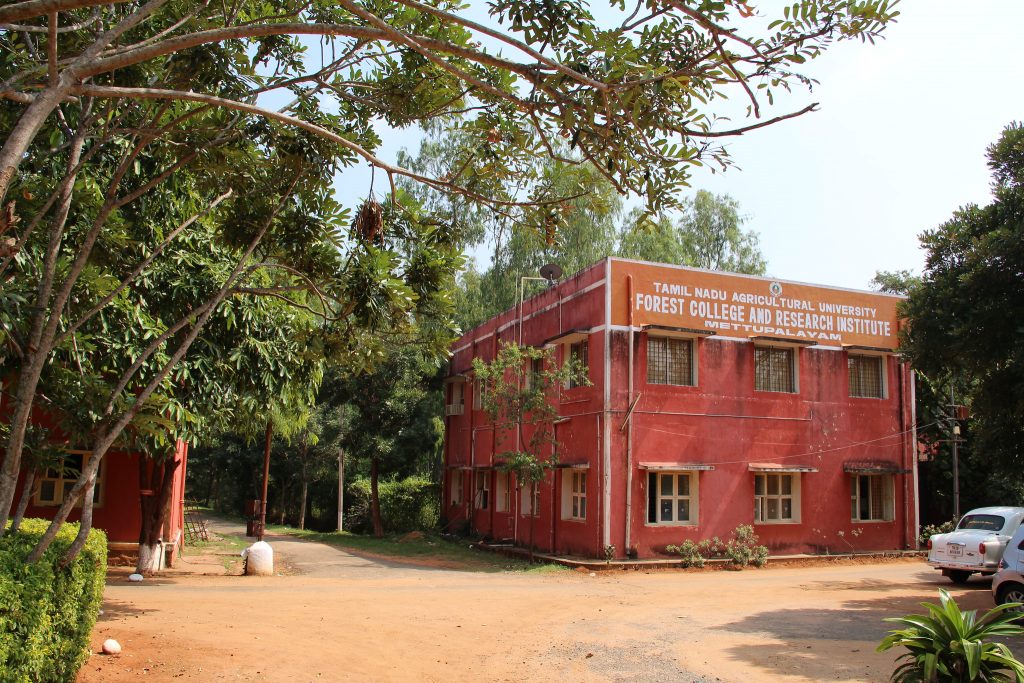
As India chases biodiversity targets, some researchers propose considering longprotected institutional campuses as Other Effective area-based Conservation Measure (OECM) sites, adding to the country’s protected area network. A case study of the CSIR-National Environmental Engineering Research Institute in Nagpur, Maharashtra, showcases the campus as a biodiversity reservoir and an ecological link in an urban environment. At the same time, experts urge caution, citing the lack of statutory backing for OECMs and the need for sustained management of campuses to secure their long-term conservation. At the 2022 United Nations Biodiversity Conference (COP15), world governments, including India, adopted the historic Kunming-Montreal Global Biodiversity Framework, whereby signatories agreed to protect and conserve at least 30% of the world’s land, coastal areas, and oceans by 2030. According to a recent analysis, India’s protected area network covers roughly 28% of its geographical area through various regulatory frameworks: protected areas under the Wildlife Protection Act, 1972; forest lands classified under the Indian Forest Act, 1927; and biodiversity heritage sites declared under the Biological Diversity Act, 2002. While that estimate is close to the 30% target for 2030, India can bridge the remaining 2% only through shared spaces and not spared spaces (national parks and sanctuaries), said Jagdish Krishnaswamy, the dean of the School of Environment and Sustainability at the Indian Institute of Human Settlements, Bengaluru. Other Effective area-based Conservation Measure (OECM) is a novel conservation instrument that falls under shared spaces. Krishnaswamy defines OECM sites as “any land or waterscape that is not part of the protected area system, but where biodiversity is a core benefit simply because of the way that area is managed”. In 2022, India formally declared the Aravalli Biodiversity Park in Haryana as its first OECM site. In a document prepared by the Ministry of Environment, Forest and Climate Change (MoEFCC), the National Biodiversity Authority of India (NBA), and the United Nations Development Programme (UNDP), 13 more sites across the country were identified and mapped as “potential OECMs”.
Institutional campuses could expand India’s conservation network, but challenges remain
Institutional campuses could expand India’s conservation network, but challenges remain