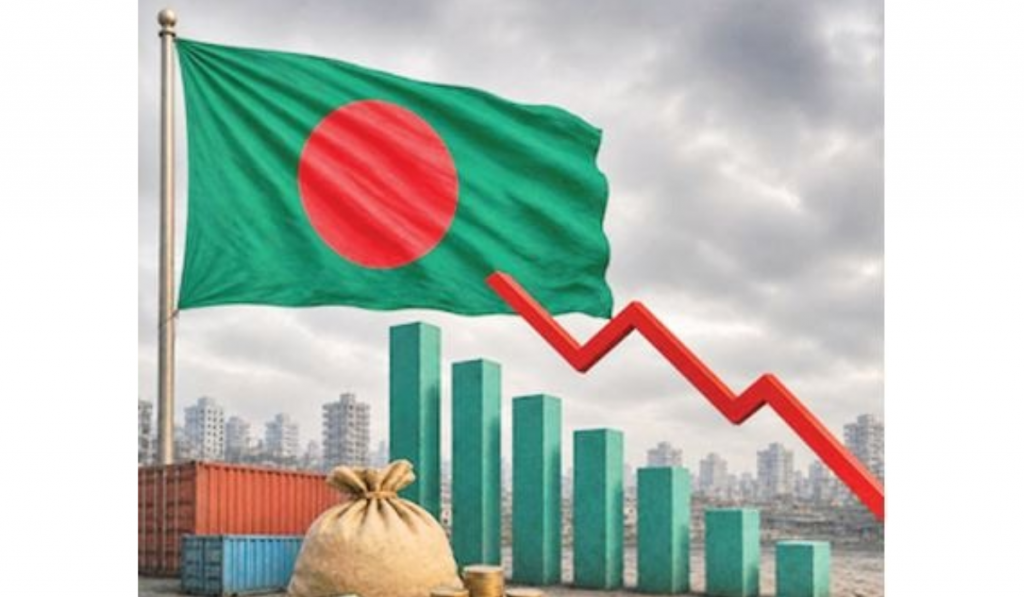
Bangladesh’s economy is confronting three interconnected crises, namely slowing growth, a widening trade deficit and severe banking-sector weaknesses. These risks make economic stability difficult and creates pressure for urgent reforms. Bangladesh’s economic growth slowed to 3.4 per cent in fiscal year 2025-26 and is expected to remain flat in FY27, well below the government’s 6.5 per cent target. The IMF projected growth of 3.2 per cent for FY27 and average inflation of 10.9 per cent, highlights concern over weakening real incomes and rising poverty risks. Though remittances so far helped prevent the country’s external accounts from crisis. Exports and foreign investment must increase to prevent an enormous trade deficit to prevent an economic collapse. Bangladesh Bank data showed imports rose 8.6 per cent year-onyear to $6.44 billion in July FY27, while exports reached $4.35 billion, widening the trade deficit to $2.09 billion. The banking sector presents the most acute of the three crises. According to Bangladesh Bank’s latest Financial Stability Report, the banking sector’s capital adequacy ratio (CRAR) had turned negative by the end of 2025. The banking sector restructure will require nearly 10 per cent of GDP, while, the FY2026-27 budget reportedly allocated only Tk 40,000 crore to support weak banks and financial institutions, far less than estimated requirement of Tk 6 lakh crore. When banks weaken, credit flows contract. In January 2026, privatesector credit growth fell to 6.03 per cent, one of the lowest levels in the past decade. A contraction in credit restricts investment and employment, further undermining economic growth.
Intertwined growth, trade and banking crises in B’desh