


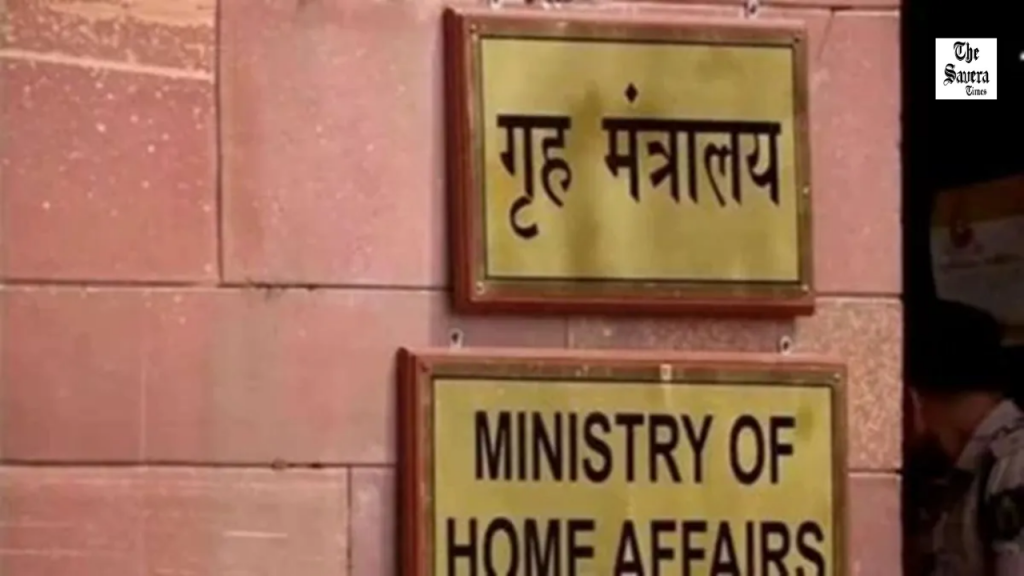
NEW DELHI, INDIA — In a significant policy change affecting Indian Police Service (IPS) officers, the Ministry of Home Affairs (MHA) has made it mandatory for IPS officers to complete a minimum of two years of Central deputation at the rank of Superintendent of Police (SP) or Deputy Inspector General (DIG) or an equivalent level to be eligible for empanelment as Inspector General (IG) or equivalent at the Centre. This revised guideline applies to officers of the 2011 batch and onwards and aims to ensure that senior law‑and‑order officials have substantial Central government experience before assuming top leadership roles in national security and policing agencies.
New Eligibility Criteria for IG Empanelment
Under the updated guidelines issued by the MHA, IPS officers who wish to be considered for IG‑level positions at the Centre — which include command roles in Central Armed Police Forces and other key security organizations — must first accrue a minimum of two years of Central deputation experience at the level of SP, DIG or equivalent. Officials have clarified that this requirement is intended to broaden officers’ professional exposure beyond state postings and help them develop a more robust understanding of national security operations before being entrusted with senior leadership duties at the national level.
The revised policy was communicated to state governments and Union Territory administrations through official letters on January 28, 2026, directing them to ensure that IPS officers in their cadres are informed about the new eligibility conditions. The change is expected to apply to officers from the 2011 batch onwards, meaning that those ahead in seniority will need to plan their career progression with this new requirement in mind.
Policy Rationale and Broader Context
According to the MHA, the mandatory Central deputation stint is designed to enhance the operational readiness and administrative capability of IPS officers before they are promoted to senior posts at the Centre, including IG and equivalent ranks. Central postings expose officers to a wide range of challenges in national security, inter‑agency coordination and policy implementation — experiences that are seen as valuable for higher command roles within agencies such as the Border Security Force (BSF), Central Reserve Police Force (CRPF), Central Industrial Security Force (CISF) and other central organizations.
Previously, the requirement for central experience at the SP or DIG level was less strictly defined, often leading officers to qualify for IG positions without significant Central exposure. Under the new rules, officers who have not completed the mandated two‑year central stint will no longer be eligible for consideration for IG‑level empanelment at the Centre, emphasizing the importance of diverse administrative experience across both state and Central assignments.
Impact on Career Planning and Cadre Posts
For many IPS officers, this amendment will necessitate longer or more strategic planning for career progression, as postings at the Central level will become not just an opportunity but a requirement for advancement beyond DIG. Experts say the shift could influence how state cadres manage deputations, with greater emphasis on sending capable SPs and DIGs to Central postings early enough in their careers to meet the two‑year prerequisite.
State police leadership and federal authorities will need to coordinate closely to ensure that officers complete their central tenure within the prescribed timeframe, and that there are sufficient opportunities for such placements. The revised rule brings the IPS cadre in line with similar practices seen in other All India Services, where Central experience is often a key factor in eligibility for senior appointments.
As policing and security challenges grow both domestically and internationally, the MHA’s move reflects a broader effort to strengthen leadership preparedness and enhance the overall effectiveness of India’s IPS leadership at the national level.