


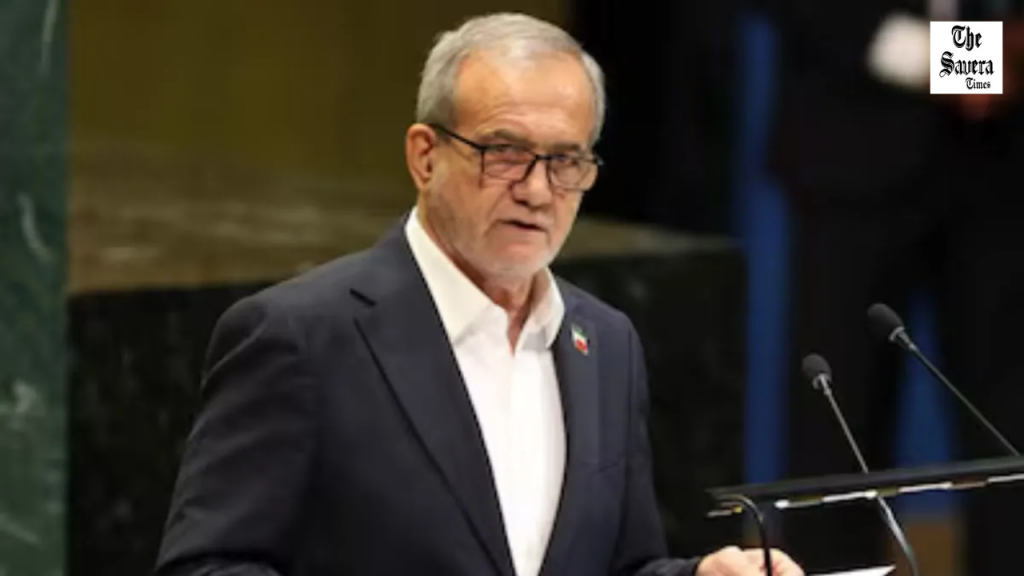
Iran has issued a rare apology to neighbouring Gulf nations after missile and drone attacks targeted several cities including Dubai, Abu Dhabi and Doha amid the ongoing regional conflict involving the United States and Israel. Iranian President Masoud Pezeshkian acknowledged the strikes and expressed regret over the instability caused in neighbouring countries.
In a televised address, Pezeshkian said Iran did not intend to escalate the conflict beyond its immediate adversaries and apologized to neighbouring states that were affected by the military operations. He also stated that Tehran would avoid launching further strikes on neighbouring countries unless they directly attack Iran.
The apology marks one of the first diplomatic signals from Iran indicating a willingness to reduce tensions with Gulf countries after days of intense military activity across the region.
Missile and drone strikes hit several Gulf locations
The apology came after Iranian forces launched a wave of missile and drone attacks across the Gulf region, targeting locations believed to host US military facilities. Cities in the United Arab Emirates and Qatar, including Dubai and Doha, reported explosions and missile alerts as air defence systems intercepted incoming projectiles.
Authorities in the UAE confirmed that air defence systems intercepted multiple ballistic missiles and drones aimed at the country. Debris from intercepted missiles caused minor incidents in some areas, including around Dubai International Airport, leading to temporary flight disruptions.
In Qatar, missile alerts were issued across the capital Doha, prompting residents to seek shelter while defence systems intercepted several incoming threats.
Conflict linked to US-Israel strikes on Iran
The attacks on Gulf cities came as part of Iran’s retaliation following coordinated military strikes by the United States and Israel on Iranian military and nuclear infrastructure. The conflict has escalated rapidly over the past week, expanding into several parts of the Middle East.
Iran has responded by launching missile barrages toward Israeli territory and targeting US-linked facilities in the Gulf region. The strikes have raised fears that the conflict could widen into a broader regional war affecting multiple countries.
According to reports, the war has already caused significant casualties and damage to infrastructure in several countries involved in the conflict.
Air travel and daily life disrupted
The missile attacks and rising tensions have also disrupted air travel and economic activities across the Gulf. Several airlines temporarily suspended or rerouted flights as airspace restrictions were imposed in parts of the Middle East.
Dubai airports experienced brief disruptions after missile debris fell near the facility, while Qatar and other Gulf nations also restricted flights due to security concerns.
Public safety measures were introduced in multiple cities, with authorities sending emergency alerts to residents advising them to stay indoors during missile warnings.
Gulf nations and global leaders urge restraint
The strikes have triggered strong reactions from Gulf governments and international leaders, many of whom have called for immediate de-escalation. Diplomatic channels are being used to prevent the conflict from spreading further across the region.
Several Gulf states have expressed concern over being drawn into a wider war due to the presence of US military bases in their territories. Analysts say the situation remains fragile as continued military exchanges could destabilise the entire Middle East.
Iran says conflict should not spread to neighbours
Despite the escalation, Iran’s leadership has stressed that its conflict is primarily with the United States and Israel, not with neighbouring Gulf countries.
President Pezeshkian reiterated that Iran’s military actions were aimed at strategic targets linked to the ongoing war and that Tehran does not want to expand hostilities to the wider region.
However, analysts caution that the situation remains unpredictable, and any further military incidents could quickly reignite tensions.
Regional stability remains uncertain
Although Iran’s apology and statement about halting strikes against neighbouring states has been viewed as a potential step toward de-escalation, the broader conflict between Iran, the United States and Israel continue.
Military operations are still underway in parts of the region, and diplomatic efforts are ongoing to prevent further escalation. Experts warn that the coming days will be critical in determining whether the crisis moves toward dialogue or expands into a larger regional conflict.