


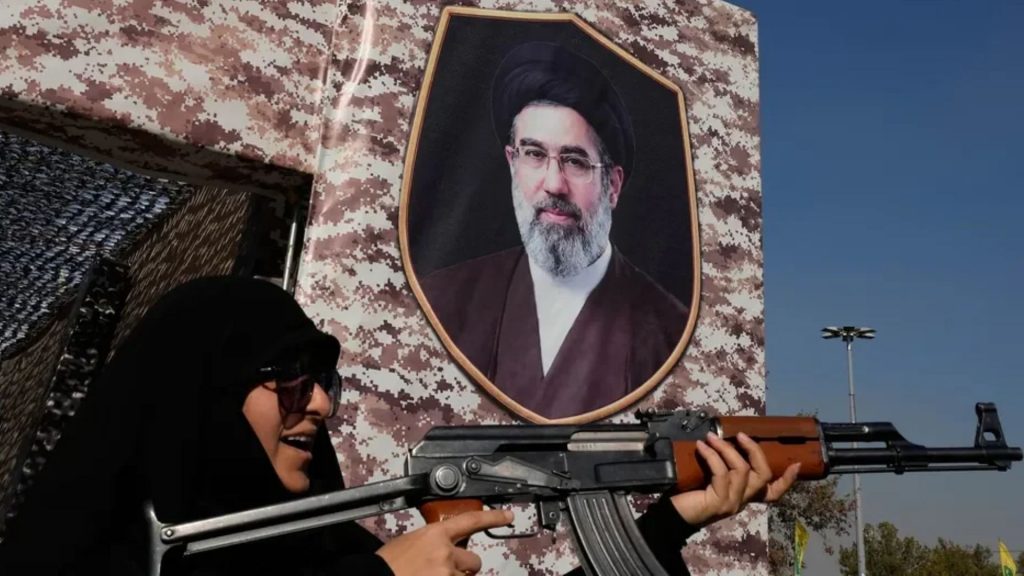
Iran: Despite months of attacks by the US and Israel on Iran’s military bases and defense infrastructure, Iran maintains a large stockpile of 1,500 to 2,500 missiles. This information citing US intelligence assessments. According to the report, Iran has the capability to target US and allied military bases if war breaks out between the two sides again.
US officials told the WSJ that this estimate is not entirely certain, as it is difficult for intelligence agencies to determine how many missiles Iran has ready to fire immediately and how many are stored. However, officials believe Iran still possesses a large stockpile of missiles. Israeli military officials have also estimated that Iran possesses more than 1,500 ballistic missiles.
Simone Lyden, who served as Deputy Assistant Secretary of Defense for Gulf Affairs during US President Donald Trump’s first term, said that if Iran possesses even 1,500 missiles, it means it has replenished more than half of its estimated pre-war stockpile. According to her, Iran replenished its entire missile stockpile between the 12-Day War in June 2025 and the current war that began in February this year.
Iran increasing missile stockpile after US-Israeli attacks
Despite heavy damage to missile-manufacturing facilities during the US and Israeli military campaign, Iran is continuing to strengthen its weapons stockpile. According to US officials, Iran is primarily using parts stockpiled before the war. However, missile production is progressing at a slower pace than before.
Iran also possesses a large number of drones and short-range missiles. It has been targeting US military bases, radar systems, and early warning infrastructure in the Gulf region with ballistic missiles and drones.
These attacks have damaged US military assets. Subsequently, many military bases and resources have been relocated to Israel, where US and Israeli officials believe they can be more secure there.
Why is it difficult to accurately estimate Iran’s missile stockpile?
Ascertaining the exact number of missiles Iran possesses remains a challenge for intelligence agencies. This is largely due to Tehran’s strict secrecy regarding information about its military capabilities. Furthermore, Iran has numerous missile manufacturing facilities, and there is no clear estimate of how many new missiles can be manufactured from finished parts stored in underground facilities.
Jim Lamson, a visiting research fellow at King’s College London and a former CIA analyst who has worked on Iran’s military activities, said that these factors make it difficult to reliably estimate the number of missiles. Uncertainty about how many missiles Iran possessed before the war also complicates assessments.
He told the WSJ that, based on his experience working for the government, he knows that such estimates can be highly uncertain, even with the availability of classified intelligence.
A key objective of the joint US-Israeli military operation was to destroy Iran’s ballistic missile capability. Both countries claimed success after their attacks. Israeli Prime Minister Benjamin Netanyahu also claimed that Iran’s missile program had been destroyed and that its remaining missiles were about to be exhausted.
However, an Israeli military official acknowledged that Iran is recovering from the attacks and is preparing for another major military confrontation.
Bilal Saab, senior managing director of Trends US, a Washington-based geopolitical risk advisory firm, said that Iran’s military strength should not be judged solely by the number of its missile stockpiles. It is also important to consider how Iran uses its weapons and what strategic lessons its military commanders have learned from past conflicts.
Trump considering postponing new attacks on Iran
Meanwhile, US President Donald Trump has reportedly considered postponing new military strikes on Iran for the time being. However, this is conditioned on the condition that Tehran and the Iran-backed Houthi rebels in Yemen do not take any action that could provoke the US.
According to a Reuters report, Trump has also taken into account the concerns of Gulf allies, including Saudi Arabia and Turkmenistan, who have urged him not to resume a full-scale war. They believe Iran’s economy is already under pressure due to economic sanctions and the US naval blockade.
On Thursday, Trump said he could end the conflict immediately, but at the request of countries whose security responsibility the US wants to assume, he is prolonging it in a more peaceful manner.