


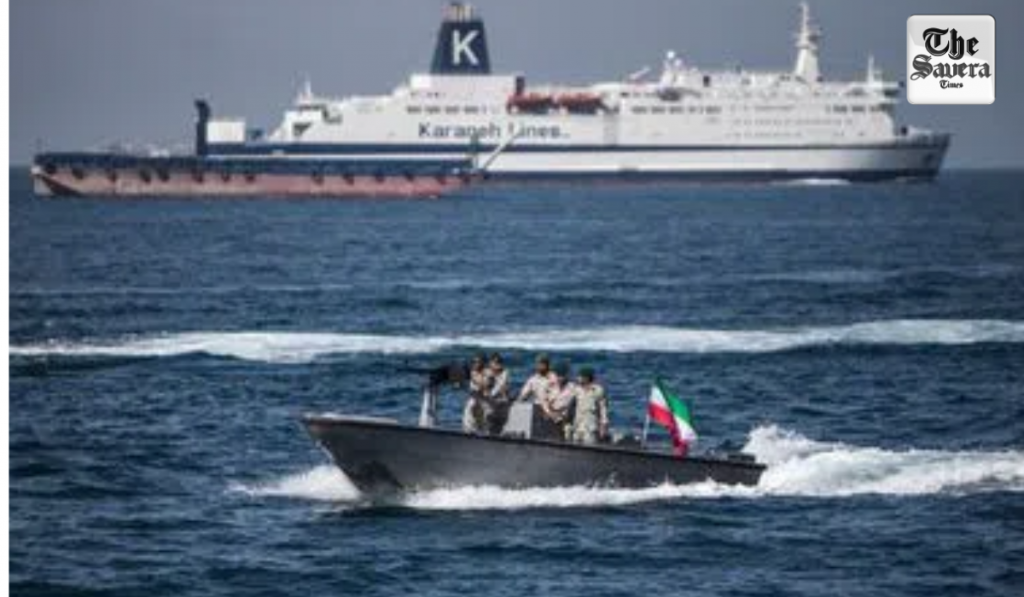
Iran and Oman have agreed on shipping routes for vessels passing through the strategic Strait of Hormuz, though technical discussions are continuing and a broader agreement governing traffic through the waterway has not yet been finalised.
Iranian Foreign Ministry spokesman Esmaeil Baghaei said negotiations between the two countries had progressed smoothly over the past three weeks. However, discussions were still underway on certain issues, including a joint statement expected to be issued by Tehran and Muscat.
“There are still some matters where discussions continue, particularly regarding the joint statement that is to be released by Iran and Oman,” Baghaei said, adding that further information would be shared once the arrangement is finalised.
Iran and Oman Agree on ‘Shipping Map’
According to Iranian authorities, the two coastal countries have agreed on a “shipping map” for vessels transiting through the Strait of Hormuz.
The remaining discussions will focus on technical aspects of the proposed arrangement. The framework has been negotiated independently by Iran and Oman, with the United States not participating in the talks.
The proposed mechanism is aimed at ensuring the safe passage of ships while protecting the sovereignty and sovereign rights of both countries.
However, Iranian authorities have not yet clarified whether ships using the designated routes will be required to pay transit fees or what security arrangements will be put in place.
Agreement Does Not Mean Immediate Reopening of Strait
The agreement on shipping routes does not mean that the Strait of Hormuz will immediately return to normal commercial operations.
Iranian Foreign Minister Abbas Araghchi said the reopening of the waterway remained a separate issue and would depend on other conditions that Tehran expects the United States to fulfil.
“Reopening the waterway is a separate issue. It depends on fulfilling other conditions that the US must abide by for it to take place,” Araghchi said.
Iran has remained in contact with mediators carrying messages between Tehran and Washington. However, Araghchi stressed that these exchanges should not be considered direct negotiations between the two sides.
“This does not constitute negotiation. We have not yet made a decision to resume negotiations with the US,” he added.
Trump Makes Fresh Claim Over Strategic Waterway
Meanwhile, US President Donald Trump made a fresh claim on Friday regarding the Strait of Hormuz, a vital global route for oil and gas shipments that has remained at the centre of tensions during the nearly six-month-long US-Iran war.
Trump said that after the US defeats Iran, he would declare the Strait of Hormuz as a territory of the United States.
“After we finish defeating Iran, which is being very badly defeated, pretty soon, I’ll be declaring the Hormuz Strait a territory of the United States,” Trump said.
The Strait of Hormuz remains one of the world’s most strategically important maritime routes, and the latest Iran-Oman arrangement could help establish a framework for safer navigation. However, with technical details still under discussion and the broader issue of reopening the waterway unresolved, uncertainty continues over when normal commercial shipping through the strait will fully resume.