


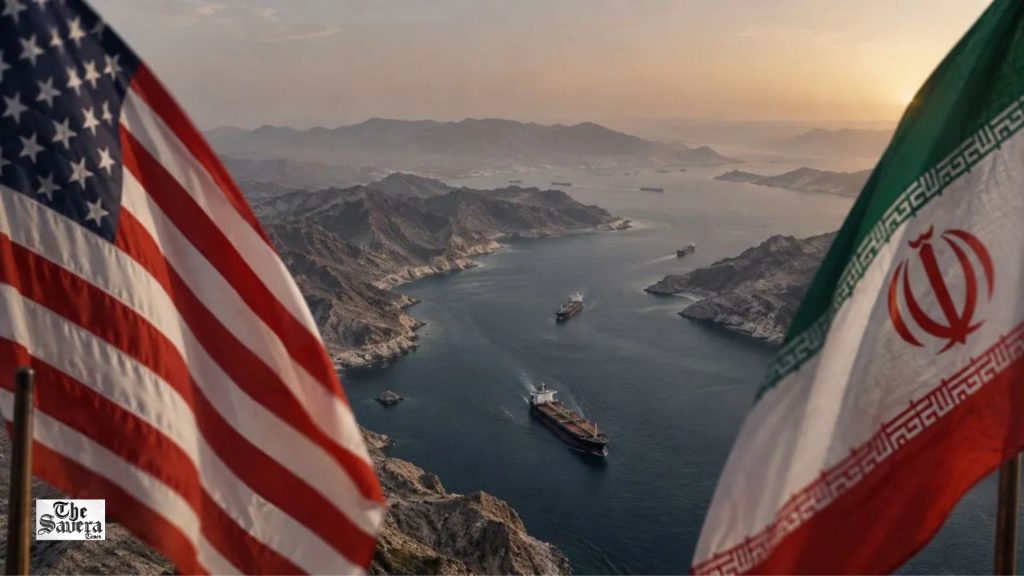
New York: Iran has indicated that the strategically important Strait of Hormuz could be reopened within seven days if the United States eases military pressure and lifts its blockade on Iranian ports, according to a senior Iranian official cited by Reuters.
The proposal comes amid heightened tensions between Washington and Tehran and as Iranian President Masoud Pezeshkian travels to New York for the United Nations General Assembly. Tehran has indicated that its delegation has authority to pursue diplomatic efforts aimed at ending the conflict.
Iran Sets Conditions For Reopening Strait Of Hormuz
According to the Iranian official, Tehran is prepared to reopen the Strait of Hormuz within a week if Washington takes initial steps to ease military pressure and end the blockade of Iranian ports. Iran would then seek to resume negotiations aimed at reaching a longer-term agreement to end hostilities.
The development comes after Iran’s military central command warned that any renewed US military operations, particularly those supported by regional countries, could trigger retaliation from Tehran.
Iran had also reportedly sent a proposal to the United States through mediators on September 16. Iranian officials have said the UN General Assembly could provide an opportunity to revive diplomatic engagement if Washington demonstrates a willingness to negotiate.
However, there is currently no confirmed agreement between Iran and the United States on reopening the waterway.
Why Strait Of Hormuz Is Important For Global Energy
The Strait of Hormuz is one of the world’s most important energy corridors, connecting the Persian Gulf with the Gulf of Oman and the Arabian Sea.
Before the latest conflict, the waterway handled roughly one-fifth of global oil and liquefied natural gas supplies, making any disruption a major concern for international energy markets. Shipping traffic through the strait has remained significantly below its recent average amid the regional conflict.
Iran’s proposal to reopen the route triggered a decline in oil prices on Tuesday as markets assessed the possibility of additional energy supplies becoming available. Brent crude fell below the $100-a-barrel level during trading.
Saudi Arabia has also resumed operations of its East-West oil pipeline, which provides an alternative route for moving crude towards the Red Sea and helps reduce reliance on the Strait of Hormuz.
G7 Calls On Iran To Stop Supporting Houthis
Separately, G7 foreign ministers have called on Iran to stop arming and supporting Yemen’s Houthi movement, while urging the Houthis to halt military operations and attacks on civilian shipping.
In a statement issued on the sidelines of the UN General Assembly, the G7 countries condemned continued Houthi attacks in Yemen and against Saudi Arabia and called for a return to the political process.
The G7 also said that Iranian support for the Houthis contributes to a broader pattern of escalation that could threaten international trade and global stability.
The latest developments come as diplomatic efforts around the US-Iran conflict receive renewed attention at the UN General Assembly, with the future of the Strait of Hormuz remaining closely linked to the wider security and energy situation in the region.