


Vowing to return home soon from a self-imposed exile since August 2024, Bangladesh’s former Prime Minister Sheikh Hasina said that she has considered all possibilities, including arrest, imprisonment and even a death sentence. Here is the excerpt of the interview. Question: You remain committed to returning home by December. Your resolve is strong but do you really see it happening, given the current circumstances in Bangladesh and personal risks involved? Sheikh Hasina: Look, I understand the risks very well. I may be arrested the moment I arrive. They may send me to prison. They may even try to kill me. I have considered all these possibilities. But, you know, I stopped worrying about my personal safety a long time ago. I returned to Bangladesh in 1981, despite military rule. I returned again in 2007, knowing that the military-backed government might arrest me. Question: What do you have to say about all the allegations levelled against you, including the judicial enquiry and tribunal proceedings? Sheikh Hasina: Let me make one thing very clear. I never ordered the killing of innocent people. I reject that accusation completely. Every death was tragic. As Prime Minister, I had a responsibility to protect the lives of our citizens, and I wanted to know exactly what had happened. That is why, on July 18, 2024, I established a Judicial Enquiry Commission headed by a High Court judge. On August 1, I expanded it into a three-member commission so that every incident could be examined properly. But what happened after Muhammad Yunus assumed power? Question: The current government in Dhaka has been pressing for your extradition but India has maintained it is a legal matter and the issue will be dealt with accordingly… Sheikh Hasina: I do not think it would be appropriate for me to comment on the decisions of the Indian government. India is a sovereign country. It has its own laws and procedures, and its government will decide accordingly. But I certainly hope my personal situation will not become an obstacle to relations between Bangladesh and India. Our relations go back to the Liberation War of 1971. Question: What is your view about Bangladesh’s economy and current law and order situation in the country? Sheikh Hasina: Look, I wish I could say that things are getting better. Unfortunately, the situation in Bangladesh is getting worse with each passing day, in almost every aspect of people’s lives. Just compare the economic situation. During our time, Bangladesh became one of the fastest-growing economies in South Asia. We reduced poverty, expanded electricity and healthcare, and built the infrastructure needed for longterm development Question: Serious doubts have been expressed about Awami League’s political future and attempts that have been made to erase the party’s legacy… Sheikh Hasina: The Awami League led Bangladesh’s struggle for independence. It has survived military rule, political bans and the imprisonment of its leaders. You cannot erase that history through a government order. Let me say something. People have every right to criticise me or the Awami League. They can campaign against us. They can vote against us. That is their democratic right. But the same right must be given to us. If those in power believe that the people have rejected the Awami League, why not allow us to participate in a free and fair election? Question: What does the future hold for Awami League amid the ongoing crisis? Sheikh Hasina: I have had the honour of serving Bangladesh as Prime Minister five times. I have seen how much our country achieved through the hard work of its people. And now, I see how much they are suffering. My immediate concern is to stand beside them and help restore their democratic rights. As far as the future is concerned, the Awami League has its own constitution and an established process for choosing its leadership. Question: India-Bangladesh relations haven’t been the same since your departure… Sheikh Hasina: The Awami League has always believed in maintaining good relations with our neighbours while protecting Bangladesh’s sovereignty and national interests. During our time, we strengthened relations with India while also working closely with China, Japan, the United States and other countries. I also believe that lasting relations between Bangladesh and India require democratic legitimacy and public confidence. Question: Bangladesh seems to be moving closer to China with several reports citing a possible purchase of fighter jets from Beijing… Sheikh Hasina: Bangladesh has every right to modernise its armed forces. I have always supported that. During our government, we also invested in defence modernisation and maintained cooperation with different countries, including China. But we have to ask some practical questions. Does Bangladesh need the equipment? Can the country afford it? Question: Attacks on religious minorities, particularly Hindus, continue to take place in Bangladesh. Several human rights organisations have also expressed deep concern but the situation has only worsened… Sheikh Hasina: I am deeply concerned about what is happening to religious minorities in Bangladesh. Hindus, Buddhists, Christians and people of every faith are equal citizens of our country. They have the same right to live safely, practise their religion, and protect their families and property. Unfortunately, we continue to hear about attacks on minority communities, their homes and places of worship. Many families no longer feel secure. Let me mention one painful incident. Chinmoy Krishnadas remained in prison while his mother was seriously ill. His family wanted him to see her before she died, but that did not happen.
Is this the Bangladesh you wanted: Sheikh Hasina
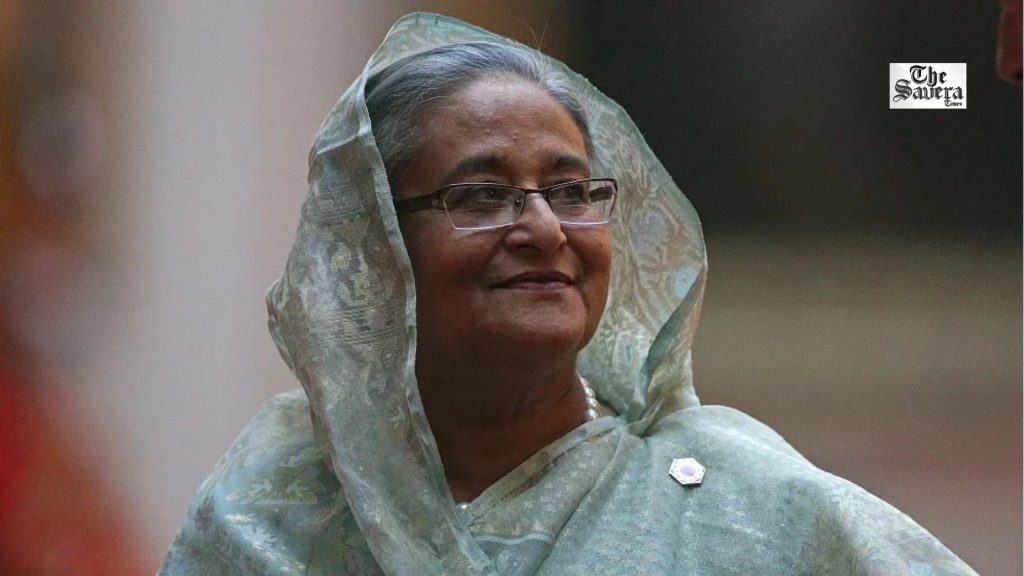
Sheikh Hasina Seeks Fresh Passport Ahead of December Return to Bangladesh