


Dhaka: Bangladesh is grappling with significant challenges amid the resurgence of a powerful Islamist movement and a growing wave of Islamist militancy following the ousting of the country’s former Prime Minister Sheikh Hasina, a report said on Tuesday.
It added that the increasing link between Pakistan’s intelligence agencies and Bangladesh’s radical Islamist party Jamaat-e-Islami exposed a deeply entrenched transnational Islamist ecosystem.
Pakistan’s Deepening Links with Islamist Groups in Bangladesh
According to the report by leading Indian think tank Usanas Foundation, Jamaat’s student wing, Islami Chhatra Shibir, has often been accused of violence and extremist recruitment, which frequently coordinates with Pakistan’s Jamaat-e-Islami and terror group Lashkar-e-Taiba (LeT).
During a rally in Pakistan’s Gujranwala on May 28, the US-designated terrorist Muzammil Iqbal Hashmi, affiliated with LeT, claimed that the terror group had collaborated with Islami Chhatra Shibir to incite campus unrest and political turmoil in Bangladesh, leading to the fall of Sheikh Hasina’s government.
Shift in Dhaka’s Foreign Policy Under Interim Government
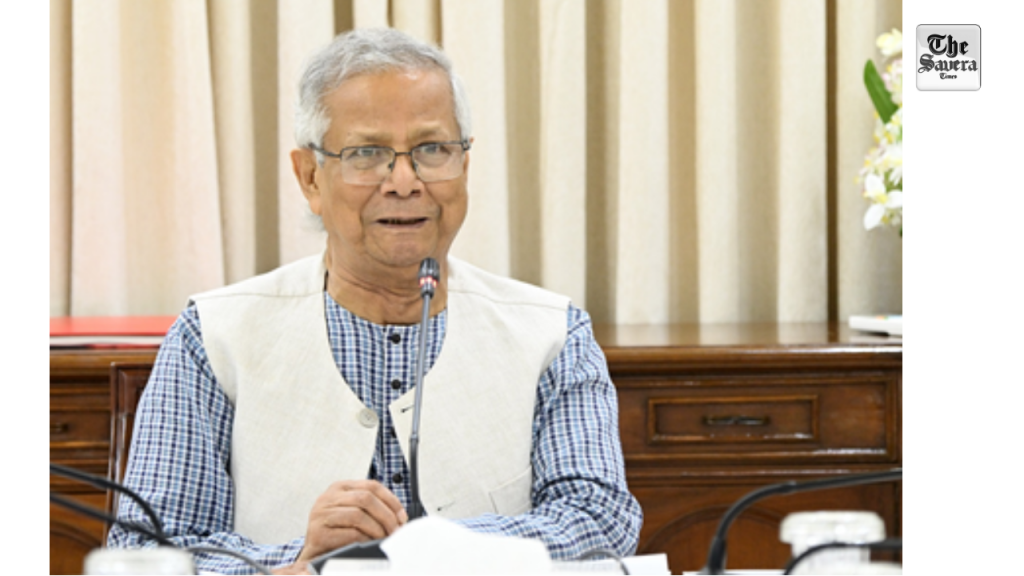
“Since Muhammad Yunus assumed the role of Chief Advisor to the interim government, he has warmed up to Pakistan, allegedly facilitating inroads by Pakistan’s supported terror and Islamist groups. Bangladesh has strategically shifted away from India as a result of the bonhomie with Pakistan.
Strengthening of Pakistan-Bangladesh ties are amply evident in Muhammad Yunus’ meetings with Pakistan’s Prime Minister Shehbaz Sharif and Field Marshal Asim Munir, leading to significant progress in trade, more relaxed visa regulations, and even joint military training initiatives between the two nations,” the report detailed.
In 2025, Pakistani Foreign Minister Ishaq Dar and senior military official General Sahir Shamshad Mirza visited Bangladesh. These meetings with top military leaders and Pakistan’s Inter-Services Intelligence (ISI) members, along with frequent high-level exchanges, point to a potential alliance with Islamist factions—a development that could strain Bangladesh’s relationship with India.
Growing Islamist Influence and Regional Security Concerns
The report further highlighted that social media has played a crucial role in amplifying Islamist narratives and embedding them within public discourse. The political and educational changes in Bangladesh have enabled Jamaat to consolidate its position as a powerful socio-political force, fueling the spread of Islamic extremism in society.
“Bangladesh’s evolving political climate has significant implications for regional security, especially concerning India. This change facilitates the emergence of extremist ideologies and cross-border terrorism, as well as raises critical concerns regarding the security situation along India’s northeastern border,” the report noted.
As regional security continues to shift, the report warned, Bangladesh faces increasing destabilisation due to the consolidation of Islamist power. The country, it said, stands at a pivotal crossroads—between preserving its pluralistic democratic identity or fostering Jamaat-e-Islami’s religious radicalism—with consequences for both regional and global stability.