


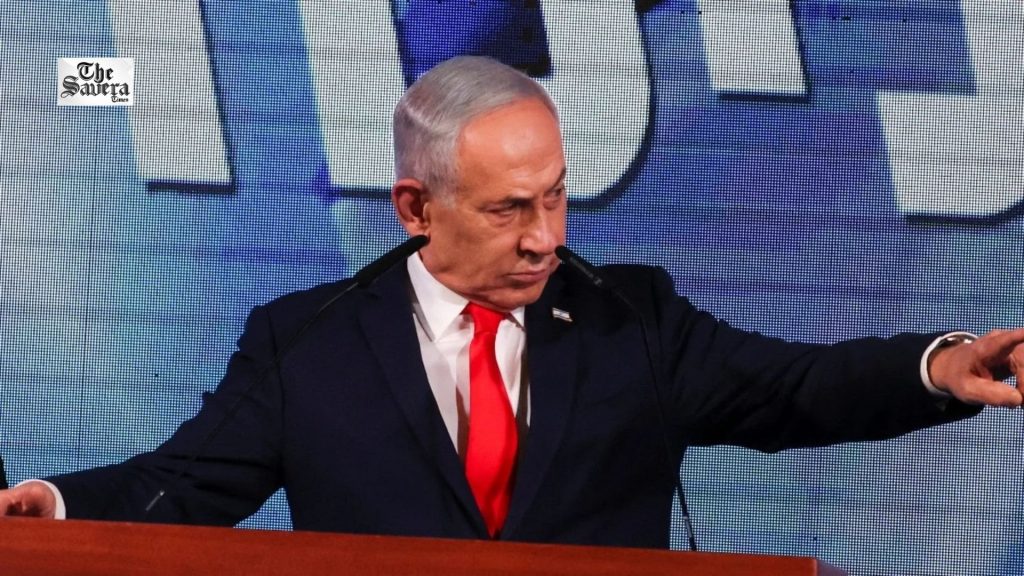
Jerusalem: Israeli Prime Minister Benjamin Netanyahu’s Likud party has alleged that the election was “stolen” by Arab-led parties after a closely contested vote left both his political bloc and the main opposition short of a clear parliamentary majority.
The election has put Arab-led political groupings in a potentially decisive position, with projections indicating that Ra’am and the Joint List could win a combined 19 seats. Their expected gains could give them significant influence in negotiations to form the next government.
Likud has raised allegations of serious electoral irregularities and called for investigations into suspected offences. However, the claims made by the party have not been established in the supplied report.
Likud Calls for Police and Shin Bet Investigations
In a statement, Likud accused Arab-led parties of attempting to undermine Israel and alleged that serious offences had been committed during the election.
“The elections in Israel were stolen by Arab parties that support terror and the elimination of the Jewish state through serious criminal offences of bribery, threats, violence, forgeries and the use of illegal software to mobilise voters,” the party said.
Likud called for a police investigation into the alleged electoral offences. It also demanded an inquiry by Shin Bet, Israel’s domestic security agency, into claims of voter fraud, intimidation and other possible violations linked to the election.
The party further alleged that prohibited software had been used to mobilise voters and called for a “thorough investigation”. It also urged the election committee to respond immediately and examine the alleged irregularities.
The supplied report did not include an independent confirmation of the allegations or findings from an investigation.
Arab-Led Parties Could Play Key Role in Government Formation
The allegations came after Ra’am and the Joint List recorded a strong electoral performance, with projections suggesting that the two groupings could secure 19 seats combined.
Their expected gains could become important in government formation talks, as neither Netanyahu’s bloc nor the main opposition appears to have secured enough seats for a clear majority.
Netanyahu has repeatedly ruled out cooperation with Arab-led parties. Their projected performance could therefore complicate efforts to assemble a governing coalition and shape the negotiations that follow the election.
With the main political blocs short of a majority, the role of Arab-led parties is likely to remain a key issue in the coming discussions. At the same time, Likud is pressing election authorities to investigate its claims of misconduct.
Israel Continues Counting Double-Envelope Votes
Meanwhile, the Central Elections Commission (CEC) has begun counting votes cast through the “double envelope” system, according to local media reports. The commission also said that the counting of regular votes had not been fully completed.
Double-envelope ballots include votes cast by people who cannot vote at their regular polling stations. These largely include Israel Defense Forces (IDF) soldiers, prisoners, medical personnel, people with medical conditions and Israeli representatives serving abroad, according to The Times of Israel.
The CEC said results had been processed from 11,712 of the 12,018 regular polling stations, representing 5,126,759 voters. The remaining polling stations were undergoing standard verification procedures.
The final outcome could affect the balance of power in parliament and determine the options available to political parties as they seek to form the next government.