


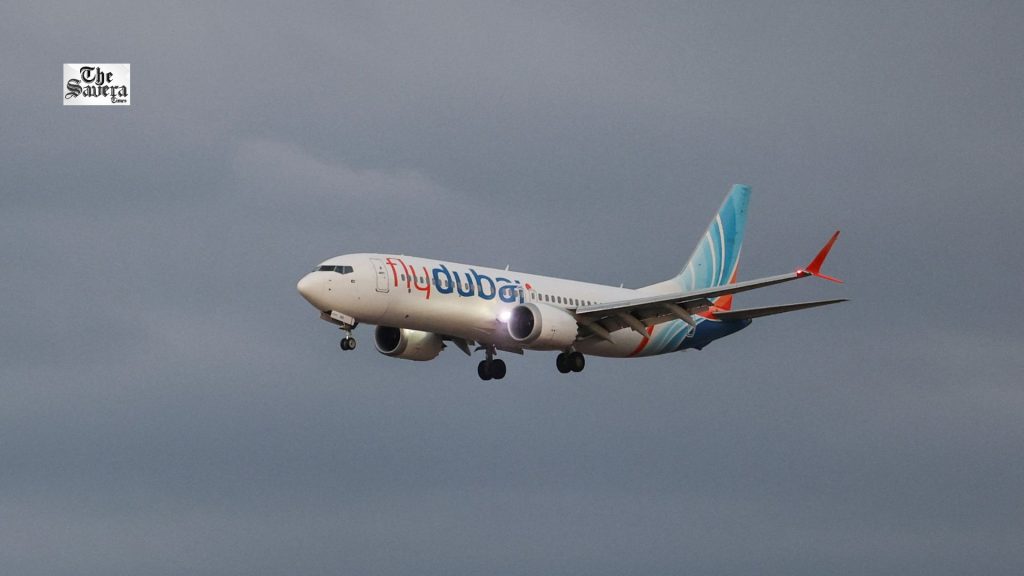
Israel was prepared to shoot down a Flydubai passenger aircraft carrying 174 people after its co-pilot allegedly attacked the captain in the cockpit and the plane plunged thousands of feet, according to a CBS News report citing two Israeli sources familiar with the situation.
Israeli Fighter Jets Scrambled After Cockpit Attack
Flydubai Flight FZ1073, travelling from Dubai to Tel Aviv on September 30, was approaching Israel when the Omani co-pilot allegedly attacked Captain Smit Machchhar with a crash axe and attempted to take control of the aircraft.
The attack triggered an emergency as the aircraft plunged about 14,000 feet, while Israeli authorities were unable to establish contact with the cockpit, according to the CBS report.
Two Israeli sources with direct knowledge of the situation told CBS that Israel activated a long-established procedure for a possible 9/11-style airborne threat. A pre-established committee was convened, a command centre was set up, Israeli fighter jets were scrambled and Israeli airspace was closed.
The fighter jets were later called back after Israeli authorities realised that the aircraft had turned towards Saudi Arabia, around 400 miles from Israel. Saudi Arabia also scrambled its own fighter aircraft as the Flydubai plane headed towards the country.
Israel Had Contingency to Shoot Down Plane
According to the two Israeli sources cited by CBS, if the aircraft had continued towards Israel and appeared to be a hijacked plane posing an imminent threat, Israeli fighter pilots would have attempted to visually assess the cockpit and cabin.
The sources said that if the aircraft was determined to have been hijacked, remained silent over the radio and showed no signs of responding to authorities, Israel’s established protocol calls for the passenger aircraft to be shot down.
Such a decision, according to the CBS report, could only have been made by the Israeli Prime Minister. The rationale behind the contingency was that a rogue passenger aircraft heading towards a major target could potentially cause mass casualties. Potential targets mentioned in the report included Ben Gurion Airport, the Azrieli buildings and other high-value locations.
Importantly, Israel did not shoot down the Flydubai aircraft, as the plane turned away from Israeli territory and eventually made an emergency landing in Tabuk, Saudi Arabia.
Captain, Passengers Helped Prevent Crash
The situation was brought under control after the injured Captain Machchhar managed to unlock the cockpit door. Passengers and crew members then entered the cockpit and subdued the co-pilot.
Two off-duty pilots who were travelling on the aircraft subsequently helped take control of the plane and land it safely in Tabuk. The aircraft had 174 people on board, most of them Israeli passengers.
The incident has since triggered investigations in several countries. The co-pilot, identified in subsequent reporting as Hamam al-Hammami, an Omani national, is accused of planning the attack before joining Flydubai. Reuters reported, citing Israeli officials, that investigators believe he had intended to crash the aircraft into Ben-Gurion Airport. The investigation remains ongoing, and authorities have not publicly established all aspects of his motive.
The case has also raised questions over aviation security and the vetting of the co-pilot. AP reported that authorities are examining how he was allowed to operate the flight despite concerns reportedly identified during the investigation.