


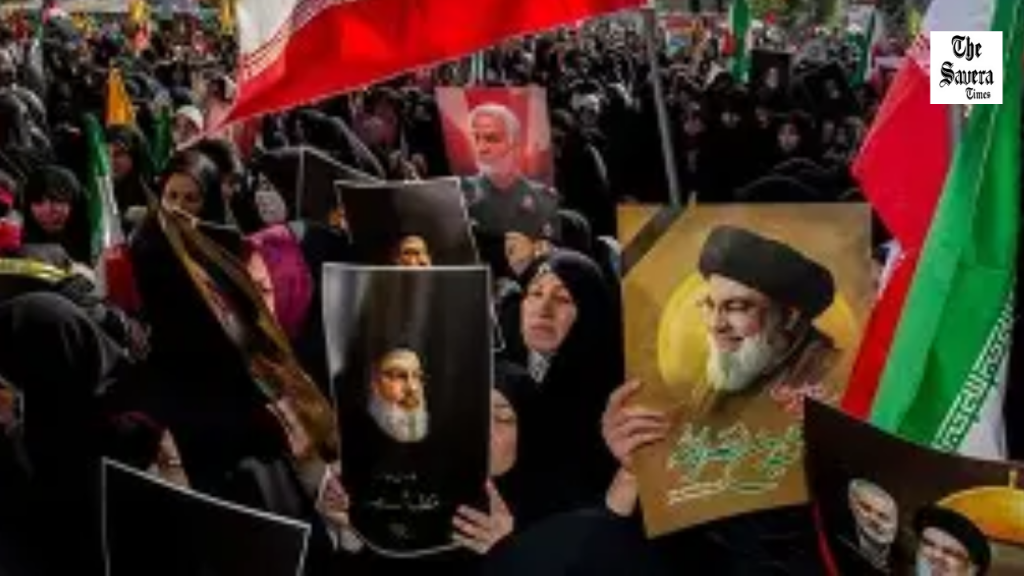
The Middle East crisis continued to escalate on Day 5 of the US-Israel military campaign against Iran, with a fresh “wave of strikes” on Tehran and growing regional fallout as Tehran prepared for the funeral of late Supreme Leader Ayatollah Ali Khamenei. The conflict, which began over the weekend with a coordinated assault by US and Israeli forces, has triggered intense retaliation, diplomatic condemnations, shockwaves in global markets, and fears of further escalation across the region.
New Wave of Strikes on Tehran


Israeli defence forces announced a renewed “broad wave of strikes” on several government targets in Tehran, including the presidential office and strategic infrastructure, marking the fifth consecutive day of intensified operations. Explosions were reported across the Iranian capital, and Iranian state media confirmed that parts of the city came under bombardment once again.
At the same time, Israel has continued airstrikes in southern Lebanon, particularly around areas viewed as strongholds of the militant group Hezbollah, part of Tehran’s wider regional network of allies.
Iran Retaliates with Missiles

In response, Iran’s Islamic Revolutionary Guard Corps (IRGC) claimed to have launched approximately 40 missiles at US and Israeli targets in the region, underscoring the tit-for-tat escalation between Tehran and its adversaries.
Iran’s retaliation has included strikes on military bases hosting American personnel, regional partner facilities, and installations linked to Israel’s security footprint which has prompted air-raid alerts and defensive maneuvers across Gulf states and Israel itself.
Funeral Preparations Amid Conflict


Despite the turbulence, Iran moved forward with preparations for the funeral of Ayatollah Ali Khamenei the country’s Supreme Leader who was reported killed in the initial US-Israeli strikes. State media announced a three-day mourning and farewell ceremony at the Imam Khomeini prayer hall in Tehran, beginning late Wednesday.
Supporters of Khamenei and ordinary Iranians were expected to gather to pay tribute to the late leader, whose death has created a leadership vacuum and political uncertainty inside Iran. Meanwhile, discussions intensified over potential successors, with state media suggesting Khamenei’s son, Mojtaba Khamenei, as a front-runner candidate a development that Israel’s defence minister later threatened to undermine.
International Reactions and Legal Criticism

The extended conflict has drawn varied global responses. Canada’s prime minister publicly stated that the US-Israeli strikes may be “inconsistent with international law”, reflecting growing unease among Western allies over the legality and justification for the offensive.
Several countries, including Spain, also voiced opposition to what they described as an unjust conflict, with some European nations resisting military cooperation with the US-Israel coalition. The United Nations and human rights bodies have called for immediate de-escalation to prevent further civilian casualties and widespread instability.
Global Market Turmoil and Energy Impact

The conflict’s effect has rippled through global markets, especially the energy sector. The Strait of Hormuz, a critical chokepoint through which roughly 20 % of global crude oil supplies flow, has been effectively closed by Iran’s threats and military activity pushing oil and gas prices sharply higher.
Stock indices across Asia, including Japan’s Nikkei 225 and South Korea’s Kospi, plunged amid fears of protracted instability and supply disruptions. Airlines have cancelled regional flights, and investors have shifted to safe-haven assets like gold and the US dollar.
Energy-importing countries such as India have expressed concern over rising fuel costs and are exploring alternative supply routes to mitigate the impact of the crisis.
Civilian Toll and Broader Escalation

Human rights organizations estimate that hundreds of civilians, including children, have been killed in the ongoing conflict, raising alarm over the humanitarian toll. Civilians in affected countries have faced displacement, loss of life, and disruptions to basic services, intensifying calls for urgent peace efforts.
Additionally, Iran has launched drones and missiles at diplomatic missions and US installations in several Gulf states, prompting multinational efforts to evacuate non-essential personnel and warn citizens about skyrocketing risks.
Uncertain Future as Conflict Widens

With fresh strikes on Tehran, mounting global criticism, volatile markets, and the looming funeral for one of Iran’s most influential leaders, the Middle East remains on the brink of wider confrontation. Analysts warn that without a clear diplomatic exit or ceasefire, the prolonged conflict could reverberate for months, reshaping regional alliances and global energy security.