


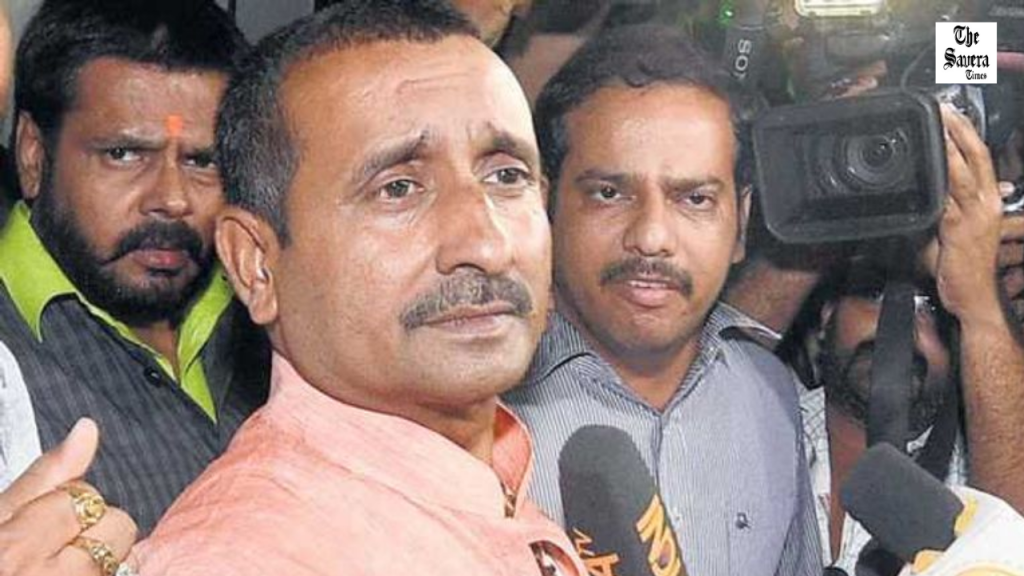
The Supreme Court of India is scheduled to hear on Monday, February 9, a bail petition filed by expelled BJP leader Kuldeep Singh Sengar in the custodial death case connected with the father of the Unnao crime survivor. Sengar has approached the apex court seeking relief from the 10‑year imprisonment sentence awarded to him by a trial court for the death of the survivor’s father while in custody. The hearing follows the Delhi High Court’s refusal to suspend his sentence in the case earlier this month.
Sengar’s appeal for bail in this custodial death case comes amid ongoing legal battles arising from the widely reported 2017 Unnao case, in which he was also convicted and sentenced to life imprisonment for the main offence. Though his sentence in the primary case had been temporarily suspended by the Delhi High Court in December 2025, the Supreme Court later stayed that order, meaning he continues to remain in custody due to the custodial death sentence.
Background of Custodial Death Case and Prior Court Orders
Kuldeep Singh Sengar was sentenced to 10 years’ rigorous imprisonment in the custodial death case arising from the 2018 death of the Unnao survivor’s father while he was in police custody. The trial court described the incident as the killing of a family’s sole breadwinner and imposed the maximum sentence under the relevant provisions. However, it did not convict Sengar of murder, instead finding him guilty of culpable homicide not amounting to murder.
In January, the Delhi High Court declined to suspend Sengar’s prison term in this custodial death case, partly citing delays in the trial process that were attributed to legal filings by the convict himself. This refusal left him in jail even after the Delhi High Court’s brief suspension of his life sentence in the 2017 conviction. The Supreme Court’s stay on the High Court’s suspension order on December 29, 2025, kept his custody intact.
Sengar’s legal team now argues before the Supreme Court that he has spent a substantial amount of time in custody and is therefore entitled to bail while his appeal against conviction in the custodial death case remains pending. The Supreme Court’s decision on Monday will determine whether Sengar’s sentence can be suspended in the father’s death case as well.
Ongoing Legal Battles in Related Cases
The custodial death case is just one of several legal matters tied to Sengar’s actions in the Unnao case, which continue to garner national attention. His conviction in the original 2017 incident involved multiple charges, including those linked to a serious inter‑state offence committed against a minor. That case resulted in a life sentence in December 2019, which remains under appeal in higher courts.
The broader Unnao case has seen intense public scrutiny and legal activity, including orders by the Supreme Court in 2019 to transfer the matter out of Uttar Pradesh to ensure a fair trial. Both the main conviction and related custodial death conviction remain active subject matters in appellate proceedings.
Implications and What to Watch
As the Supreme Court prepares to hear Sengar’s bail application in the custodial death case, legal observers note that the decision could have implications for how sentences are treated during appeals in high‑profile criminal cases. Given the complexity of overlapping convictions and sentences, the court’s ruling will be closely watched by legal experts, victim rights advocates and the general public alike.