


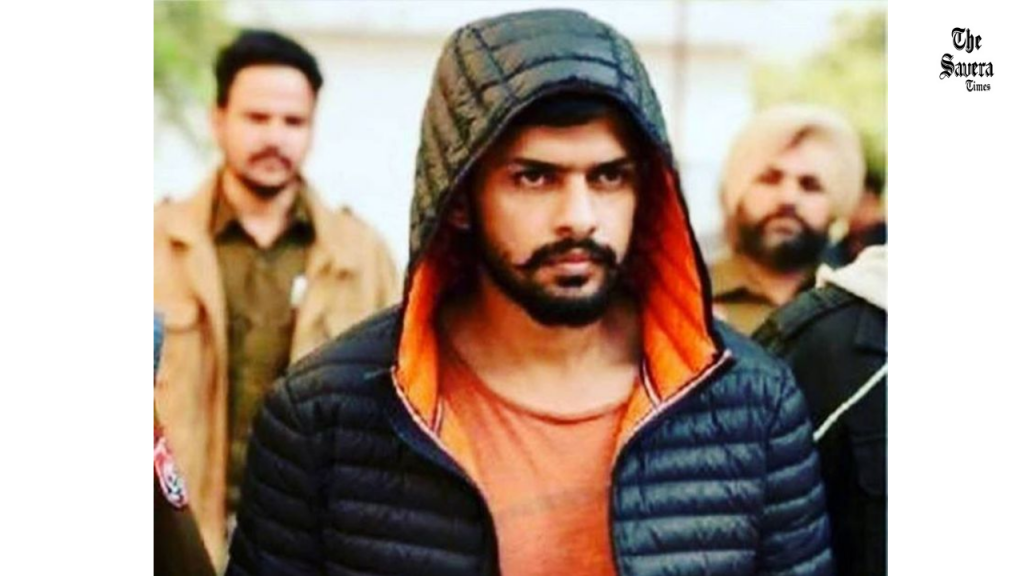
In a surprising development in a long-running case linked to college violence in Chandigarh, a key prosecution witness refused to identify gangster Lawrence Bishnoi during his ongoing trial for an attempt-to-murder case that dates back to 2012. The testimony took place on 27 February 2026 in a local court in Chandigarh, where Bishnoi appeared via video conferencing from Ahmedabad jail in connection with the decades-old case.
According to court proceedings, the witness, Navneet Singh, stated that he did not know or recognize Bishnoi when asked to identify him in court a setback for the prosecution in a case that hinges heavily on eyewitness accounts.
Background of the DAV College Clash
The case originates from a violent incident that occurred in 2012 at DAV College, Sector 10, Chandigarh, where rival student union factions clashed during a celebration. The violence escalated into a chaotic confrontation involving weapons, leaving several students injured. The police subsequently registered a case of attempt to murder and other offences against several individuals, including Lawrence Bishnoi and his alleged associates.
The original complaint was lodged by Ankit Grover, then a BTech student at Chandigarh Engineering College, who told police that he, along with friends including Charandev Singh, Navneet Singh, Arasdeep and Jeevanjot Chahal, were attacked during preparations for a “star night” event at DAV College by a group allegedly led by Bishnoi and Amandeep Singh Multani.
According to the police complaint, the accused allegedly forced entry into the college through a back gate, wielded firearms and sharp weapons, and assaulted students. This led to multiple charges under sections of the Indian Penal Code (IPC) for rioting, assault, criminal intimidation and an attempt to murder, as well as provisions under the Arms Act.
Court Proceedings and Prosecutor’s Challenges
The trial has been ongoing for more than a decade. Charges were formally framed against Lawrence Bishnoi in January 2022, and he is currently the sole accused at trial, as several other accused including Amandeep Singh Multani, Vicky Middukhera (now deceased), Tarsem Singh and Ranjot Singh were previously acquitted after earlier witnesses turned hostile during their hearings.
Witness testimony is a critical element in criminal trials, especially in cases based on alleged violent clashes. The prosecution had listed 21 witnesses in its case against Bishnoi, hoping multiple statements would corroborate their version of events. However, the refusal of Navneet Singh to recognize Bishnoi directly poses a challenge to the purported narrative of orchestrated violence.
Gangster Profile and Legal Implications
Lawrence Bishnoi now a high-profile incarcerated figure has been facing numerous criminal charges across several states. Originally linked to student politics in the early 2010s, Bishnoi’s name has since been associated with serious crimes including extortion, conspiracy and violent attacks in Punjab, Haryana, Rajasthan and Delhi.
The refusal of a key witness to identify him in this attempted murder case may impact the prosecution’s capacity to show his direct involvement. Observers note that hostile witnesses and changing testimonies have, in various criminal cases, often led to weakened indictments and even acquittals if evidence is not compelling.
Public and Legal Reactions
The case is widely viewed as symbolic of how student union politics in the region in the early 2010s occasionally devolved into violence and contributed to wider gang rivalries. Legal experts say that after years with limited evidence and witnesses turning hostile, the prosecution faces the challenge of strengthening its case or reconciling conflicting testimonies if it hopes to secure a conviction.
The court will continue proceedings in the coming weeks as both sides assess the impact of the recent testimony and prepare for further examination and cross-examination of other witnesses.