


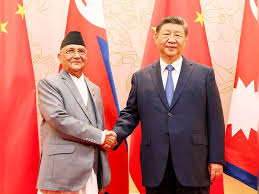
Although China congratulated Nepal and the Rastriya Swatantra Party (RSP) for its sweeping victory in the parliamentary elections held on March 5, the results have emerged as a setback for Beijing.
The RSP, led by former media personality Rabi Lamichhane and Prime Ministerial hopeful Balen Shah, emerged as the largest political party in the House of Representatives, securing nearly a two-thirds majority. Traditional political parties, including the Nepali Congress, Communist Party of Nepal (Unified Marxist-Leninist) (CPN-UML), and the Nepal Communist Party, suffered significant defeats.
While the RSP secured a total of 182 seats in the 275-member House of Representatives, the Nepali Congress won 38 seats, the UML secured 25, and the Nepal Communist Party got 17.
One of the defining features of the election results is the humiliating defeat of communist forces in Nepal, which had dominated the country’s politics for decades.
The UML, the Nepal Communist Party, and other leftist forces were ideologically closer to Beijing, which appeared to have sought to influence Nepal’s policies through them.
“The election results for the leftist forces are unlikely to please Beijing, though the northern neighbour has said it is ready to work with the new government,” said Nepal’s former Ambassador to China, Bishnu Pukar Shrestha. “They might be concerned about whether the RSP’s thumping win could invite greater US influence in Nepal.”
Opponents of the RSP had accused the party of acting in US interests. When RSP senior leader and former Kathmandu Mayor Balen Shah did not include the Nepal-China Industrial Friendship Park — planned with Chinese investment in Jhapa — in his election agenda, supporters of K P Sharma Oli criticised him of being anti-China. Following the election results, the Communist Party of China (CPC) sent a congratulatory message to the RSP. In a message issued from Beijing on March 11, the CPC extended “warm congratulations and best wishes” and emphasised its willingness to deepen political trust and promote high-quality cooperation under the controversial Belt and Road Initiative (BRI), while working towards a closer “China–Nepal community with a shared future”.
Referring to its past engagements with the RSP, the CPC said it valued ongoing exchanges between the two parties and expressed confidence that, under the leadership of Rabi Lamichhane and Balen Shah, the RSP would continue to foster friendly relations with China and strengthen bilateral cooperation. Beijing typically works with whichever party is in power and does not openly display political preference. However, many observers have perceived a tilt toward leftist forces in the past, which at times irked parties such as the Nepali Congress.
When the CPN-UML and the erstwhile CPN (Maoist Centre) merged in 2018 to form the Nepal Communist Party, many viewed it as influenced by Beijing. Before the merger, the two parties had formed an electoral alliance for the 2017 parliamentary polls, securing nearly a two-thirds majority in the 2017 parliamentary elections together.
In October 2019, Chinese President Xi Jinping visited Nepal. Just ahead of his visit, a two-day symposium for top leaders of the then-ruling Nepal Communist Party was held in Kathmandu on ‘Xi Jinping Thought’, with experts describing it as an ideological outreach by the CPC.
However, internal power struggles between co-chairs K P Sharma Oli and Pushpa Kamal Dahal ‘Prachanda’ eventually led to the party’s collapse.