


K SIVA PRASAD
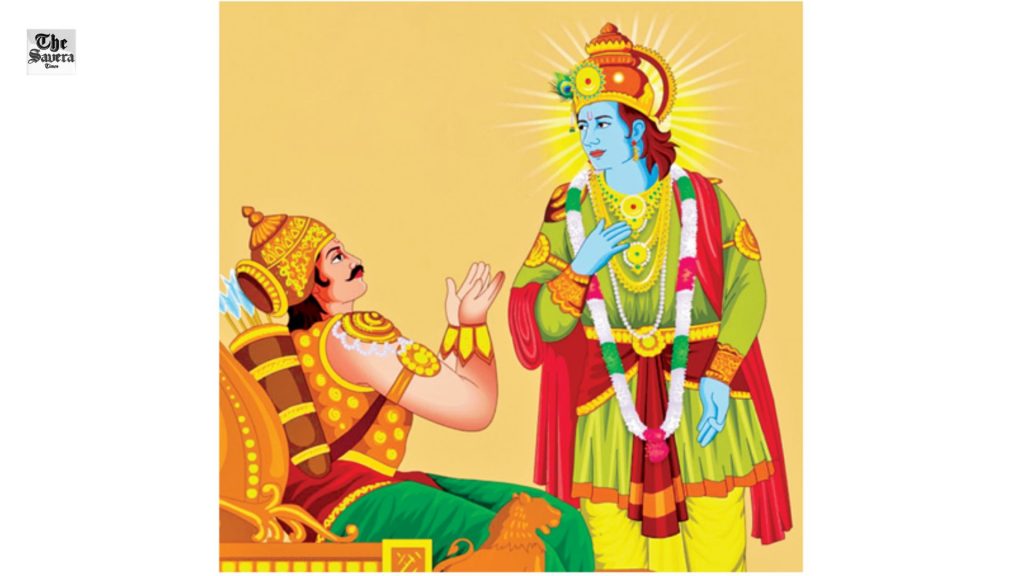
Every culture has developed dos and don’ts for peace in society, and with the development of the justice system, some don’ts have become punishable offenses. In criminal jurisprudence, the role of intentionality and execution in a crime is determined by its nature. Intention is the thought behind the crime, and execution is the physical aspect. Proof of both components is necessary to convict a person of a crime. If we consider intention as intention and execution as desire, we can understand Sri Krishna’s statement, “The great man whose actions are all in accordance with the scriptures, without desire and desire, and whose actions have been consumed by the fire of knowledge, is called a scholar even by the learned.” (4.19) Generally, society is satisfied as long as no crime is committed, even if someone moves around with criminal intent.
But Sri Krishna says that we must not only give up desire, but also give up desire. People give up desire for various reasons, such as fear of the law, lack of resources, or maintaining one’s reputation. But resolve is very deep, and as long as it remains alive, it always has the potential to transform into lust at a vulnerable moment. Therefore, Sri Krishna asks us to abandon not only desire but also resolve, which drives desires. From childhood, we are repeatedly told to have a strong determination and desire to achieve educational, economic, and personal growth, which makes our progress toward understanding this existential truth difficult. It is important to note that a desire is a desire, whether noble or inferior. When desire and resolve are abandoned, one attains nischal samadhi, which is freedom from attachment, fear, and anger. The karmas arising from such a state are tempered and purified by this awareness