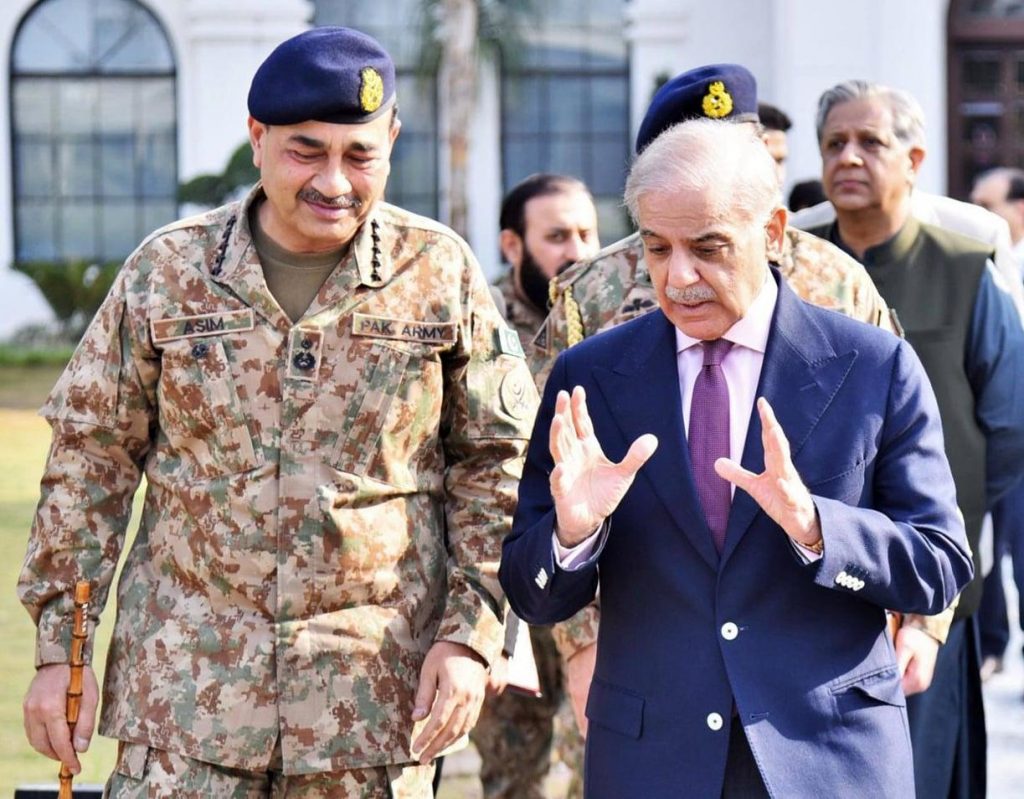
Before redrawing map, Pakistan must first address its deepening crisis of governance, accountability, and democratic representation that continues to undermine state institutions in the country. Pakistan’s political establishment’s latest proposal to redraw its provincial map is being presented as an administrative reform designed to improve governance in a country facing population growth, weak service delivery, and uneven development. Reports that authorities are considering a plan to divide four provinces of Pakistan into 12 to 15 smaller provinces, with some proposals calling for a larger network of administrative units, have sparked intense political debate. The call for more provinces comes at a time when Pakistan’s military has unprecedented influence over the political landscape of Pakistan. The restructuring of provinces has a profound impact on federalism, provincial autonomy, resource distribution and the future balance of power between elected institutions and Pakistan’s most powerful unelected actor. Proposal to create smaller provinces seems persuasive, as Pakistan’s demographic realities are undeniably uneven. Punjab contains more people than many nations, while Balochistan, which has nearly half of Pakistan’s landmass, only has a small fraction of the population. People often feel disconnected from government institutions due to vast distances, poor infrastructure and overburdened bureaucracies. However, considering provincial boundaries as the source of Pakistan’s governance failures risks shadowing the real causes of the state dysfunction. The political history of Pakistan has witnessed repeated attempts to reshape institutions through elitedriven engineering instead of broad democratic consent. Changes in the constitution, administrative decisions, and structural reforms have frequently originated from centres of power functioning above the electoral process. Considering this, any proposal related to the military establishment demands scrutiny, as it has an impact far beyond governance. Redrawing provincial boundaries would redistribute political influence, fiscal authority, and institutional power in Pakistan, making the question of authorship and intent impossible to ignore. This concern becomes more important due to Pakistan’s contemporary political environment. Pakistan’s military remains the country’s most powerful institution despite the presence of an elected civilian government. The timing of the proposal has also sparked questions on why the provincial restructuring has emerged as a national priority at a moment when Pakistan faces severe economic distress, rising public debt, sluggish growth, inflation and worsening investor confidence. Currently, Pakistan faces many challenges like economic governance, fiscal weakness, energy shortages, educational deficits, and institutional dysfunction, and none of the problems will disappear because a line on the map is moved.
Let Pakistan Address Crisis of Governance First