


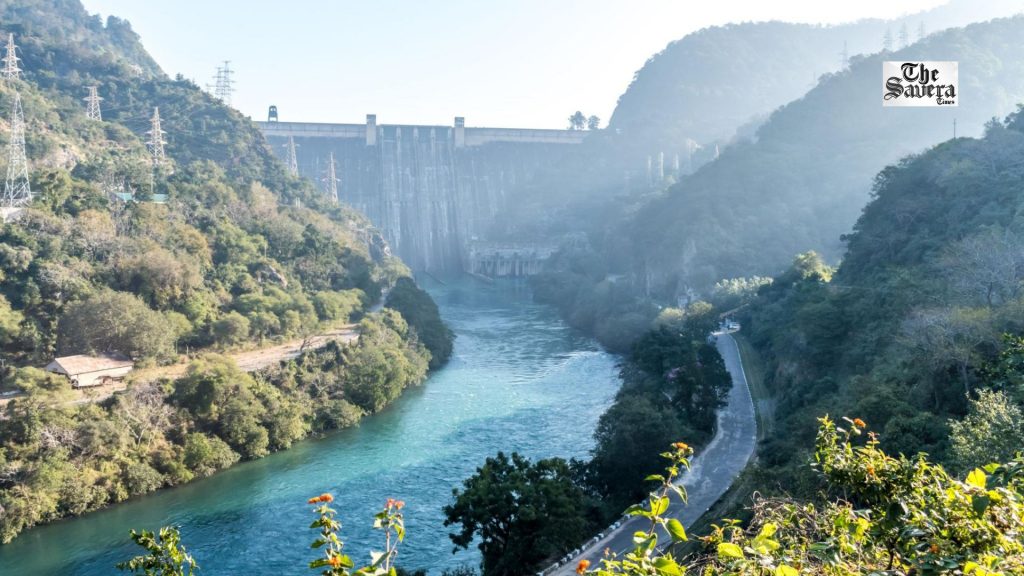
Dam management in the northern states of Punjab, Haryana, Rajasthan, and Delhi is sounding a major alert. Management says that due to a dry monsoon this year, there is concern about low water storage in these dams, including the Bhakra Dam, Pong Dam, and Ranjit Sagar Dam. Rainfall has decreased, glaciers on the higher peaks are less frozen, and due to global warming, the glaciers are melting faster, and the amount of water being released into these dams is also significantly less than last year.
Due to low rainfall and snowfall in the mountainous catchment areas, the inflow of water into all major dams has decreased. The major concern due to this reduced inflow is how much water will remain until winter. If less water remains, it will become difficult to fulfill the two objectives of these dams (one, generating sufficient electricity and the other, alleviating the water crisis by releasing water). The danger is that if the water level decreases, how will adequate water availability for electricity and irrigation be achieved in the coming months?
Compared to last year, the water level in Bhakra Dam is 35.12 feet lower. Live storage has fallen to twothirds, meaning one-third of Bhakra is empty. Now, if Punjab, Haryana, Rajasthan, and Delhi do not use this water judiciously and consume as little electricity as possible, then crisis is inevitable. Water crisis as well as power crisis. It is not just about Bhakra Dam, there is less water in Pong Dam and Ranjit Sagar Dam as well. The water level in Pong Dam on September 30 was 1367 feet which is 22 feet less than last year’s 1389.30 feet. One-fourth of the live storage is also empty whereas last year the same storage was 99 percent. On September 30, 5508 cusecs of water was received whereas last year it was 9778 cusecs.
The inflow into the Pandoh Dam was 4,619 cusecs, compared to 8,758 cusecs last year. This indicates that the worsening monsoon will severely impact the economy of these areas. The current warning is to use water and electricity judiciously, and to alter crop cycles to reduce irrigation water use. The vision is clear: prioritize addressing the environmental crisis and global warming. Instead of hoping for assistance, every citizen of the country should understand their responsibility and come forward to address environmental pollution. Only then is a solution possible.