


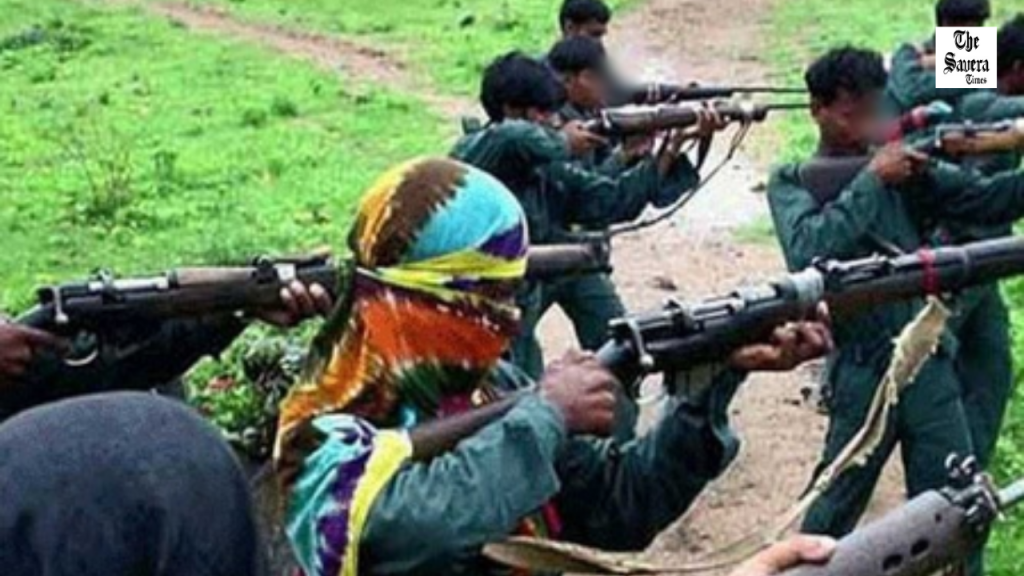
In a major success for anti-Naxal operations, 34 Maoist cadres surrendered in Chhattisgarh’s Bijapur district, carrying a combined bounty of ₹84 lakh, officials said on Tuesday. The surrender marks a significant step in the government’s efforts to curb Left Wing Extremism in the Bastar region.
The cadres laid down arms under the state government’s surrender and rehabilitation policy, citing disillusionment with Maoist ideology and internal exploitation within the banned outfit.
Senior Maoist Leaders Among Surrendered Cadres
Officials confirmed that the surrendered group included several senior Maoist operatives, some of whom were involved in violent incidents targeting security forces and civilians.
The combined cash reward of ₹84 lakh had been announced on these cadres for their alleged roles in ambushes, extortion, and sabotage activities across Bijapur and neighboring districts.
Role of Security Forces and Administration
The surrender was facilitated by coordinated efforts of the Bijapur Police, District Reserve Guard (DRG), Central Reserve Police Force (CRPF) and intelligence agencies.
Authorities said continuous area domination, targeted operations, and outreach programmes encouraged Maoist cadres to abandon violence and return to the mainstream.
Why the Maoists Surrendered
According to officials, the surrendered cadres cited several reasons for quitting the insurgency, including:
-
Disappointment with Maoist leadership and ideology
-
Harsh living conditions in forest camps
-
Increasing pressure from security force operations
-
Desire to rejoin society and live peacefully
Some cadres also stated they were misled into joining the movement at a young age.
Rehabilitation and Support Measures
Under the state’s surrender policy, the former Maoists will receive:
-
Immediate financial assistance
-
Skill development and vocational training
-
Housing and employment support
-
Protection and reintegration assistance
Officials emphasized that rehabilitation is a key pillar in ending insurgency by offering a dignified alternative to violence.
Boost to Anti-Naxal Campaign in Bastar
Security experts say the mass surrender reflects the weakening hold of Maoist groups in Bastar and surrounding regions. Increased development work, road connectivity, education initiatives and sustained security operations have significantly reduced Maoist influence in recent years.
Authorities reiterated their appeal to remaining Maoists to lay down arms and join the mainstream, assuring them of security and rehabilitation benefits.