


The Naxalbari movement began in West Bengal in the 1970s. This movement was inspired by the teachings of Maoism and advocated a violent path to change. The violent Naxalbari movement has since died down over the past half century, though its traces remain in some areas of the country’s northeast. Last year, India’s Prime Minister condemned urban Naxalism, which is flourishing among the country’s pseudo-intellectuals.
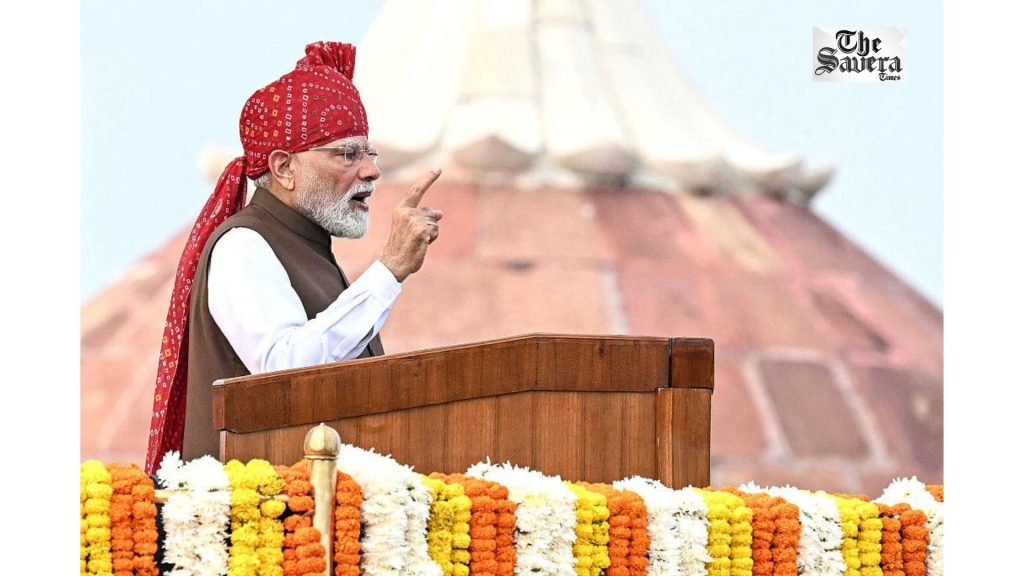
This time, while delivering a speech from the Red Fort in Delhi on August 15th, Prime Minister Narendra Modi said that mental Naxalism is flourishing among some so-called intellectuals in the country. Such people should not be given even the slightest encouragement and should be isolated from every aspect of the country. The opposition took this very seriously.
Some student leaders still sitting at Jantar Mantar took this as a reference to themselves. Now, over the past two or three days, a political storm has erupted over this. Rajya Sabha MP P. Chidambaram, responding to the Prime Minister’s comment, declared that he was proud to be a Naxalite by heart. This marked the first time that Minister Kiren Rijiju had to come forward to clarify the Prime Minister’s comment.
He stated that the Prime Minister’s comment was directed only at those separatist, traitorous leaders who want to divide the country, separate India’s Chicken Neck, and do not support the repeal of Article 370. This makes the matter very clear, but opposition leaders are claiming that Modi’s remarks were directed at them, and clarifications are being sought. Independent thinkers are saying that it is their duty to speak out against what is wrong, to oppose deviations, and to prevent authoritarianism from flourishing.
The Prime Minister repeatedly dismisses them by calling them various kinds of Naxalites, which is not true. It is a miracle of Indian democracy that people raised such questions about this speech. Rijiju has responded appropriately to these questions. Instead of stirring up such protests, it would have been much better if the Independence Day address had mentioned new steps to create jobs for the youth, eradicate corruption, and control inflation, or if there had been policy clarity on addressing the impact of warring parts of the world on our economy.