


On May 25, 2020, George Floyd, a 46-year-old Black American man, was murdered by Derek Chauvin, a 44-year-old White police officer, in Minneapolis, Minnesota, United States. Floyd had been arrested after a store clerk reported that he made a purchase using a counterfeit $20 bill. Chauvin knelt on Floyd’s neck for over nine minutes while Floyd was handcuffed and lying face-down in the street. Before being placed on the ground, Floyd had exhibited signs of anxiety, complaining about claustrophobia and being unable to breathe. After being restrained, he became more distressed, still complaining of breathing difficulties, the knee on his neck, and fear of imminent death. After several minutes, Floyd stopped speaking.
One of his colleagues present there, faced a deep moral dilemma. The officer felt a surge of moral alarm, but he said nothing; fearful of breaching an unspoken code. In interviews a year later, he admitted he had replayed the scene “a thousand times,” ashamed of the silence that had made him complicit. (Papazoglou & Anderson, Frontiers in Psychology, 2020). The officer did nothing to stop the injustice when he could.
Arjuna is told by Krishna that one must not abandon righteous duty even under strain
“Better to perish in the performance of one’s own dharma
than to follow another’s.
Following another’s path leads to great danger.”
— Bhagavad Gita 3:35
This verse establishes that moral integrity is not optional but foundational to inner harmony.
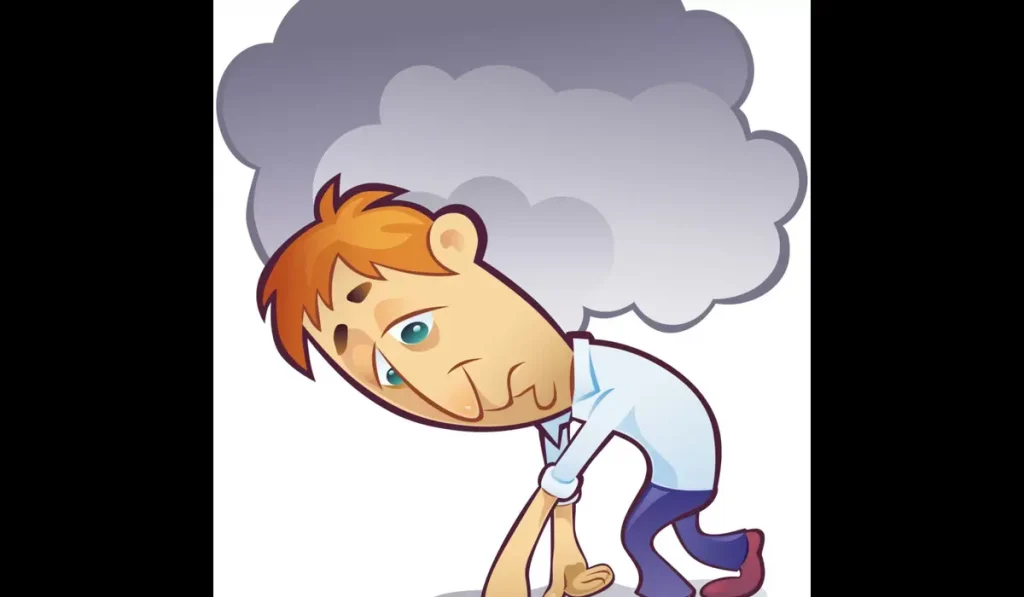
There are wounds that bloom quietly within us when we act against the grain of our own moral nature. This latter hurt, what psychologists now call Moral Injury’ is amongst the most profound forms of inner suffering.
Diana Divecha, Robin Stern from Yale write about an eight-year-old girl who returned home distraught after aligning herself with school bullies. She hadn’t bullied anyone but had laughed when the school bullies were doing their misdeeds. Earlier she had been their victim; now she tasted the brittle thrill of power borrowed from unkindness. Her small body revolted with nausea, trembling, shame. This was evidence of a moral compass thrown violently off its axis.
Science affirms that children are not morally blank. In a landmark Yale study, infants as young as six months displayed consistent preference for fair, helpful characters over harmful ones, suggesting the presence of rudimentary moral cognition from birth (Hamlin et al., Nature, 2007). Neuroscientific research shows that compassion activates reward pathways and enhances parasympathetic tone i.e biological signatures of well-being, while unethical action triggers heightened cortisol and inflammatory responses (Zahn et al., Nature Neuroscience, 2009; Litz et al., Clinical Psychology Review, 2009). We suffer, literally, in body, mind and soul when we step outside our innate ethical architecture.
“Let a man lift himself by himself; let him not degrade himself.
For the Self alone is the friend of the self,
and the Self alone is the enemy of the self.”
— Bhagavad Gita 6:5
This is the Gita’s clearest statement on inner morality; the idea that one’s salvation or suffering begins with one’s own choices.
THE PSYCHOLOGY OF VIOLATED CONSCIENCE
Moral injury differs sharply from fear-based trauma. PTSD arises from threat and helplessness; moral injury emerges from guilt, shame, moral outrage, or witnessing wrongdoing that one could not prevent.
The concept first entered clinical literature when veterans of Vietnam, Iraq, and Afghanistan described suffering not primarily from terror but from acts or omissions they believed violated their deepest values. Jonathan Shay, a pioneering U.S. psychiatrist, famously observed that their agony arose when their “moral horizon collapsed” (Shay, Achilles in Vietnam, 1994).
GLOBALIZATION OF MORAL INJURY: THE SHADOW PANDEMIC
In the second year of the pandemic, a primary school teacher in São Paulo was instructed to mark children absent if their families lacked stable internet and could not join online classes. Following the directive felt like punishing the poor, but she complied, fearing she would lose her job otherwise. When one mother called in tears, explaining she had lost her husband and could not afford data for her phone, the teacher felt a “moral collapse,” as she later described it to researchers (UNESCO–WHO Joint Report, 2021). For months she carried the weight of having enforced a rule she believed was unjust. “I didn’t fail as a teacher,” she said. “I failed myself.” It was a quiet act, but its spiritual cost was immense.
In the years following COVID-19, moral injury has moved from military contexts to civilian life with alarming speed, becoming what some researchers now term as a shadow pandemic.
In the spring of 2020, at the height of Italy’s first COVID-19 surge, a young nurse in Bergamo faced a defining moral injury. With ventilators scarce, she was instructed to prioritize a younger patient over an older man who was rapidly deteriorating. She complied, because protocol demanded it. However, she later told researchers, something inside her “broke.” She held the older man’s hand as he slipped away, whispering apologies he could no longer hear. For weeks afterward she could not sleep, convinced she had violated her own humanity. “It was the right decision,” she said, “but not for my soul” (Greenberg et al., Occupational Medicine, 2020). In that moment, her suffering did not arise from the virus outside, but from the quiet rupture within
Journalists covering humanitarian disasters have reported nightmares, self-doubt, and moral numbness. Teachers, police officers, caregivers and even corporate employees now describe similar symptoms as they overlooking injustices to keep their jobs. Researchers at the University of Oxford term this “institutional moral injury,” a growing global phenomenon driven by bureaucratic pressures and eroding public trust (Williamson et al., 2020).
This is why the World Health Organization has repeatedly warned that Moral injury, once considered rare, is now a silent pandemic.
ANCIENT WISDOM AND THE HUMAN CONSCIENCE
Greek writers have described miasma, a moral pollution that clouds the soul. Hindu philosophy speaks of adharma. Buddha’s insight is equally profound
“By oneself is one defiled; by oneself is one purified.”
(Dhammapada, 165).
Before the start of the Mahabharat, Arjuna’s paralysis arises from moral confusion. Krishna says
“Let a man lift himself by himself; let him not degrade himself. For the Self is the friend of the self, and the Self is the enemy of the self.”
(Bhagvad Gita 6:5).
HOW WE HEAL: MORAL REPAIR
Healing moral injury is neither mere apology nor self-punishment. Moral repair is the slow turning of the self, back into its own ally.
Research shows that confronting the breach without collapsing into self-hatred is correlated with reduced symptoms of depression and shame (Bryan et al., Psychological Services, 2018). Whether through apology, changed behavior, or acts of service, restorative action reduces moral residue, what psychologists call the lingering “moral wound burden” (Maguen & Burkman, J. Gen. Internal Medicine, 2013).
The Guru Granth Sahib says
“Nanak, within each and every heart, the Divine Light shines.”
(Guru Granth Sahib, Ang 1349)
The message is unmistakable, wrongdoing may cloud the light, but it cannot extinguish it.
Spiritual traditions move beyond repair to transformation. Service or Seva has demonstrable psychological benefits. Carnegie Mellon University research shows that altruism reduces inflammatory markers and improves emotional resilience (Poulin et al., 2013). Self-forgiveness, too, is biologically restorative; it reduces rumination, lowers cortisol, and improves heart-rate variability (Wohl et al., PSPB, 2008).
What spirituality offers uniquely is the possibility of moral transcendence:
the promise that one’s worst moment need not become one’s defining identity.
This is the deeper resonance behind the lines often attributed to Mother Teresa, inscribed on the walls of her orphanages in Kolkatta:
“The good you do today will often be forgotten. Do good anyway… In the final analysis, it is between you and God. It was never between you and them anyway.”
(Views expressed are the author’s own).
Parneet Sachdev, IRS is the Chairman of Real Estate Regulatory Authority and a leading author.