


Abhishek Vij
The scope of the devastation stemming from the ongoing war between the US, Israel, and Iran continues to expand. It has now been nearly two weeks since the conflict erupted. According to recent reports, Iran put forward certain conditions on its part to halt the fighting—conditions to which the US and Israel showed little seriousness. The situation has deteriorated to the point where the fighting is moving beyond military installations and is now leading to the destruction of civilian lives. Even on the 13th day of the conflict, Iran carried out heavy bombardment of oil installations in the Gulf nations. Hezbollah launched attacks on Israel using missiles and drones, resulting in injuries to 179 people. In the Persian Gulf, oil tankers traversing the Strait of Hormuz were targeted.
On Thursday, Israel also launched fierce attacks on the Gaza Strip. Entities ranging from the United Nations to China have condemned this deadly conflict. China imports 80 percent of its crude oil requirements from Iran; consequently, an oil crisis is deepening there as well. Reports also suggest that
Iran has provided assurances that it will refrain from attacking Indian oil and gas tankers passing through the Strait of Hormuz. The US, for its part, has already stated that India is free to utilize this route and may purchase oil and gas from any tankers currently stranded there. However, with the Strait of Hormuz currently under heavy bombardment, why would companies willingly undertake the immense risk of sending their tankers through this route? While faint voices calling for a diplomatic settlement are indeed being raised, the clamor of war currently drowns them out.
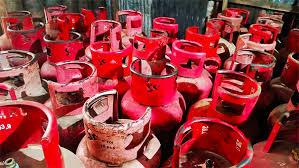
Despite the devastation wrought by the conflict, Donald Trump issued a statement asserting that the war would end swiftly; conversely, Iran has once again issued a threat, declaring that the fighting will cease only on its own terms. Meanwhile, the repercussions of this war have now clearly reached the streets of India; across cities nationwide, a crisis regarding cooking gas supplies has deepened significantly. The government has given assurances that gas supplies will be delivered to customers within two and a half days; however, the stark reality on the ground is that gas supply companies are showing reluctance to accept bookings over the phone. Discussions are also underway regarding the re-verification of KYC details. Amidst this crisis, not only commercial but also domestic gas cylinders have started being sold on the black market.
India has initiated oil procurement from 40 different countries and has also placed fresh orders to resume oil imports from Russia. Due to disruptions along the Persian Gulf route, the entire supply chain has inevitably been thrown into disarray. Government sources maintain that the country will not face any severe shortages in the immediate future; nevertheless, reports of gas scarcity are pouring in from every city. In Qatar—which accounts for 50 percent of the global gas supply—both gas production and distribution have been completely disrupted as a result of this conflict. This issue has also become a subject of political debate within the country.
On Thursday afternoon, in Parliament, Leader of the Opposition Rahul Gandhi issued a statement regarding the crisis of gas shortages. On behalf of the government, Petroleum Minister Hardeep Singh Puri responded to this statement. The government asserts that by ramping up refinery operations and procuring supplies from alternative sources, it will ensure that a gas crisis does not take hold in the country.
However, black marketeers—who thrive on creating a psychology of scarcity—are fueling public anxiety by conjuring up fears of impending gas and oil shortages in the minds of ordinary citizens. In some areas, crowds of people rushing to fill up on petrol and diesel can be seen gathering at fuel stations. Given the escalating gravity of this situation, only one solution appears clearly evident: both warring parties must engage in introspection, and this senseless, destructive conflict must be brought to an end as swiftly as possible.