


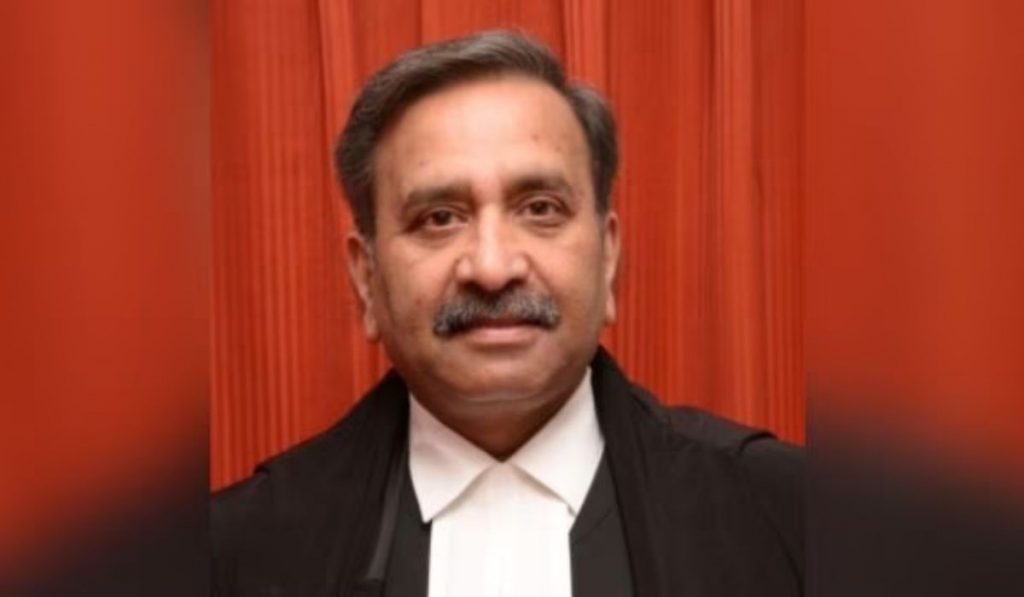
New Delhi, Aug 26: In an unprecedented development, a judicial member of the National Company Law Appellate Tribunal (NCLAT) has recused himself from hearing a case. Justice Sharad Kumar Sharma wrote in his order that a “revered member” of the country’s higher judiciary had approached him to pass an order in favour of a party.
The case relates to insolvency proceedings against Hyderabad-based real estate company KLSR Infratech Ltd. The NCLT Hyderabad bench had allowed the Corporate Insolvency Resolution Process (CIRP) initiated by A.S. Met Corp Pvt Ltd, which KLSR challenged in the NCLAT.
Justice Sharma, in his August 13 order, said:
“We observe with regret that one of us (Judicial) is being asked to pass an order in favour of a particular party by a highly distinguished member of the higher judiciary of this country. I, therefore, recuse myself from hearing the case.”
The hearing of the case was concluded on June 18, and both parties were allowed to file written submissions within a week.
The case involved an appeal filed by Attluru Sreenivasulu Reddy, the suspended director of KLSR Infratech Limited, against an order that admitted the Hyderabad-based company into the Corporate Insolvency Resolution Process under the Insolvency and Bankruptcy Code.
Sources indicated that Justice Sharma also referred to a message he had received on his mobile phone and that he showed this message to the lawyers present in court before recusing. However, the actual contents of the message were not disclosed in court and remain unknown.
This is not the first time Justice Sharma has stepped aside after reporting attempts to influence his adjudication. In June 2025, while hearing appeals involving Shri Ramalinga Mills and related companies, he recused himself after recording that a party had tried to approach him for a favourable judgment.
By placing his statement on record and refusing to hear the matter, Justice Sharma has attempted to ensure that the proceedings remain free from any appearance of bias. The appeal will now be placed before the Chairperson of the NCLAT, who will nominate a new bench to hear the case afresh.
The identity of the senior judicial figure who allegedly attempted to influence the outcome has not been revealed. The disclosure nonetheless marks one of the rare occasions where an NCLAT member has openly recorded such an approach in a judicial order.