


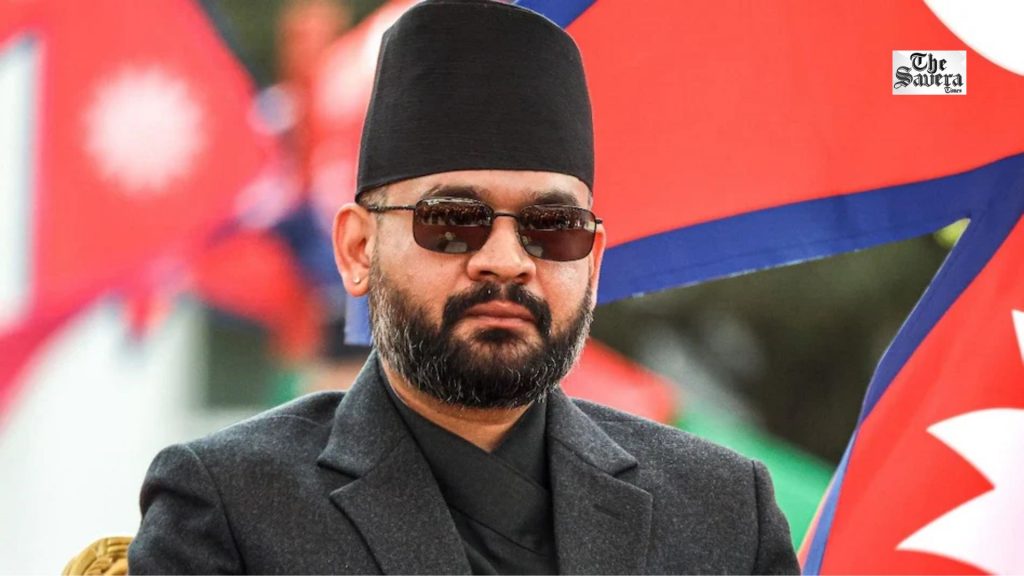
Kathmandu: Nepal is seeking a major assistance package from India during Prime Minister Balendra Shah’s proposed visit to New Delhi, expected in the final days of November. Kathmandu is looking for financial support for reconstruction, particularly after devastating floods, along with progress on long-pending issues involving trade, air connectivity, energy cooperation and border disputes.
Although neither government has officially announced the dates, officials at Nepal’s Prime Minister’s Office and Foreign Ministry have indicated that Shah could visit India on November 22 or 23.
“The Prime Minister is likely to visit India in the final days of November,” Dipa Dahal, Shah’s press adviser, said, adding that the duration of the visit had not yet been confirmed. Nepal’s Foreign Ministry has not formally proposed a specific date to the Indian side.
Nepal Seeks Reconstruction Aid After Devastating Floods
The proposed visit comes as Nepal faces extensive reconstruction needs following the floods of August 26, which caused widespread destruction. According to the National Disaster Risk Reduction and Management Authority, nearly 1,500 people were killed and more than 5,000 remained unaccounted for.
Flooding in the Bhote Koshi and Trishuli rivers swept away communities, damaged hydropower facilities and destroyed roads and bridges, causing billions of dollars in physical damage.
A senior Nepalese Foreign Ministry official said Kathmandu had been seeking substantial assistance from India even before the floods. The government now wants support for reconstruction and recovery, including Indian grants and concessional loans.
The official said Nepal would prefer assistance with fewer conditions attached so projects could be implemented smoothly and deliver visible results within a short period. However, the official did not disclose the amount Nepal intends to seek.
Nepal’s Finance Minister Swarnim Wagle has already visited India and discussed possible assistance for post-flood reconstruction.
India’s Existing Credit Support and Development Projects
India provides Nepal with grants through its regular budgetary allocations and also extends financial support through lines of credit for infrastructure development.
According to the Indian Embassy’s website, Nepal is currently using four Indian lines of credit worth $100 million, $250 million, $550 million and $750 million, amounting to a combined $1.65 billion. These credit facilities support infrastructure projects prioritised by the Nepalese government.
However, loans provided through the Export-Import Bank of India come with requirements concerning the proportion of project components that must originate in India.
During Shah’s proposed visit, the two countries are also expected to inaugurate several development projects built with Indian assistance. These include the Nepal Police Academy in Panauti, a bridge in Darchula, the integrated check post in Bhairahawa and a motorable bridge over the Mahakali River.
According to a report by The Kathmandu Post, the two prime ministers may also mark the start of construction on the integrated check post at Dodhara Chandani, the Lower Arun hydropower project and a petroleum pipeline connecting Siliguri in India with Jhapa in Nepal.
Border Disputes and Air Connectivity on Agenda
Apart from financial assistance, Nepal wants tangible progress on longstanding bilateral issues, including the border dispute involving Lipulekh, Kalapani and Limpiyadhura. Nepal claims these territories, which India considers part of Uttarakhand. The dispute remains a source of friction between the neighbours.
Kathmandu is also seeking additional international air-entry routes through Indian airspace. Around 90 per cent of international flights currently enter Nepal through a single, congested route over Simara in southern Nepal.
Nepal has been requesting additional routes for about a decade, particularly to improve access to its international airports in Pokhara and Bhairahawa. It has proposed three additional entry points through Janakpur, Bhairahawa and Nepalgunj.
India has been reluctant to approve direct, low-altitude routes through Nepal’s western and eastern corridors, citing security concerns linked to sensitive military installations, including the Gorakhpur air base, as well as air traffic management challenges.
Trade Treaty Review and Export Barriers
Nepal also wants an early review of the Nepal-India Trade Treaty, which was automatically renewed in 2023. The agreement is renewed every seven years unless either side formally objects, although individual provisions can be amended through mutual consent or letters of exchange.
Another concern is the requirement for Nepalese exporters to obtain certification from the Bureau of Indian Standards (BIS) for certain goods entering the Indian market.
Nepal says procedural delays linked to these requirements have created difficulties for exporters of cement, steel, plywood, footwear, sanitary pads, diapers and electrical wires. Kathmandu is seeking action to address these non-tariff barriers and improve trade flows.
Hydropower Projects and Regional Cooperation
Hydropower is expected to feature prominently in discussions, with Nepal considering several major projects for the agenda. These include the 750-MW West Seti project, the 480-MW Phukot Karnali project and the 450-MW Seti River-6 project, all involving India’s state-owned NHPC.
The development of Phukot Karnali has faced uncertainty following a Nepalese Supreme Court ruling requiring the Indian company to provide at least 21.9 per cent of the project’s electricity to Nepal free of charge, according to officials from Nepal’s Ministry of Energy, Water Resources and Irrigation.
Other possible subjects include cooperation on a project on the Koshi River, the Ayodhya-Janakpur railway link and Indian support for Nepal’s ambitions in artificial intelligence.
Shah’s First Proposed Bilateral Visit to India
Shah became Nepal’s prime minister on March 27 following the parliamentary elections held on March 5. India invited him to visit New Delhi after he took office. His only overseas trip so far has been to New York in September to attend the 81st session of the United Nations General Assembly.
The proposed India visit is expected to provide an opportunity for both governments to discuss financial assistance, reconstruction, infrastructure and unresolved bilateral matters. The visit dates and the specific assistance package, however, remain unconfirmed.