


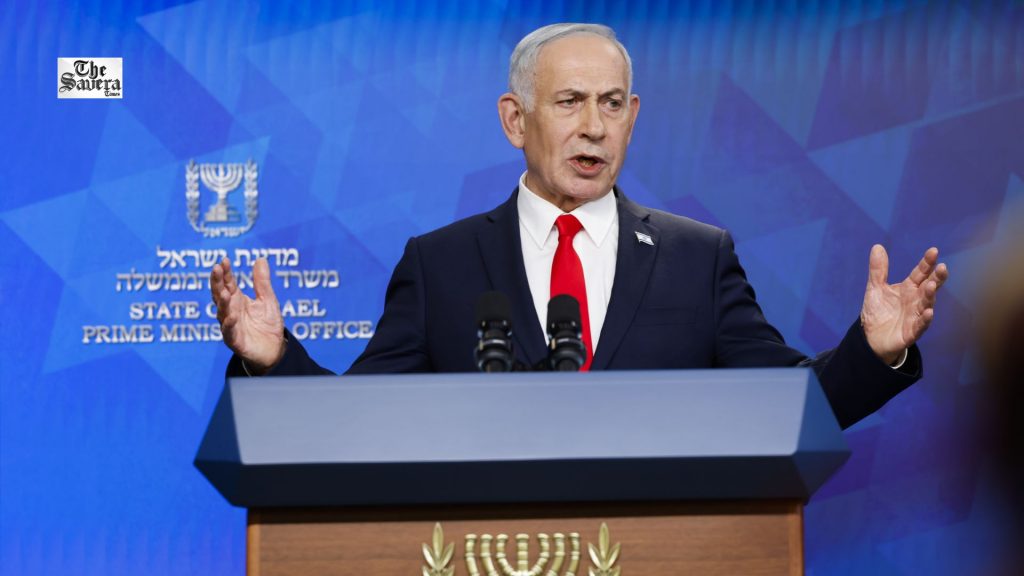
Jerusalem: Israeli Prime Minister Benjamin Netanyahu has warned that a future US president could adopt a hostile approach towards Israel, calling on the country to strengthen its international partnerships, including with India and nations in Latin America.
Presenting his security doctrine on Sunday, Netanyahu said Israel must prepare for possible changes in Washington’s policy while making the most of the remaining years of US President Donald Trump’s current term.
“In two years, a President man or woman could come to power who is very hostile to Israel,” Netanyahu said, highlighting concerns about the future of US-Israel relations.
His remarks came nine days before Israel’s October 27 election, in which he faces a challenge from former Israel Defence Forces chief Gadi Eisenkot. Trump publicly endorsed Netanyahu’s re-election bid shortly after the Israeli Prime Minister presented his security doctrine.
Netanyahu Calls for New Alliances Beyond the US
Netanyahu said Israel should continue strengthening its position in Washington while building relationships with other countries to reduce its dependence on a single strategic partner.
He stressed the need to use the remaining period of Trump’s presidency to advance Israel’s interests in the United States, even if relations become difficult in the future.
The Israeli Prime Minister also called for expanding partnerships with countries in the Middle East and beyond. He specifically mentioned India and Latin America as important areas for diplomatic outreach.
“India is not a small country, and there are many others,” Netanyahu said while outlining his approach to building new alliances.
He also pointed to political developments in Latin America, referring to Brazil as a country where a significant political shift could take place soon.
Netanyahu argued that Israel should broaden its international relationships and develop capabilities that make it a valuable partner to countries around the world.
India Remains Important to Israel’s Diplomatic Outreach
India featured prominently in Netanyahu’s remarks as he discussed the need to diversify Israel’s international partnerships.
The Israeli leader has previously highlighted the relationship between India and Israel and his ties with Prime Minister Narendra Modi. In May, Netanyahu described the relationship between the two countries as “unique” and referred to India as a “huge power”.
His latest comments place India within Israel’s broader effort to strengthen diplomatic and strategic ties beyond Washington.
The remarks come as Netanyahu prepares for a possible shift in US policy under a future administration. His comments suggest that Israel intends to maintain its close relationship with the United States while seeking stronger partnerships elsewhere.
Netanyahu’s Ties With Democratic Presidents Under Scrutiny
Netanyahu’s warning comes against the background of his often strained relations with former US presidents Barack Obama and Joe Biden, both Democrats.
Analysts cited in the source material have argued that disagreements between Netanyahu and Democratic administrations have contributed to declining support for him among some Democrats in the United States.
Netanyahu has often presented his differences with American presidents as part of his effort to defend Israel’s national security interests. Relations with Washington remain a central issue in discussions about Israel’s diplomatic and security strategy.
Gadi Eisenkot Criticises Netanyahu’s Security Doctrine
Netanyahu’s security doctrine drew criticism from Gadi Eisenkot, his main challenger in the upcoming Israeli election.
Eisenkot dismissed the document as a political exercise, arguing that it failed to offer a detailed response to the security challenges facing Israel.
“Nine days before the election and three years after the gravest failure and disaster in Israel’s history, with every war front still open, Netanyahu decided to present his ‘security doctrine’ to the public,” Eisenkot said.
He described the document as two pages of slogans and accused Netanyahu of leaving the country without a clear strategic direction.
Eisenkot also alleged that Netanyahu was using fear and political messaging to influence voters ahead of the election.
The exchange highlights the differences between the two leaders over Israel’s security priorities and diplomatic direction. While Netanyahu has called for stronger alliances and continued engagement with Washington, Eisenkot has questioned whether the Prime Minister’s proposed doctrine provides a substantive response to the country’s security challenges.