


The genetic alphabet is made up of only four letters, which represent the four nucleotides, the molecular building units that make up all DNA. Scientists have long wondered if it is conceivable to add new letters to the alphabet by synthesising new nucleotides in the lab, but the utility of this invention is dependent on whether or not cells can recognise and use artificial nucleotides to produce proteins.
Researchers at the University of California San Diego’s Skaggs School of Pharmacy and Pharmaceutical Sciences have moved one step closer to realising the potential of synthetic DNA.
The findings were published in Nature Communications, could help scientists create new medicines by designing custom proteins.
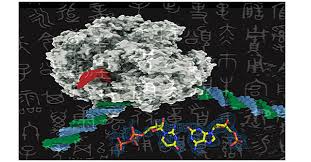
The researchers found that RNA polymerase, one of the most important enzymes involved in protein synthesis, was able to recognize and transcribe an artificial base pair in exactly the same manner as it does with natural base pairs.
“Considering how diverse life on Earth is with just four nucleotides, the possibilities of what could happen if we can add more are enticing,” said senior author Dong Wang, PhD, a professor at Skaggs School of Pharmacy and Pharmaceutical Sciences at UC San Diego.
“Expanding the genetic code could greatly diversify the range of molecules we can synthesize in the lab and revolutionize how we approach designer proteins as therapeutics.”
Wang co-led the study with Steven A. Benner, PhD, at the Foundation for Applied Molecular Evolution, and Dmitry Lyumkis, PhD, at Salk Institute for Biological Studies.
The four nucleotides that comprise DNA are called adenine (A), thymine (T), guanine (G) and cytosine (C). In a molecule of DNA, nucleotides form base pairs with a unique molecular geometry called Watson and Crick geometry, named for the scientists who discovered the double-helix structure of DNA in 1953.
These Watson and Crick pairs always form in the same configurations: A-T and C-G. The double-helix structure of DNA is formed when many Watson and Crick base pairs come together.
“This is a remarkably effective system for encoding biological information, which is why serious mistakes in transcription and translation are relatively rare,” said Wang.