


Time is counting down to Russian President Vladimir Putin’s visit to India, scheduled for December 4 and 5 in New Delhi. This will be Putin’s first visit since the start of the Russia-Ukraine war, and defence cooperation is expected to dominate the agenda. India and Russia have maintained a strong military relationship for decades, and both sides are set to review ongoing projects and explore new areas of collaboration.
A key item likely to feature prominently in the talks between Prime Minister Narendra Modi and President Putin is the proposal for a fresh contract involving a more advanced version of the S-400 air defence system, informally referred to as the S-500. Officials familiar with the discussions indicate that India is expected to push for additional regiments of this upgraded air shield, driven by the country’s evolving security needs and recent operational assessments.
To understand why New Delhi is keen on strengthening its S-400 inventory, it is important to examine the capabilities of the system. Developed by Russia’s Almaz Central Design Bureau, the S-400 is a long-range surface-to-air missile system known within NATO as the SA-21 Growler. Since becoming operational in 2007, it has gained a reputation as one of the most formidable air defence platforms available.
The S-400 is designed to detect, track and neutralise a wide range of threats, including drones, cruise missiles, ballistic missiles and even stealth aircraft. Its reach extends up to 400 kilometres, and it can hit targets at altitudes of up to 30 kilometres. One of its key strengths is its ability to manage multiple incoming threats simultaneously. The system can track nearly 160 targets at a time and engage up to 72 of them, giving it a significant edge in complex combat environments.
Unlike several Western air defence systems, including the US-made Terminal High Altitude Area Defence, the S-400 can be rapidly deployed. It requires only a few minutes to become operational once positioned, a capability that enhances the mobility and survivability of the units using it.
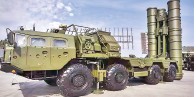
The S-400 is composed of four primary components: a long-range surveillance radar, a command and control vehicle, an engagement radar and launcher units mounted on trucks. It also fires four types of missiles, each suited for different ranges, starting with the 40-kilometre short-range missile and extending up to the 400-kilometre very long-range interceptor.
As India weighs its future air defence requirements, the performance of the S-400 and the evolving security landscape have strengthened its interest in acquiring more advanced variants. The upcoming Putin-Modi meeting is expected to shape the next phase of defence ties, with the S-400 family once again emerging as a central point of strategic cooperation.