


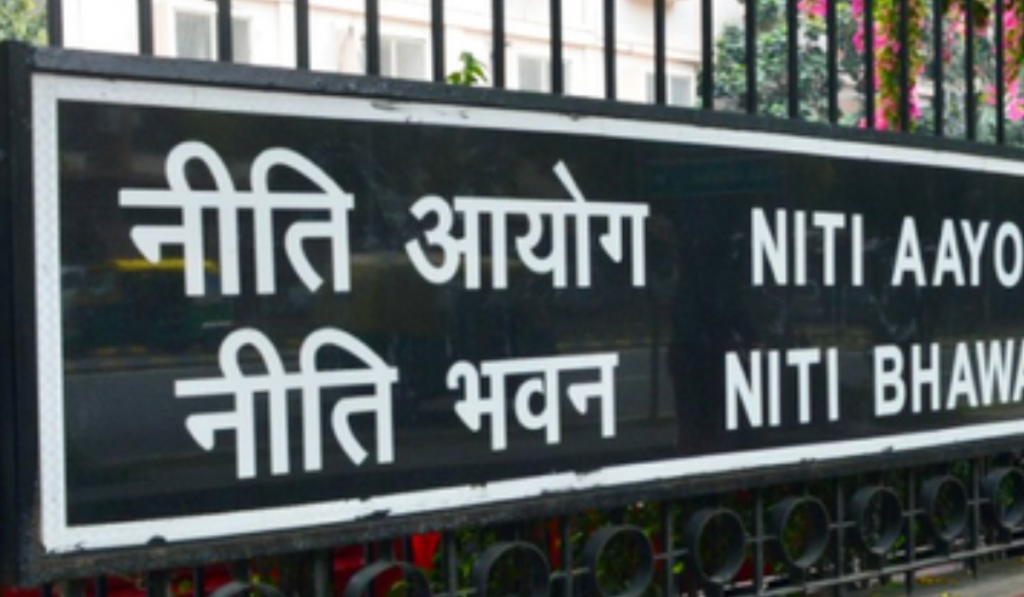
New Delhi: NITI Aayog’s Frontier Tech Hub released a Data Centre Evaluation Framework to help states plan for sustainable data‑centre growth, an official statement said on Thursday.
The framework aims to help states move from attracting data-centre investments to building investment-ready infrastructure, protecting critical resources and maximising long-term economic value, the statement from NITI Aayog said.
The framework, developed with inputs from industry, the Ministry of Electronics and Information Technology, the Ministry of Power and DPIIT, provides state governments a practical approach to planning, evaluating and facilitating data-centre investments.
It helps them assess infrastructure readiness, safeguard critical resources and maximise long-term economic and strategic value, the statement said.
India’s data-centre capacity has grown from about 375 MW in 2020 to approximately 1.5 GW currently, driven by the growing demand for Artificial Intelligence (AI), cloud computing, high-performance computing and data-intensive digital applications.
As India accelerates its AI and digital transformation, data centres are emerging as critical infrastructure underpinning the country’s technological and economic ambitions, the statement noted.
The government has made moves to create an enabling environment for data-centre investments, including a tax holiday until 2047 for eligible foreign cloud service providers leveraging India-based data-centre infrastructure, NITI Aayog said.
Prof. Abhay Karandikar, Member, NITI Aayog, highlighted the opportunity to leverage data-centre investments to build India’s technological capabilities. He emphasised the need to strengthen domestic R&D, industry–academia collaboration and Indian participation across the data-centre technology value chain.
The framework recommended identifying suitable data-centre zones, distinguishing colocation from active compute services and linking state incentives to measurable outcomes. These measures are supported by time-bound approvals, clear accountability and monitoring of project commitments.
The framework aims to serve as a decision-support tool for state governments, enabling them to evaluate investment proposals against infrastructure availability, environmental sustainability, economic value and implementation readiness.
“By identifying potential constraints early and providing greater clarity on project requirements, it seeks to improve investment decisions, reduce implementation risks and facilitate sustainable growth of India’s data-centre ecosystem,” the statement noted.
The framework seeks to help states plan better, move faster and convert the next wave of data-centre investment into sustainable capacity and lasting economic value.