


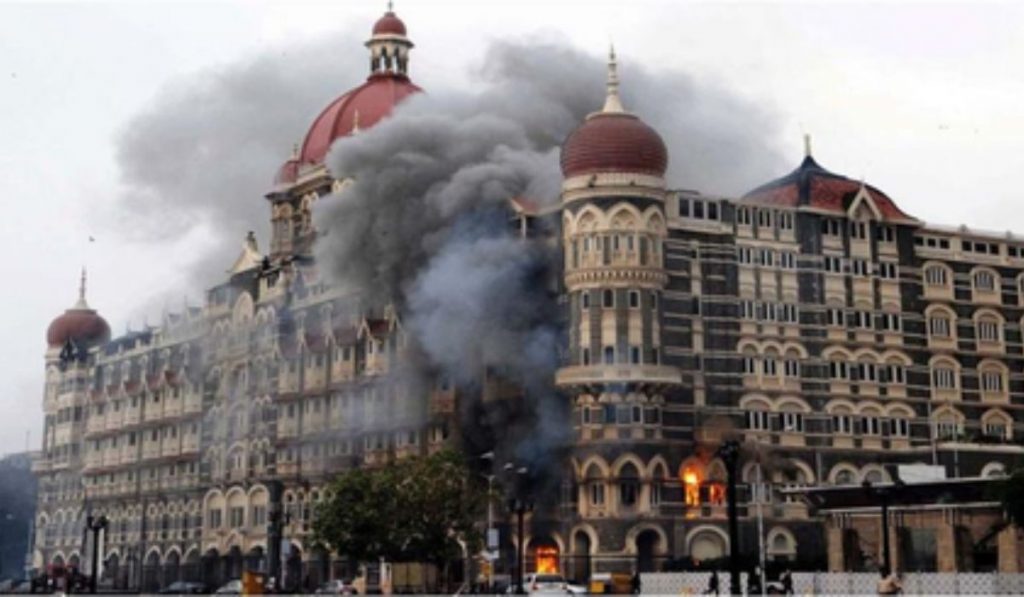
New Delhi: From the 26/11 Mumbai terror attacks to Operation Sindoor, India’s counterterrorism response has undergone a major transformation. While previously limited to defensive measures and diplomatic responses, the country has now adopted targeted military action against cross-border terrorist bases, a media report claims.
At the recent National Investigation Agency (NIA) anti-terror conference, Union Home Minister Amit Shah stressed the need for better coordination and a coordinated strategy among all government departments to dismantle the entire network of terrorism. He said that action against terrorism should not be limited to terrorists alone, but also to target their cross-border handlers, financial networks, those involved in organized crime, and local facilitators.
The Home Minister praised the police and armed forces, saying that their actions have made the country safer than before. He also mentioned the killing of Latif Bhat, the last known locally active terrorist in Jammu and Kashmir. Shah emphasized the importance of proactive and preventive action by security forces to prevent terrorist incidents.
According to a report in Page 3 News, data from the South Asia Terrorism Portal shows that the number of terrorists, security personnel, and civilians killed in terrorist incidents has declined significantly over the past few years.
The report states that the hijacking of Indian Airlines Flight IC-814 in December 1999 highlighted the threat posed to India by Pakistan-based terrorist organizations. The 26/11 Mumbai terrorist attacks proved to be a turning point in the debate regarding the country’s internal security.
Between November 26 and 29, 2008, a series of shootings and bombings took place in Mumbai. Ten heavily armed terrorists belonging to the Pakistan-based terrorist organization Lashkar-e-Taiba carried out these attacks.
From Surgical Strikes to Balakot, a Shift in Strategy
According to the report, India’s approach to counterterrorism has become more aggressive since the BJP-led government came to power in 2014. The surgical strike carried out after the terrorist attack on the Indian Army camp in Uri was cited as a key example of this shift.
The report stated that this action marked a departure from India’s previous strategy. It indicated that India was prepared to conduct targeted military action across the Line of Control (LoC) in response to major terrorist attacks.
This was followed by a suicide attack on a CRPF convoy in Pulwama, killing 40 soldiers. In response, India launched an airstrike against a Jaish-e-Mohammed hideout in Balakot, Pakistan. According to the report, this action further expanded the scope of India’s military response to Pakistan-sponsored terrorism.
Operation Sindoor Reveals India’s Changed Approach
In response to the killing of 26 people in the Pahalgam terrorist attack on April 22, 2025, the Indian Armed Forces launched Operation Sindoor on May 6 and 7, 2025. During this period, the Indian Army carried out precision strikes on nine major terrorist bases located in Pakistan and Pakistan-occupied Kashmir (PoK).
The Page 3 News report stated that Operation Sindoor demonstrated India’s expanded scope of action in response to major terrorist attacks. India’s response is no longer limited to diplomatic measures or targeted operations along the Line of Control.
According to the report’s findings, the reduction in the number of civilian and security personnel killed in terrorist incidents and the increased use of targeted military operations against terrorist bases indicate a significant shift in the country’s security landscape.
However, the report also cautioned that cross-border terrorist networks, their support structures, and evolving methods of attack remain challenges to India’s security system.