


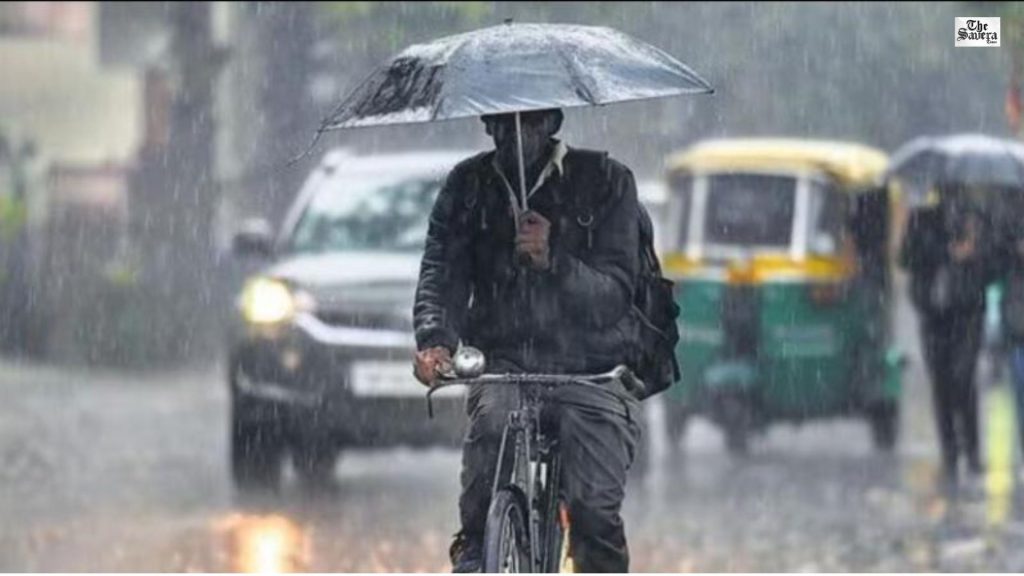
This year, the rainfall pattern has been erratic— excessive in some areas and deficient in others. Excessive rain leads to floods and loss of life and property, while also disrupting trade, production, investment, and overall progress. Paradoxically, however, areas receiving scanty rainfall offer no relief to the general public either. In these regions, clogged sewerage systems and silt accumulation in rivers and drains obstruct water flow, causing roads to suddenly transform into waterlogged channels. Similar reports have emerged from Uttarakhand, Himachal Pradesh, and Jammu & Kashmir, where heavy rains have wreaked havoc. In contrast, Punjab has received less rainfall than required.
Even when it did rain intermittently, the result was often waterlogging on streets and around homes. Data indicates a 26 percent deficit in Punjab’s rainfall. While the normal rainfall for July is 161.4 mm, the state received only 119.3 mm. This has led to a drop in dam water levels and exacerbated crises in agriculture and power generation. Admittedly, four districts in Punjab— Pathankot, Gurdaspur, Amritsar, and Faridkot—did experience above-normal rainfall. Pathankot recorded the highest rainfall at 495.5 mm, whereas Mansa district received only 38.4 mm. The impact of this rainfall deficit is also evident in dam water levels.
Although these dams are located in Himachal Pradesh, fluctuations in their water levels directly affect Punjab. The current water level at the Bhakra Dam is 1,599 feet, which is 21.67 feet lower than last year. The Pong Dam recorded a water level of 1,338.40 feet, marking a drop of 15.69 feet compared to the previous year. Overall, the aggregate water level is 10.83 percent lower this year.
Water storage in Punjab’s Ranjit Sagar Dam is 9.21 percent lower than normal. It must be understood that low water levels imply a reduced supply of water for irrigation, which in turn leads to lower crop productivity. How, then, can inflation be curbed or free grain distribution be sustained? People are now pinning their hopes on rainfall in August. If rainfall remains deficient in August, crop irrigation will be hampered, and low water levels in dams will adversely affect electricity generation. For now, one can only hope for good rainfall during the remainder of the monsoon season