


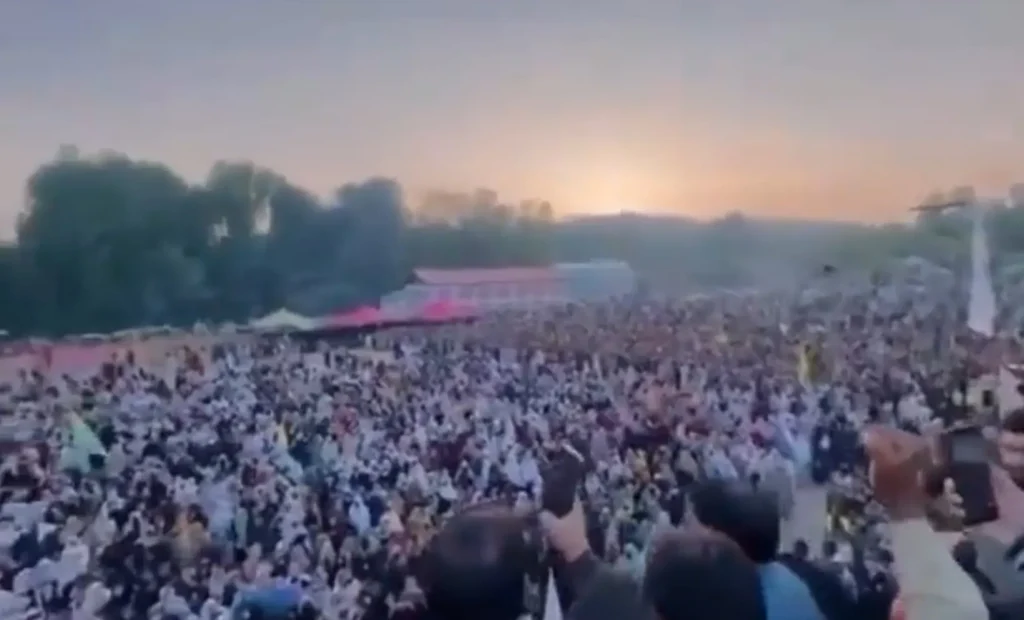
While the Union Territory of Jammu and Kashmir (J&K) drew international attention for its growing cultural and cinematic outreach, a starkly different picture emerged from Pakistan-occupied Jammu and Kashmir (PoJK) over the last week of September, with activists at the UN Human Rights Council in Geneva raising concerns over human rights abuses by Pakistani authorities in PoJK. It noted that the activists highlighted deaths, arbitrary arrests, enforced disappearances, communications blackouts and the militarisation of civilian life in the occupied territory since June 5 this year. The contrast came into focus when the fifth Jammu Film Festival in the Union Territory of Jammu and Kashmir screened 53 films — 41 from 16 countries and 12 from Jammu and Kashmir — and brought together more than 300 local artists, with the festival claiming over 12 million socialmedia views, according to a report in India Narrative. The report cited the Human Rights Commission of Pakistan, which through its own factfinding mission in August, linked the 2026 crisis in PoJK to longstanding grievances, institutional distrust and “an increasingly confrontational state response, including the disproportionate use of force.” Amnesty International had earlier described the designation of the Joint Awami Action Committee (JAAC) as a terrorist organisation as “disproportionate, unlawful, and a violation of the right to freedom of association.” UN High Commissioner Volker Turk also told the Council that Pakistani authorities had used “excessive lethal force and arbitrary detention to quell protests.” The difference was not merely symbolic but reflected contrasting institutional responses. The wider numbers on the Indian side are not cinemaonly. Recognised startups in J&K rose from 69 in 2020 to 1,255 by December 2025, including 434 women-led firms. Investment in the first nine months of FY 2025-26 was put at Rs 5,260 crore. Tourist arrivals hit a record high of more than 2.3 crore in 2024 before the Pahalgam massacre knocked the sector back; the government is now pushing Jammu as a yearround circuit, with pilgrimage roads, homestays and 153 tourism events in seventeen months. More than 41,000 government jobs were reported created since 2019, and nearly ten lakh people were said to have received self-employment support over four years. Handloom and handicrafts still employ over 3.5 lakh people, almost half of them women. Across the Line of Control, the grievances are older, rooted in years of demands over electricity and essential commodities. PoJK hosts the Mangla reservoir, a major contributor to Pakistan’s national power supply, yet residents have repeatedly demanded electricity at generation cost and wheat flour at affordable rates
PoJK’s Rights Abuses Expose Stark LoC Divide
PoJK’s Rights Abuses Expose Stark LoC Divide