


Abhishek Vij
In India, the majority of agricultural activity is conducted within the framework of traditional crop rotation cycles. This typically involves cultivating wheat after paddy, and paddy again after wheat—essentially, the ‘Rabi’ and ‘Kharif’ crop cycle. At present, the wheat crop in the fields has ripened and is ready for harvest. In many regions, the harvested crop is already making its way to the ‘mandis’ (agricultural markets).
Prior to this, the sugarcane crop had arrived at the ‘mandis’, where it was sold to market traders and sugar mills. While Punjab has managed to resolve a significant portion of its farmers’ difficulties, farmers in other major states across the country often fail to receive timely payments for their produce. Amidst the issue of outstanding dues owed to sugarcane farmers, a particularly troubling development has emerged: the total arrears owed to farmers have surged 32-fold, with a staggering Rs 16,000 crore of farmers’ money currently held up with sugar mills.
The situation regarding outstanding sugarcane payments is most dire in Karnataka, where arrears amounting to Rs 4,956 crore remain unpaid to farmers. This is followed by Maharashtra, with outstanding dues of Rs 4,252 crore, and Uttar Pradesh, with arrears reaching Rs 3,787 crore.
In Punjab, whenever crops arrive at the ‘mandis’for sale, the government issues declarations assuring farmers that they will receive immediate payment for their produce. Furthermore, these declarations have actually been implemented in practice in Punjab. Consequently, the outstanding arrears in Punjab currently stand at a mere Rs 535 crore. This demonstrates that, given the requisite political will, any problem—no matter how complex—can be effectively resolved. Just recently, the Punjab government announced that, despite providing free electricity across the state, it has successfully reduced the burden of debt associated with electricity subsidies while simultaneously achieving an increase in revenue within the power sector.
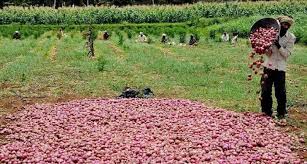
An assessment of the condition of farmers across the country reveals that when they bring their harvested crops to the *mandis*, they are often compelled to wait for some time to secure a fair price; consequently, they are forced to store their produce. However, this problem frequently remains unresolved because the available warehouses and storage facilities are already filled to capacity. As a result, farmers are left with no alternative but to store their harvested crops out in the open. On the other hand, nowadays, due to environmental pollution, weather conditions remain consistently adverse.
If harvested crops left lying in the open are exposed to rain, their quality suffers significantly. Consequently, farmers receive lower payments. In light of this, the Punjab government has announced that adequate warehousing facilities will be constructed for farmers. To date, this problem remains unresolved across the country. However,the larger question is: why do sugar mills have such massive outstanding dues owed to farmers? The fundamental reason is that the country produces between 300 and 330 lakh metric tonnes of sugar annually, whereas domestic consumption ranges from 270 to 290 lakh metric tonnes.
Consequently, in mills that are unable to sell their entire stock of purchased produce, payments due to farmers inevitably get stalled.The government is now exploring the option of utilizing sugarcane for ethanol production in an effort to resolve this issue.
Furthermore, the Minimum Support Price (MSP) for sugar has been raised from Rs 2,900 to Rs 3,100, and stock limits have also been imposed. As a result, while payments to sugarcane growers in Punjab are currently being processed smoothly, this problem continues to loom large in other states.This fact has also been acknowledged by MP Kanimozhi Karunanidhi, Chairperson of the Parliamentary Standing Committee on Food, Consumer Affairs, and Public Distribution, who has expressed deep concern over the 32-fold surge in outstanding sugarcane dues. In our view, such problems must be resolved immediately; policy decisions should not be deferred.