


In most states of India, farming is practiced in a single traditional, fixed crop rotation. This is known as the Rabi and Kharif crop rotation. Wheat is sown in Rabi and paddy in Kharif.
Farmers have faced this economic challenge not just recently but for decades. Whenever they harvest their crops, they head to the mandis with the hope that their produce will be protected from the vagaries of weather and they can sell it at a reasonable price when the time is right. However, this is not possible in India. This year too, farmers are facing the same problem: they have harvested a bountiful harvest in their fields and have brought their produce to the mandis, yet they want to receive the minimum support price announced by the government, but the government machinery takes time to purchase the produce,
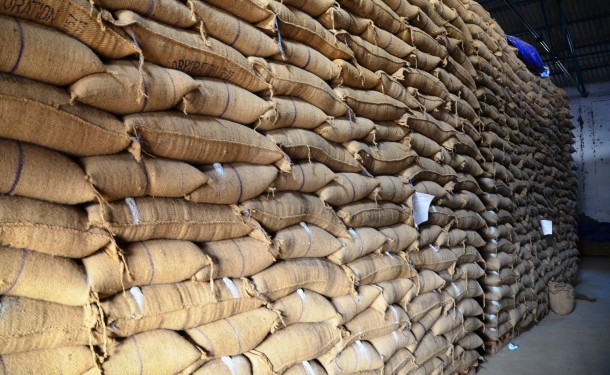
Although the system promises payment within 24 hours of harvest, when farmers excitedly approach the warehouses, they discover that the previous season’s grain procurement hasn’t yet been sent to the designated destinations and states. The warehouses are full, but only with the farmers’ previous crops. If the crops are stored outside the warehouses, the weather poses a threat to their produce. If they hurry to sell, they are constantly surrounded by commission agents and wholesale buyers, intent on purchasing the produce at prices below the minimum support price.
If farmers don’t want this, they will have to wait to get their crops into warehouses, as the warehouses are already overflowing. Currently, Punjab’s warehouses send 650,000 metric tons of paddy to other states each month, and 500,000 metric tons of wheat. If there’s a weather problem, this percentage could drop even further. Experts say that if farmers are to be empowered to sell their crops, then warehouses should be emptied of paddy and wheat every month, but the warehouses remain overflowing.
Meanwhile, crops lying in the open get wet with just a little rain, and their quality begins to decline. What can a farmer do in such a situation? They can’t wait long for a fair price. Then, what will remain but hunger and poverty? Farmers were forced to sell their crops at throwaway prices or trade their standing crops, and they remain so today. Amidst claims of development, we want to ask: when will this situation improve for farmers? When will adequate warehouses be built?