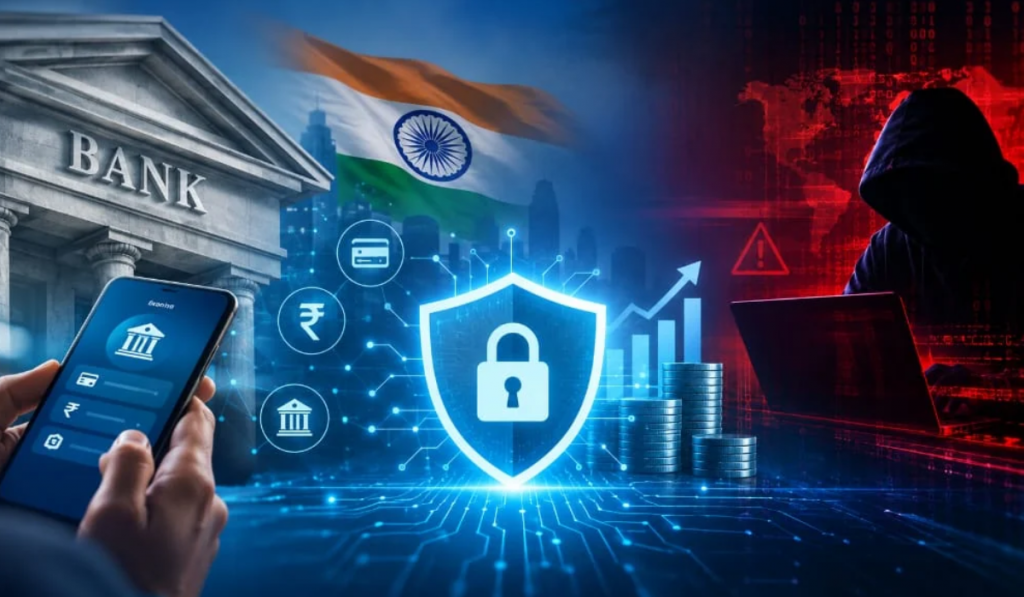
Indian banking has progressed so much since independence that a large part of the nationwide postal services are now also done through banking. Often people have chosen the new banking services spread across the country as a convenient option for their deposits and taking loans for investment. As the country became digital, computer systems have brought these services to every home. Along with the development of banking, a problem of security of customers’ accounts has also arisen. Cyber fraud started on a small scale but now seems to be turning into a business. That is why Prime Minister Narendra Modi also said on Sunday that it is important to protect Indian banking from cyber terrorists. Prime Minister Narendra Modi virtually inaugurated the Reserve Bank of India’s data center in Bhubaneswar on Sunday. He also inaugurated the Cyber Security Training Institute. He said that the purpose and interpretation of wars have changed. Nowadays, wars are not fought solely with weapons; if a country is attacked, its economy is also attacked. A group of cyber robbers and cyber terrorists has emerged. If they go unchecked, they can devastate any country’s modern banking-based economic system. This is a new challenge that will be addressed by establishing cyber security training institutes like the one in Bhubaneswar. Remember, cyber threats are evolving. Now, not only are accounts being hacked, but the business of selling account details has also become widespread. Modi said that the country cannot combat cyber terrorism with outdated systems. For this, a new modern infrastructure will have to be built and skilled human resources will have to be created. Only such a system can emerge as a powerful growth engine of a developed India. Taking the opposition to task, he said, remember your rule, during the time of 1960-70, did banking services ever reach the villages? Nationalization of banks started during the rule of Indira Gandhi when she nationalized 14 big banks, but when we came in 2014, we came to know that more than half of the country’s population was outside the banking system. Getting a loan from banks was a dream for the middle class. Poor farmers and women could not even dream of it. Only the rich and influential people had the say. The PM further stated that due to this misplaced prioritization, NPAs in Indian banking increased, and loans worth crores of rupees became non-performing or bad debt. The banking system began to collapse. Modi said that with the help of Jan Dhan accounts, we attempted to make banking services accessible to every citizen of the country. The question is, has the banking landscape changed? The common man is saddened. Due to modern computerization and the uncooperative behavior of bank employees, banking is becoming increasingly difficult for the common man. While we wanted balanced development and banking access to villages and small towns, the situation today is such that even in villages, postal services are their savior. In the coming decade, banking services should not only be accessible to everyone but also efficient and reliable. While banking has become computerized in the name of efficiency, the relationship between the average customer and the employee has become disconnected. The objective should be to fill this void.
Protecting Indian Banking System from Cyber Terrorists