


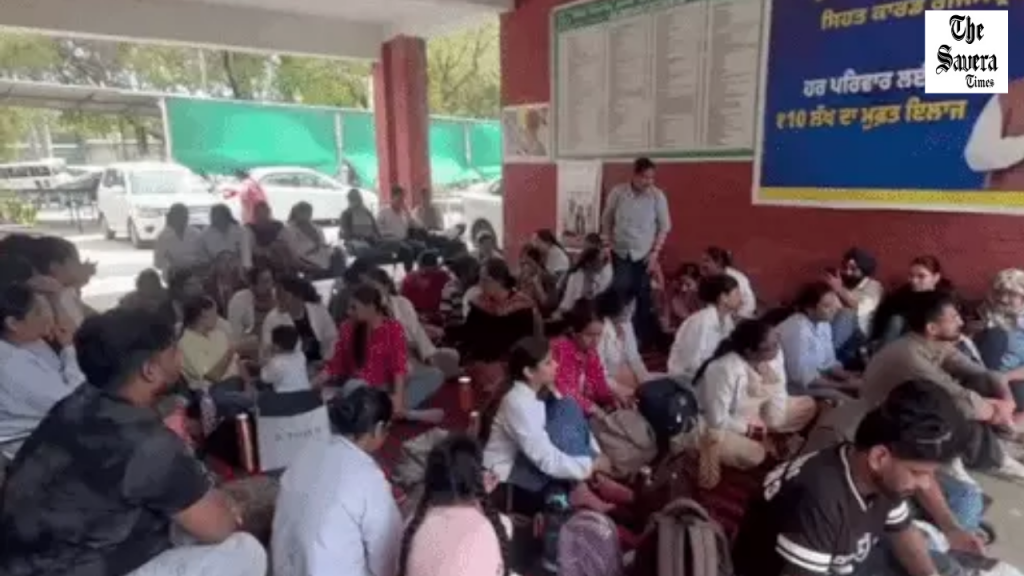
Healthcare services in Punjab have been hit after nursing staff launched an indefinite strike, defying the state government’s invocation of the Essential Services Maintenance Act (ESMA).
The protest has impacted major government medical colleges and hospitals in cities like Patiala, Amritsar, and Mohali, with routine services such as OPDs and ward duties being disrupted. However, emergency services are still being managed with limited staff.
The strike has led to inconvenience for patients, highlighting the growing tension between the state government and healthcare workers.
Government invokes ESMA, orders immediate return
In an attempt to maintain essential healthcare services, the Punjab government invoked ESMA and issued strict directions to nursing staff to resume duty immediately.
Under ESMA, strikes in essential services like healthcare are considered illegal, and employees who fail to comply can face legal action, including fines, suspension, or imprisonment.
Officials warned that strict action would be taken against those violating the order, stressing the importance of uninterrupted medical services.
Nurses refuse to join duty, continue protest
Despite the government’s directive, nursing staff have refused to call off the strike, stating that their demands remain unresolved.
The protest, led by the United Nurses Association, centres around the long-pending demand for restoration of ₹4,600 grade pay and implementation of better pay scales.
Union leaders said the agitation would continue until concrete action is taken, even if it means facing legal consequences under ESMA.
Pay disparity at the core of protest
Nurses claim that those recruited after 2020 have been placed under a lower pay structure, significantly reducing their salaries compared to earlier recruits and counterparts in other states.
According to union representatives:
- Promised higher pay scales were downgraded in 2021
- New recruits earn significantly less than expected
- Salary differences of ₹15,000–₹20,000 exist compared to neighbouring states
They argue that this disparity has caused financial stress and dissatisfaction among staff.
Hospitals face staff shortage and pressure
With nearly 1,500 nurses participating in the strike, hospitals are facing a shortage of trained staff.
The burden has shifted to:
- Senior nursing staff
- Nursing students
- Limited available personnel
This has raised concerns about patient care, safety, and the ability of hospitals to handle non-emergency services effectively.
Long-standing dispute escalates
The dispute between nursing staff and the government has been ongoing for several years, with multiple rounds of discussions failing to produce a resolution.
Union leaders claim they had given prior notice of the strike and held meetings with officials, but no concrete decision was taken.
The imposition of ESMA has further escalated tensions, turning the issue into a major confrontation.
Impact on patients and public health
The strike has directly affected patients, especially those requiring routine medical care. Services like OPD assistance, elective procedures, and ward management have been disrupted.
While emergency services remain functional, experts warn that prolonged disruption could impact overall healthcare delivery in the state.
Standoff continues amid uncertainty
The situation remains tense as the government insists on resumption of duties, while nurses continue their protest.
The ongoing standoff highlights the challenges of balancing employee rights and essential public services, especially in the healthcare sector.
With no immediate resolution in sight, all eyes are now on whether negotiations between the government and nursing unions can break the deadlock and restore normalcy in Punjab’s healthcare system.