


It is said that women have recognized their identity and, whether it’s in the field of education or the field of livelihood competition, they are ahead of men. Women constitute nearly half of India’s total population, but despite considering them part of the vote bank, politicians hesitate to grant them the requisite rights. Global surveys show that women neither receive salaries commensurate with their qualifications, nor do they have the same opportunities for advancement as men. Be it politics or society, if we call our country an open democracy, then women must be properly represented. These days, the sound of elections is growing louder in five states across the country. In Punjab, too, the election bugle has been sounded. Accounts show that nearly half of the total votes are cast by women. The competition for women’s votes in electoral politics intensifies with each election, but when it comes to giving women tickets and representing them in the Legislative Assembly, political parties’ priorities seem to shift. State governments, without regard to their economic capabilities, make announcement after announcement to woo women, yet limit their participation in ticket distribution. The 2027 Assembly elections are knocking at the door in five states, including Punjab. Punjab has over 9.7 million women voters, and the history of Assembly elections shows that major political parties have remained around or below ten percent in fielding women candidates. In 2022, the Aam Aadmi Party fielded the most women candidates (12), followed by the Congress (11), the BJP (6), and the Shiromani Akali Dal (5). However, in elections, women’s wings of political parties play a role in favour of their parties, they go door to door to campaign to gather crowds for rallies and take the lead in publicising government achievements. First, women are nominated as candidates in very small numbers, and even after winning, they are not given due priority in the allocation of seats. Currently, the political climate in the country is abuzz with the idea that the proposal for 33% reservation in Parliament and Legislative Assemblies, passed in a special session of Parliament, should be implemented nationwide. The 2027 Legislative Assembly elections offer ample opportunity for this implementation. Parties may have the opportunity to give more tickets to women and face pressure to ensure proper representation. Punjab’s 33 percent voter turnout creates approximately 39 seats, but only 13 women were elected as MLAs in 2022. To attract women voters, parties can make numerous promises, such as financial assistance, employment, security, health, education, and respect. But why just promises? Why not give them full representation in ticket distribution, even though a resolution has already been passed? If implementation is implemented, the problem of geographical delimitation arises, and political infighting between the ruling party and the opposition keeps delaying it. On the one hand, we claim that the system of production and management has modernized, and women are entering the battlefield, their domain of work. But consider the women’s share of the labor force in cities: it is only 28 percent. In rural areas, women’s work in the fields and homes is considered unpaid, calling it domestic work.
Women should get proper representation in the electoral process and in everyday life
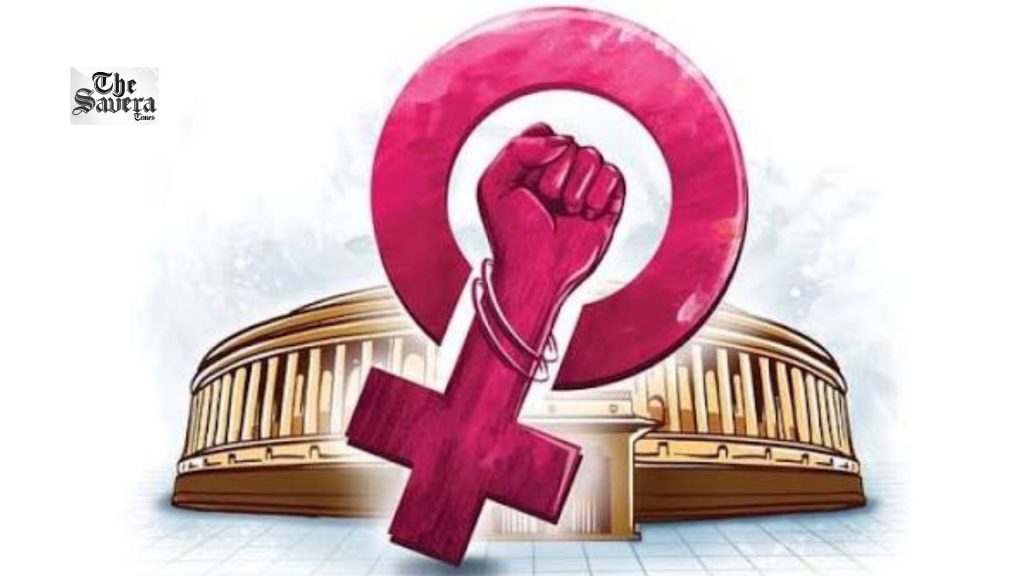
Women should get proper representation in the electoral process and in everyday life