


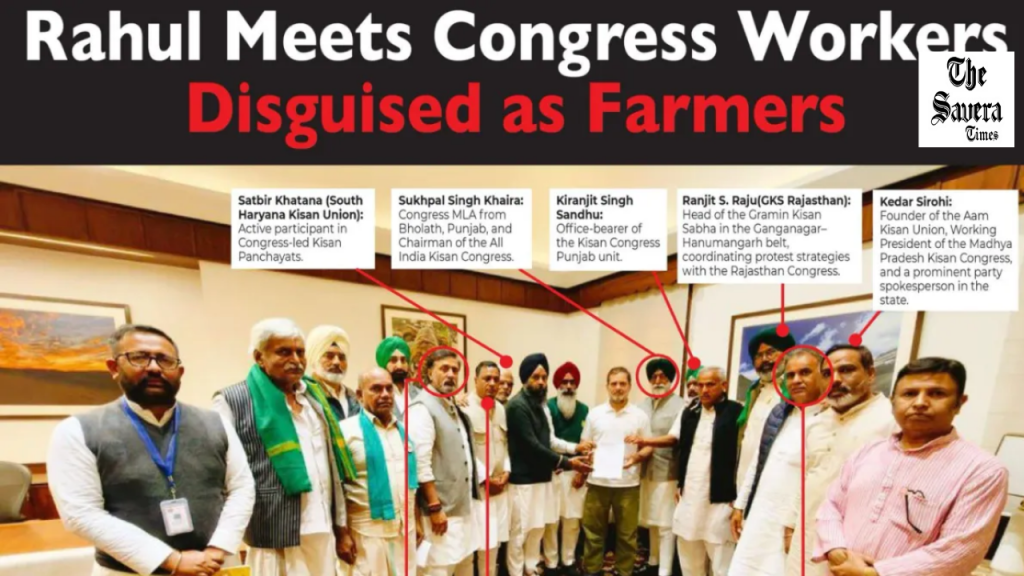
Leader of Opposition Rahul Gandhi met with a delegation of farmer leaders at his Parliament office in New Delhi to hear their concerns about the recently negotiated India‑US trade deal, emphasizing its potential impact on Indian agriculture and rural livelihoods. The meeting brought together representatives from several farmers’ unions who voiced deep unease over the pact’s implications for crop markets and farming communities.
Rahul Gandhi reiterated that the trade agreement could expose Indian farmers to unfair competition from highly subsidized American agricultural products, potentially undercutting domestic produce and threatening farm incomes and food security. He underscored the need for a nationwide movement to defend farmers’ interests and urged the government to reconsider or renegotiate aspects of the deal that could harm the farming sector.
BJP Labels the Meeting ‘Stage‑Managed’ and ‘Baseless’
In response, senior leaders from the ruling party, including Union Commerce Minister Piyush Goyal, dismissed Rahul Gandhi’s outreach as “stage‑managed,” “fake,” and “baseless.” They argued that what was presented as farmers’ concern was actually a politically orchestrated narrative aimed at misleading the agricultural community and sowing unnecessary fear about the trade deal.
The BJP maintained that the government has taken adequate measures to protect Indian agriculture, insisting that key staples and sensitive farm sectors have been fully safeguarded in the interim trade framework. Goyal claimed that tariff reductions and market access provisions have been balanced to benefit both farmers and exporters and accused Gandhi of spreading misinformation to score political points.
Diverging Views on Farmers’ Interests
Supporters of Rahul Gandhi highlighted that farmer organizations fear the deal could lead to increased agricultural imports, particularly of crops such as corn, soybean, cotton, fruits, and nuts which are already vulnerable due to global subsidies and competitive pressures. These groups told Gandhi that without clear protections and consultative processes, rural producers could face heightened economic stress.
In contrast, the government argues that the trade agreement is designed to expand market opportunities for Indian goods abroad, particularly in sectors like textiles, rice, fruits, spices and leather, and that no major concessions were made on critical agricultural products, including dairy or poultry. Officials claim the pact could ultimately boost exports and increase farmers’ incomes in select segments.
Political Implications Ahead of Parliamentary Debate
The clash over the India‑US trade deal reflects growing political polarization around economic policy and agriculture, with the opposition framing the agreement as a threat to farmers while the government defends it as balanced and beneficial. As debates intensify, both sides are likely to use the issue to consolidate support ahead of forthcoming legislative sessions and public engagements.