


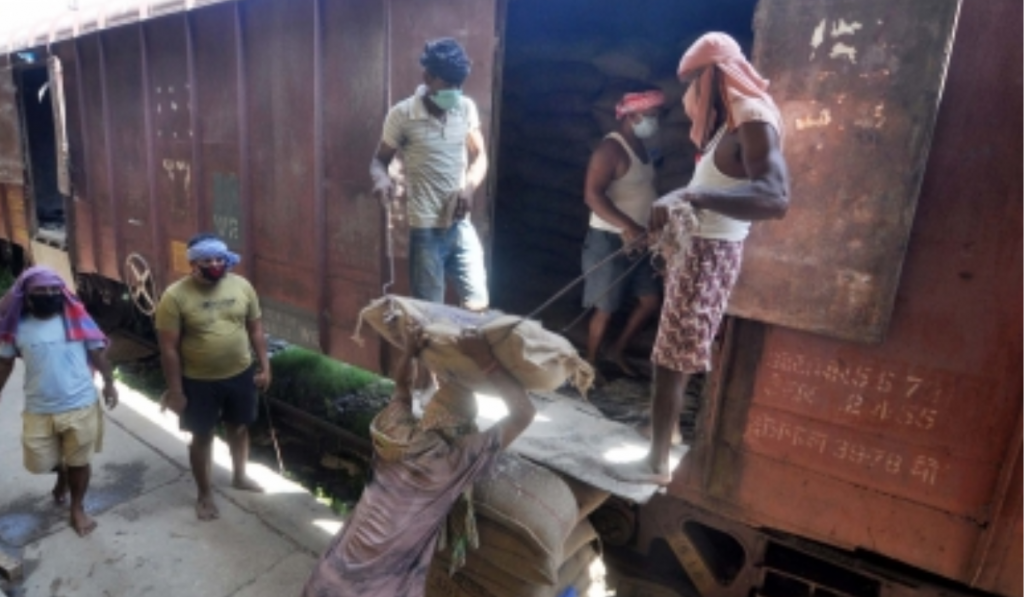
New Delhi: Railways is expected to drive India’s economic growth with 3,000 million tonnes (mt) freight capacity by 2030, said a report.
The report by ASSOCHAM-AESCLA said railways currently account for up to 30 per cent of freight movement and that huge scope exists to grow the sector.
Sector at a Turning Point
It said the sector is at a turning point with Dedicated Freight Corridors, near complete electrification, leading to rapid transformation to make it more efficient and sustainable.
The report said it is important to increase rail’s modal share by expanding capacity, creating more Dedicated Freight Corridors, greater private participation and improving last-mile connectivity.
Focus on Reducing Logistics Costs
It said it is important to reduce logistics costs, which come to around 7.97 per cent of GDP, to enhance India’s global competitiveness.
“Indian Railways is going through accelerated transformation and is becoming future-ready. It is not only a driver of growth but also an enabler of growth as Indian Railways has a huge manufacturing and service ecosystem. These ecosystem aspects play a huge role in creating growth opportunities,” said Dr. Surendra Kumar Ahirwar, Executive Director (Traffic Commercial), Railway Board.
Rapid Expansion and Technological Upgradation
“Some of the users of the transformation are better safety standards, accelerated capacity expansion, technology upgradation, AI adoption, transition to end to end logistics solutions with strong first and last mile as well as the need to bring down the costs of container production,” said Ahirwar.
Ahirwar said Indian Railways added close to 31,000 km of track in the last ten years, meaning infrastructure is expanding at a rapid pace.
Sanjay Bajpai, Advisor Railways Council, ASSOCHAM, said Indian Railways is transitioning from a traditional transporter to a key driver of logistics efficiency, industrial competitiveness and economic expansion. He emphasised the need for modern terminals, improved port connectivity, and seamless multimodal integration.
He added that with freight loading already exceeding 1.6 billion tonnes annually, the sector is poised for strong growth, supported by infrastructure development, policy reforms, and digitalisation.