


When Indian intellectuals are asked about the country’s real problems, they tell you about inflation, corruption, and the inefficiency of government policies. But surprisingly, even in Western and European countries, considered relatively modern and prosperous, these problems are leading to serious uprisings every day. Currently, not only France is reeling from violent protests, but also Italy, Portugal, Albania, Turkey, Argentina, and the United States, considered the world’s greatest superpower, are facing protests. In these countries, millions of people are taking to the streets to protest rising inflation, rising unemployment, and inefficient government policies. In France, protests have been accompanied by widespread arson and looting. Marches in Milan, Italy, suddenly turned violent. French President Emmanuel Macron and Italian Prime Minister Giorgia Meloni had to warn protesters of dire consequences. Protesters threw stones at police, set barricades on fire, and looted shops. Police used tear gas and water cannons to disperse the protesting crowds, but to no avail. Protesters entered and looted shops. Hundreds of people, overwhelmingly young, demonstrated in Brussels, the capital of Belgium. In Albania, protesters even set fire to the Supreme Court, leading to clashes between protesters and police. Student organizations are protesting against the rising cost of education and changes that have made higher education unaffordable for ordinary youth. The protests in France were initiated by schoolchildren complaining about the lack of proper resources. What is happening around the world? These don’t seem to be the world’s most advanced countries; they seem to be extensions of the Third World and countries like India. The youth, eager for change, whether at the college level (Gen-G) or the school level (Gen-Alpha), are seen fighting for their rights, even resorting to violence. We don’t claim that youth in Third World countries lack awareness or rebellion; rather, what has happened in Bangladesh, Nepal, Pakistan, and Sri Lanka in recent times is well known. There, too, youth took to the streets in protest, but due to lack of proper guidance, they fell prey to partisan or class politics. India is called a nation of youth. It is said that half its population falls into the working age bracket, while the other half is unemployed. Now, this unemployed youth force appears to be awakening. Although this vanguard generation has been called cockroaches, in a democratic country, the problems of youth cannot be simply addressed with grants and freebies. Sooner or later, their problems will have to be addressed. How long will partisan politics’ attempts to capitalize on them continue? If the young generation truly rises to the occasion, they have a tremendous influence as voters that cannot be denied. It’s a good thing that India’s young generation still champions Vande Mataram, the tricolor, and the Constitution. They haven’t strayed from their path and become destructive. Sooner or later, the country’s leaders will have to recognize this power and take this generation’s aspirations into account when deciding the nation’s future. The sooner these destiny-makers understand this, the better.
Rebellion Erupts in Western Countries
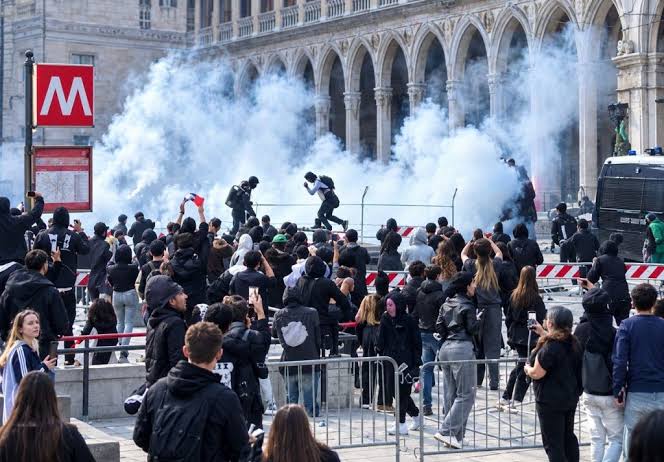
Rebellion Erupts in Western Countries