


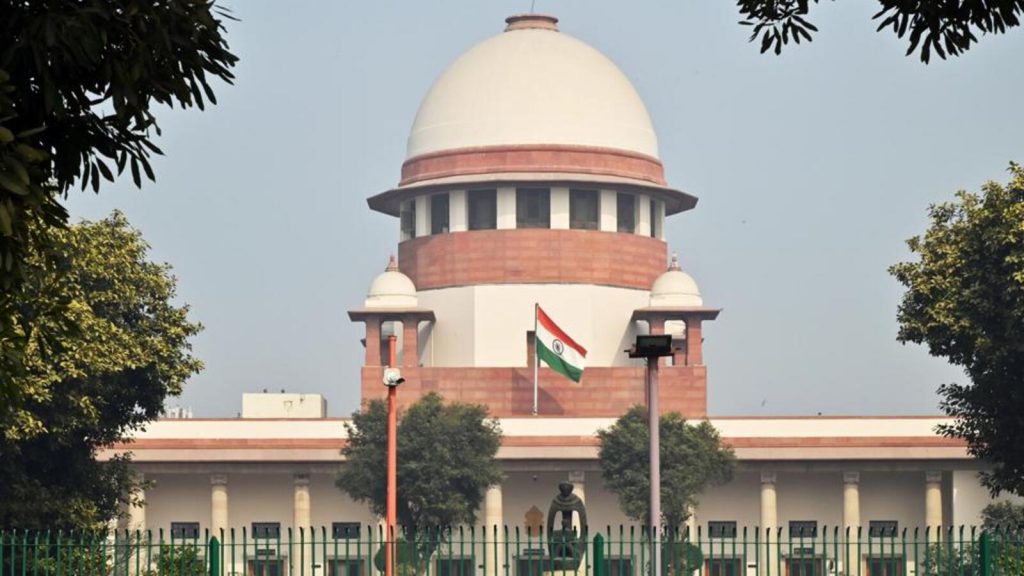
The Supreme Court of India on Tuesday issued a notice to the Election Commission of India (ECI) in response to a writ petition seeking a Special Intensive Revision (SIR) of electoral rolls in Assam. The plea challenges the ongoing Special Revision (SR) process, arguing that SR is inadequate to ensure an accurate and credible voter list. The petitioner contends that SR does not require submission of documentary proof for citizenship, age, or residence, whereas SIR mandates document-based verification along with photo identification, which could significantly improve the reliability of the electoral rolls.
The Supreme Court on Tuesday issued notice to the Election Commission of India on a writ petition challenging the ECI’s decision to conduct only a “Special Revision” of the electoral roll in Assam instead of a “Special Intensive Revision” ahead of the 2026 Assembly elections.… pic.twitter.com/s1zkhADb14
— Live Law (@LiveLawIndia) December 9, 2025
Why SIR is Considered Critical for Assam
Assam has a unique electoral landscape due to its history of illegal immigration and the sensitive citizenship issues surrounding the state. The National Register of Citizens (NRC) process, which identifies legitimate residents of Assam, has heightened the importance of precise voter rolls. The petitioner argued that SR, which relies mainly on household-level verification and pre-filled voter lists, may allow errors, duplicate entries, or inclusion of ineligible voters. In contrast, SIR involves rigorous document verification, making it a more reliable tool to maintain accurate electoral data, especially in a state like Assam with complex demographic challenges.
Election Commission’s Perspective
The ECI has defended the decision to conduct SR instead of SIR in Assam, citing the state’s special status under the Citizenship Act, 1955. According to the ECI, implementing SIR now could overlap with ongoing NRC and citizenship verification processes supervised by the courts. The commission also argued that SR is sufficient to update the voter lists ahead of the next assembly elections while ensuring minimal disruption to ongoing administrative and verification procedures.
Legal and Political Implications
The Supreme Court’s notice signals judicial scrutiny of the ECI’s decision, raising the possibility of a directive to conduct SIR for Assam. Approval of the plea could result in fresh, fully verified voter lists, addressing concerns over illegal entries and duplicates. The move also has political ramifications, as accurate voter rolls are critical in a state where electoral outcomes are highly sensitive to demographic composition.
Preparing for 2026 Assembly Elections
Assam’s assembly elections are scheduled for 2026, and the final electoral roll under SR is expected to be published by February 10, 2026, with January 1, 2026, as the qualifying date. If the court mandates SIR, the election preparation timeline could be extended to accommodate additional verification, but it would strengthen the integrity of the voter list and ensure fairer electoral processes.
Wider Significance
This case highlights the tension between administrative feasibility and electoral accuracy in India’s largest democracy. While SR is quicker and easier to implement, SIR provides a higher level of verification, which is particularly important in states facing historical or ongoing disputes over citizenship. The Supreme Court’s decision could set a precedent for handling similar disputes in other states with sensitive voter demographics.